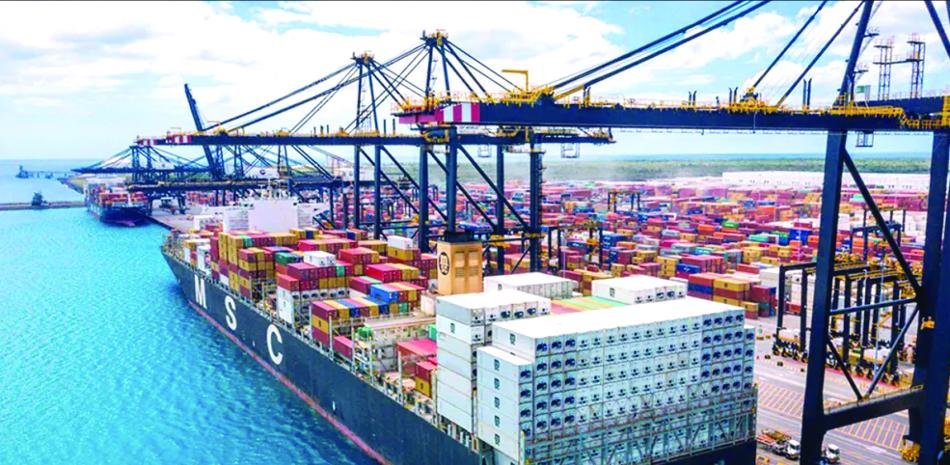
The uncertainty created by the hostilities of the United States and Israel’s war against Iran maintains a certain nervousness in the economies, especially in the business sector dedicated to imports, due to the increase in the costs of maritime transportation.
When consulted by Listín Diario, the shipping expert, Aníbal Piña, pointed out that for the Dominican Republic the current impact is indirect but tangible, mainly through fuels and adjustments in the global market. “It is not a severe disruption yet, but it is enough to affect logistics costs and margins.”

Aníbal Piña
He assured that freight rates in maritime transport still have manageable prices, however, he recommended that the business community monitor their behavior weekly and emphasized that they must continue taking advantage of nearby markets (Nearshoring) so that certainty is a constant even in times of crisis.
He maintained that it is possible to consider other options on the routes established due to the influence of fuel costs mainly (Bunker), insurance and others, however he said that it is advisable for the business community to rely on the logistics and shipping sector by monitoring freight behavior weekly.
According to data provided by the shipping sector, maritime transport costs have experienced an average increase of between 15 and 25% in recent months, driven by strong geopolitical tensions in the Middle East and the global rise in oil prices.
Connectivity is stable
Recently, the Shipping Association of the Dominican Republic (ANRD) indicated that the behavior of freight responds to global dynamics of the international logistics system, in a context marked by external pressures, but without relevant interruptions in operations.
The ANRD explained that these increases, although significant, occur on a lower cost base compared to previous periods, particularly with the levels observed in 2024, when freight rates reached significantly higher peaks.
The entity reiterated that maritime connectivity remains stable, given that its main trade routes are not directly exposed to the areas of greatest international tension. Consequently, there are no disruptions in access to goods or in the continuity of services.
The organization highlighted the importance of maintaining continuous monitoring of the international environment and strengthening coordination between the different actors in the logistics chain, as a way to anticipate scenarios, mitigate possible impacts and ensure the continuity of operations.
Despite the Government’s efforts to maintain stability in the prices of basic products, agreeing on measures with business and commercial associations, the population continues to complain about the instability of prices and the increase in fuel prices.
Merchants and businessmen, although they value the actions of the government sector, warn about the delicate situation that the country is currently experiencing and the need for measures to be taken to protect the most vulnerable families.
Volatility
Expectations for the coming months point to a maritime market of high volatility and high costs, where geopolitical tensions and ship overcapacity will play a constant role. Although a collapse in supply chains similar to that of the pandemic is not projected, Dominican importers will have to live with unstable rates. News agencies report that what began as a temporary crisis has become the “new normal” of global trade.