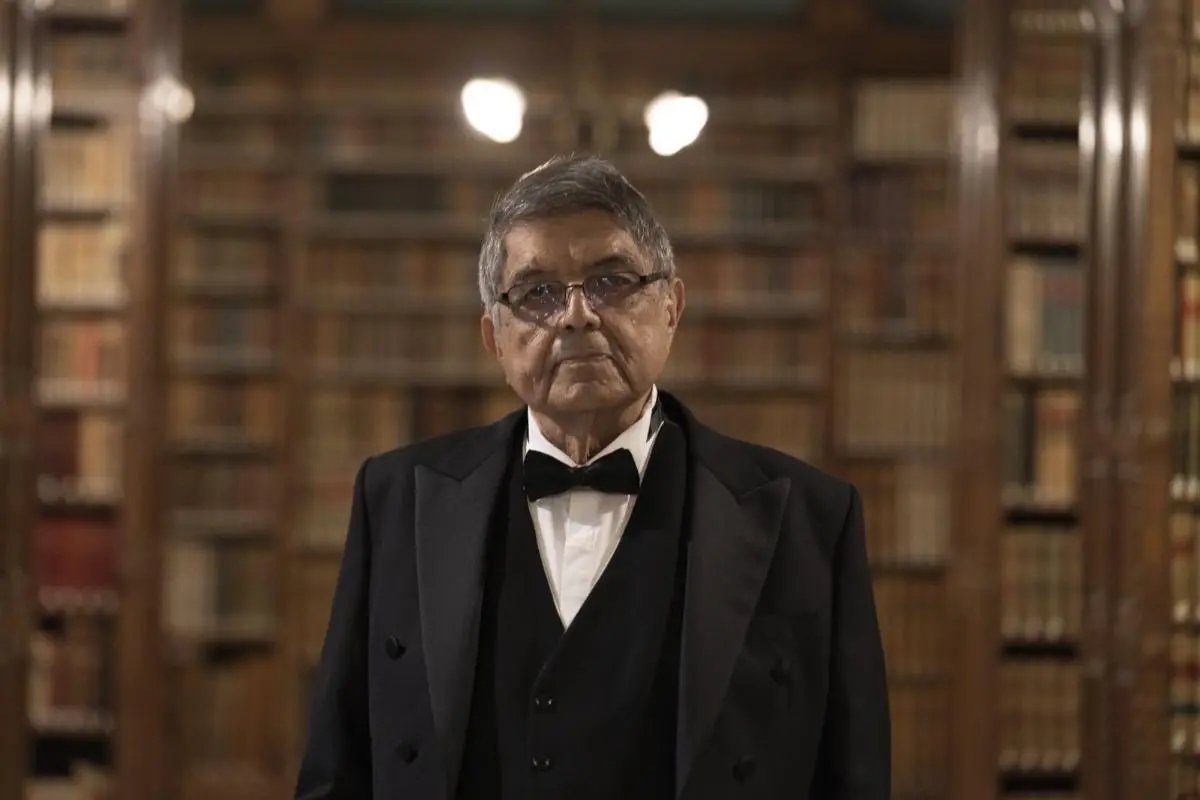
The Nicaraguan writer and winner of the 2017 Cervantes Prize, Sergio Ramírezjoined as a member of the Royal Spanish Academy (RAE), where he will occupy the L chairvacant since the death of the Peruvian writer Mario Vargas Llosawhich occurred on April 13, 2025.
Ramírez was elected by the plenary session of the RAE on May 21, 2026 and his candidacy was presented by Santiago Muñoz Machado, director of the institution; Víctor García de la Concha, former director of the Academy and the Cervantes Institute, and Luis Mateo Díez, winner of the 2023 Cervantes Prize, highlighted the RAE in a statement published on its website.
During the entrance ceremony, chaired by Muñoz Machado, academic Luis Mateo Díez was in charge of welcoming Ramírez and responding to his speech.
Ramírez titled his intervention An ecumenical novelistdedicated to the career and work of Vargas Llosa, who received the Cervantes Prize in 1994 and the Nobel Prize in Literature in 2010.
In addition, Ramírez referred to the Peruvian author as a “culminating figure in the great wealth of Latin American literature” and recalled the impact that reading The city and the dogs.
“In the distant days when I was awakening my first weapons as a writer, and I read for the first time The city and the dogs“I thought with admiration and amazement that that first-time book, with such novel writing, and which remains so alive and current sixty years later, capable of continuing to teach new things, had been written by a twenty-five-year-old boy, who had gone out into the world from Peru to conquer the language,” he expressed. Ramírez, who resides in Spain after leaving Nicaragua due to the attacks of the Daniel Ortega regime.
A recognition of the Spanish language
In his speech, Ramírez also thanked the academics who supported his candidacy and reflected on the role of the Spanish language in his life.
“Uphill, downhill, ups and downs, twists and turns, exile, one homeland lost, another gained, is the reflection I make about my life upon entering this house of language,” said the new academic.
The writer added that, despite the vicissitudes of his career, he preserves the Spanish language as one of his main certainties: “if I have not lost something among so many vicissitudes, it is that language.”