According to the previous procedure, the heads of the aforementioned institutions were elected by a commission of the Ministry of Culture or a municipality specially assembled for this purpose.
The new description states that the two candidates selected by the commission will be finally approved by “(…) the competition organizer”, ie the Ministry of Culture or the municipality “in order to select the most suitable applicant”. According to this description, the first- and second-placed applicants will speak with the contest organizer, who will select the winning applicant with a “motivated decision”.
“If there is only 1 applicant selected by the Commission who has scored at least 7 points, the tender organizer makes a decision to select this applicant as the winning applicant,” the description adds.
Vice-minister Drukteinis: opportunity for the leader to choose
As Vice Minister of Culture M. Drukteinis stated in 15min, this amendment should be viewed in a broader context. M. Drukteinis said that the interview with potential candidates for the position of head of the institution would be conducted by a person appointed by the Ministry of Culture or the municipality, and what exactly would be decided within the organization. It would not necessarily be the Minister of Culture.
“In the updated mechanism, there is enough balance and levers to allow only the most qualified candidates to enter. There is a raised and transitional score from 6 to 7, the commission’s qualifications are better defined, more precisely the whole process is described in operation. The two candidates selected by the commission are really highly qualified. We believe that the upcoming competitions will show this. Bearing in mind that there are often such cases that the scores of the selected candidates are slightly different, and in the private sector, it is a prerogative that the manager can choose who to work with,” he said 15 minutes said M. Drukteinis.
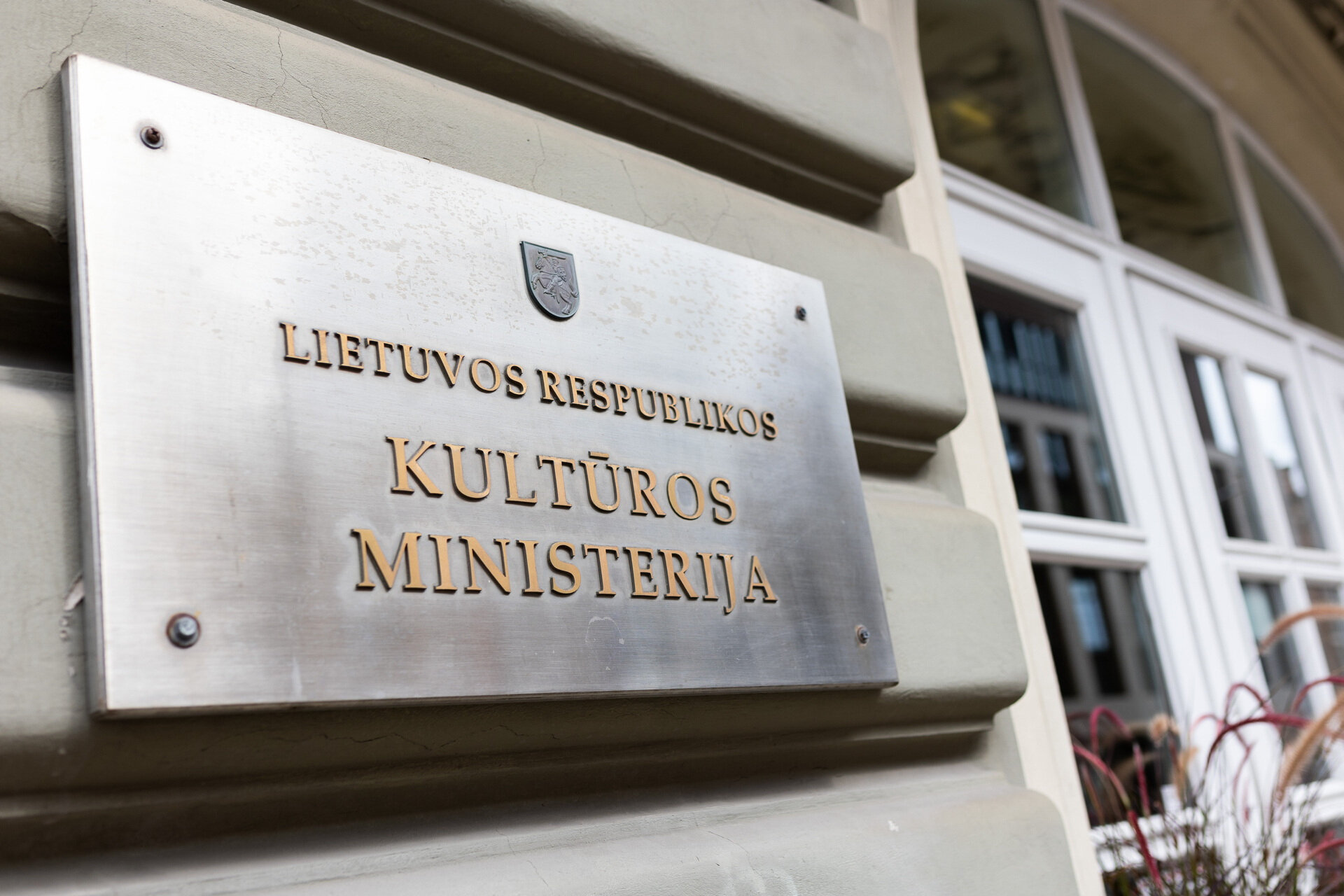
Ministry of Culture of the Republic of Lithuania / Lukas Balandis/BNS photo.
M. Drukteinis emphasized that it is possible to give the manager the opportunity to choose.
“It should be noted that this is not an obligation – a person chooses from two candidates who are selected by the commission. The head of the organization can decide to follow the opinion of the commission. We have other cases when the president chooses judges or, in the same way, in other institutions, managers are also selected from several candidates who pass the competition,” said M. Drukteinis.
When asked why the previous procedure, when the head of the institution was elected only by a commission, is flawed, if it needs to be changed, M. Drukteinis said that this way the head is given the opportunity to choose the person he will work with.
“This is an opportunity to choose for the leader a person who would best implement the tasks set by the founder – the state. (…) We have to evaluate the comprehensively updated order, we cannot evaluate it by only one criterion. Yes, the leader chooses, but there are also other things: more transparent work of the commission is ensured, higher qualification criteria are set for the commission. All this creates a model in which those two candidates are of a very high level. Therefore, this is the final assessment of who would better implement the vision,” he said M. Drukteinis.
According to the vice-minister, proposals for harmonization are currently being submitted.
“This is not the final option. If other institutions and the public see things that need to be corrected, we will listen to them,” said the Deputy Minister of Culture.
Former culture minister: “Sounds like appointments”
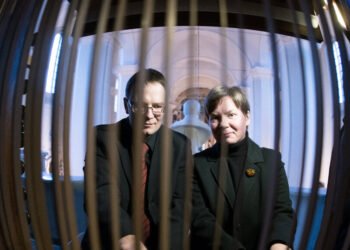
Former Minister of Culture, Member of the Seimas Simonas Kairys 15 minutes said that he sees a process of politicization in this new proposal.
“I see it as a step back from the perspective of transparency. It must be understood that when it comes to national institutions, we are talking about institutions where we are looking for the highest caliber managers, and what do we do now? We decide the results of the competition, because a group of specialists – the commission – only performs selection work, submitting two candidates to the minister or the mayor for approval”, said S. Kairys.
According to him, being a minister and facing various challenges in the context of the competition for the heads of institutions, let’s say when one of the candidates complains about the results of the competition to the court, he was just able to rely on the commission’s decision, arguments, and assessment.
“The Ministry of Culture won and won all the courts simply because it was not some personal ambition, opinion of the minister, an action taken in the perspective of political pressure, but the commissions were clearly empowered,” said the former minister of culture.
Clarifying the commission’s work order, S. Kairys emphasized that the commission usually selects one candidate, not two.
“Strange decision from strange incentives”, assessed S. Kairys.
According to the politician, this new procedure is taken from the practice of electing heads of public administration institutions.
“For example, the head of the State Language Inspectorate (competition) or the Trakai Historical National Park (competition). They are institutions of public administration. The selection there is basically not carried out by the ministry itself, and the minister receives two candidates and chooses one or the other. I don’t remember when in a similar situation I have felt more political pressure on what to choose. His act will depend on the minister’s will, understanding, and respect for the law,” said S. Kairys.
According to him, this procedure, when the minister has to choose from several candidates, is not transparent enough.
“In the ideal case, it should be like this: the minister sees the matrix of the results of the competition for the heads of any institution. He sees if there are any distortions, excessively low or high scores from one or another person (in the commission). If he sees certain suspicions in the procedure, he can stop it, but creating such conditions when the appointment can be carried out is no longer a feature of a democratic state,” said the politician.

Photo by Roberto Riabovo/BNS/Simonas Kairys
S. Kairys said that he sees the desire of the ruling majority to consolidate its power.
“Legally having such a maneuver that there are two candidates for the winners, later it is very easy to make a decision by political power by choosing the one you want or who was specially chosen,” S. Kairys commented.
When asked how he reacts to the argument that the head can choose the heads of subordinate institutions, S. Kairys said that it is “a return to the Soviet way of thinking”.
“The more you leave such powers to the minister, the more decisions are made by appointment. Basically, here we will have almost no appointments to positions,” said the former Minister of Culture.
Despite the fact that experts will participate, their work “becomes a cover” for the minister’s wishes, S. Kairys said.
The politician said that culture has principles of respectful distance between politics and culture.
“In this case, it is a huge step back (…) I would like to point out that when the vice minister comments, he says that the state should have more power to make decisions. If a respected vice minister or minister, after working for several months in the (Culture) ministry, feels like the state, identifies with the state, something is not right in their mind, they cannot make such decisions,” said S. Kairys.