The terror of bright lights is spreading on the roads
father-in-law
Expressiveness
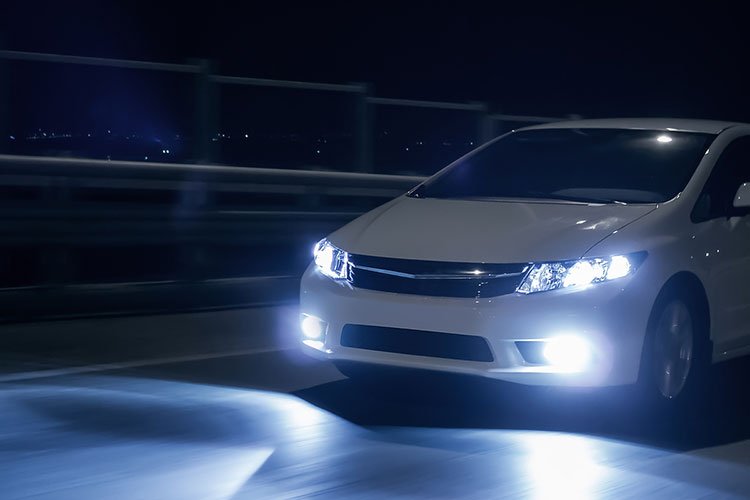
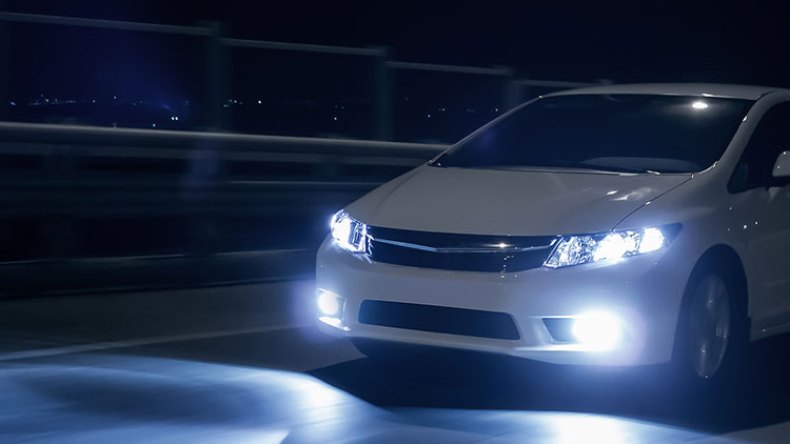
Night driving on national roads, especially in dark and bumpy sections, has turned into a daily risk that threatens the lives of drivers and pedestrians alike. After constantly suffering with random adjustments to LED and GZeno lights, the danger has doubled with the entry of counterfeit “laser lights” technology into the illegal accessory market, raising the threat level and imposing a complex traffic reality that puts public safety at stake.
The random modification contagion extends to trucks
The use of these annoying lights and various non-compliant lighting devices is no longer limited to tourist cars or light vehicles only, but rather the phenomenon has extended to include trucks, heavy-weight vehicles, passenger buses, and various types of vehicles. The seriousness of the situation doubles when road users are exposed to floodlights and high-intensity lamps installed at a higher height on the front of the trucks, which spreads the direct light beam over a larger area and doubles the dark area in the face of the oncoming driver and pedestrians.
The use of these devices is no longer limited to highways or isolated axes, but rather the phenomenon has spread to sweep the centers of cities and residential areas, and even sections that have strong and sufficient public lighting. The state of traffic discontent is multiplied by some drivers deliberately leaving their vehicles’ dazzling lights, whether LED, VZino, or laser, burning at full power even when stopped or completely parked on the edge of the road, which blinds the eyes of passers-by and drivers coming in the opposite direction and obscures their view. Obstacles and pedestrian movement.
A technical problem causes fatal “temporary blindness.”
The technical problem with these commercial lamps and random fixtures, which are installed outside the factory frames and without adaptive guidance lenses, is that they emit an intense and dispersed light beam. While the poor-quality LED and GZino devices cause the white light to spread sharply towards the eye level of the oncoming drivers, the imitation “laser” lamps emit a focused beam that extends for several hundred metres, and in the absence of smart systems that luxury cars are equipped with to cut the light automatically, this flows The beam is directed directly towards the faces of road users, causing the phenomenon of “temporary blindness” for several seconds, which is a period of time sufficient for the vehicle to travel a distance of tens of meters without being seen, which increases the possibility of cars swerving or running over pedestrians walking on the edge of the road.
Testimonies reveal suffering on the roads
One of the daily drivers on National Road No. 09 between Bejaia and Setif confirms that encountering these lights at night, of all kinds and from all shapes of vehicles and trucks, makes the driver lose the ability to determine the asphalt path completely, noting that the bright white light turns into a wall that prevents the vision of any stopped or walking object on the right side. An interstate taxi driver adds that vision disappears as soon as a vehicle or truck carrying random, unverified “Vezino” or “LED” or “laser” lights approaches. On it, which forces him to stop almost completely to avoid colliding with sudden obstacles or swerving.
Pedestrians and the elderly…the first victims of photoluminescence
This danger increases in severity among pedestrians, especially the elderly and those with visual problems such as deviation and dry eyes. One elderly citizen narrates that crossing or walking on the edge of the road at night causes him immediate pain inside the retina and a white cloud that lasts for long seconds due to the bright “LED” and “LED” lights, which makes him lose his balance and “remains” in place for fear of falling or being run over. Another citizen who suffers from poor eyesight indicates that the scattered light halos coming from… These lights make him unable to distinguish between the edge of the road and the asphalt, so he finds himself facing the danger of speeding vehicles without having any option to avoid them. In another testimony, a female citizen confirms that walking at night on the city’s illuminated streets no longer protects pedestrians from the sudden sharp light distraction resulting from vehicles parked on the sidewalk with their floodlights on, which causes dizziness and severe visual fatigue.
Strict penalties in the new traffic law
In light of these violations, Algerian legislation in the new Traffic Law, Law No. 25-01, established strict penalties, as it explicitly included the use of lighting devices that do not conform to specifications or random technical modifications, including LED, GZino, and laser, on all types of vehicles, as fourth-degree violations. The law regulated penalties and procedures at specific points, as the violator is imposed a lump sum fine of 5,000 dinars that must be paid within a maximum period of 30 days. In the event of late payment, the value rises automatically to its maximum limit of 7,000 dinars with the report being referred to the competent judicial authorities. Penalties also include retaining the driver’s license in exchange for granting a temporary connection, and the driver’s adherence to the legal text imposed by the obligation to immediately remove non-compliant lamps at the place of control. Legislative texts granted the judicial police the power to stop the vehicle and refer it to the inspector in the event of abstention or proof of a fundamental modification to the electrical network, in addition to the categorical rejection of the vehicle at the control centers. technology and requiring a second inspection after the complete removal of the lamps.
Calls for drying up import and marketing sources
Traffic safety specialists believe that addressing this life-threatening phenomenon requires going beyond field supervision towards taking firm decisions to prevent the import and entry of counterfeit and unapproved devices and lamps through the nation’s border and commercial ports, and to dry up the sales networks and install them in local markets to ensure the protection of the security of all road users.