The school canteens have started to put numbers to a problem which until recently was resolved by eye. Schools weigh the leftovers, adjust the rations and involve students to reduce the food wastebut the most difficult leap is to reuse the cooked food that has not been served. According to the latest balance of waste, educational establishments generate 28.8 kilos of food waste per day and schoolalmost three times as much as socio-health centers and more than twice as much as the hospital.
“We cook with a little margin so that it can be repeated. Weighing helps to not do it so by eye”
The data is included in the framework of the circular economy lawwhich incorporates food waste into the waste policy and aligns it with the 2030 Agendathe international roadmap for sustainable development. The goal is to reduce a half the food that could still be consumedbut which end up discarded. In school canteens, this does not refer to leftovers they return to the tray once the service is completebut to the food that has already been cooked and that has not yet been served. This surplus can only have a second output if conserva with guarantees; therefore, measuring it and predicting how to reduce it is the first step in deciding what can be used.
“We have spoken with the communes so that this food can be redistributed”
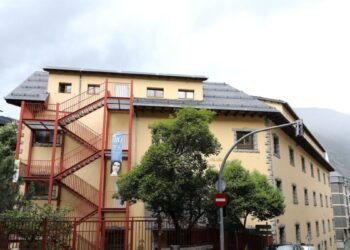
Before arriving at the redistribution of foodthe centers have started with the first step: making visible what is thrown away. at theAndorran schoolthis job has been incorporated into theSpace Middayan initiative in which the students participate in the weighing of the remains and they learn to serve themselves based on what they will actually eat. The project started three years ago with the water left in the jugs at the end of the service and that was collected to rub or water the plants. With food, the idea is the same: for children to see that what they take and don’t eat ends up as waste.
“We go over the list every morning to find out how many students will stay for lunch”
The next step is to convert this logic into food redistribution. theAMPAEA has raised the possibility of giving one second outing for food preparation that remains unused, a formula that has already been tried a Andorra la Vella with Rexcateringthe system of selling meals made with surpluses from the dining room of Calones “We have spoken with the communes so that this food can be redistributed”, he explains Mireia Muñozmanager of theAMPAEA. The proposal, however, requires an infrastructure that canteens do not have: a temperature blaster to quickly cool the surplus, a packaging machine for cstore it in a vacuum and a labeler to identify the allergensthe date of production and the origin. The idea is not to generate a profit, but to set a symbolic price that helps cover the cost of some equipment that is outside the ordinary functions of a dining room.
At the Spanish school María Molinerthis path is seen as uas much as you need to study. The center believes that it can be beneficial in the medium and long term within a more sustainable country model, although the day by day the dining room continues to adjust the quantities. “We cook with a little margin so that the students can repeat. Weighing helps us not to do it by eye”, he explains Noemi Gómezadministrative of theAMPA. When a dish has less acceptance, as can happen with vegetables, the excess volume can grow. At this point, the record of the remains helps to correct rations already better adjust the service of the following days.
In the EEncamp French schoolthe measurement also involves calibrating lin anticipation before cooking. In the center they stay for lunch 200 students and the fresh material is bought every day in depending on the expected attendancean organization favored by the fact that the kitchen is smaller and does not allow to accumulate much stock. “We go over the list every morning to find out how many students will stay for lunch“, he explains Montse Nicolascanteen coordinator. On Wednesdays, when more children eat lunch at home, the purchase is already reduced. The result is that almost never no food remains unserved and, if there is one on time, it is included in the monitors’ lunch that same day.
Outside the educational centers, the food reuse already has a more direct way. during the 2025the spaces enabled in shopping centers for sell products with a close expiration date or small imperfections allowed to give way to 285,478 units which would have ended up as waste. Als school canteenson the other hand, there is still no defined strategy by Government nor from the commons to redistribute the prepared food that has not been served.