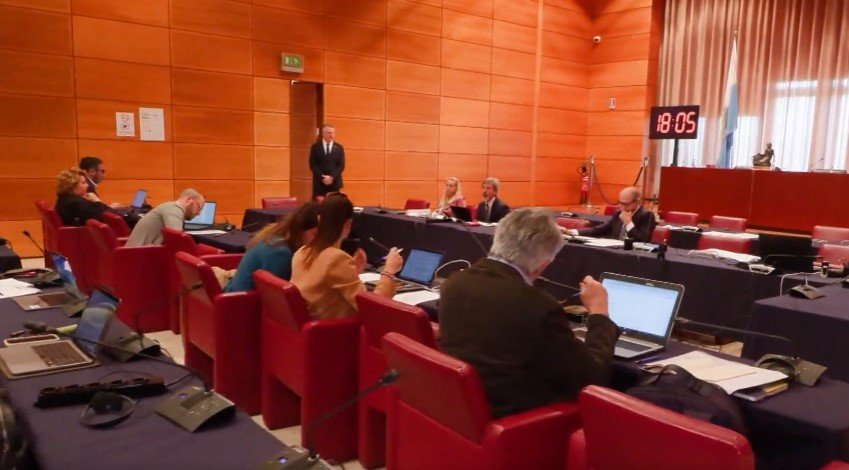
The morning session of Permanent Council Commission I (Permanent Constitutional and Institutional Affairs; Public Administration; Internal Affairs, Justice – Here is the full report of the session) which took place this morning, Monday 3 August 2026, drew a clear line between the celebrations for diplomatic successes and the need for a concrete reorganization of the State to face the challenges of European integration and legislative modernisation. The debate opened with the requests of Carlotta Andruccioli regarding the strategy for the Public Administration in view of the Association Agreement with the EU, underlining how the preparation of staff and offices cannot be left to improvisation but requires rigorous planning.
The Secretary of State responded to these concerns Stefano Canticonfirming that the work has already begun with the appointment of “focal points” in the departments, the preparation of a new needs plan and the imminent appointment of the new director of the Public Service. In this context, Giuseppe Maria Morganti recalled the experience of Malta, suggesting the establishment of a dedicated task force to promptly intercept the benefits and opportunities offered by the European Union.
The technical heart of the work concerned the presentation of the reform of the Criminal Procedure Code, described as a work of “evolutionary maintenance” aimed at making the process more guaranteeing and efficient. Stefano Canti he explained that the project, the result of the work of the Criminal Process Observatory, introduces crucial measures such as urgent removal from the family home to combat gender violence, allowing the police force to intervene immediately to protect the victims.
Although the reform was welcomed for strengthening the presumption of innocence and the right of defence, councilors such as Ilaria Baciocchi have raised questions about the sustainability of the new procedural deadlines and the risk that the increase in guarantees could negatively impact the speed of justice and the resources of the Court.
A moment of heated ethical and legal confrontation was marked by the debate on the criminalization of surrogate motherhood, in implementation of a specific Arengo Request. The bill provides for the punishability of the practice even if committed abroad by San Marino citizens, a choice defended by Marco Mularoni as necessary to fully implement the will of the people and to prevent the ban from being circumvented outside national borders.
However, on the part of PSD And Free strong doubts emerged: Ilaria Baciocchi warned against the use of criminal law as a tool to resolve moral issues, criticizing the extension of prosecutability abroad as a violation of the principle of territoriality. Also Giulia Muratori expressed doubts about the effectiveness of the rule and the investigative difficulties that international cooperation would entail in countries where the practice is legal.
Finally, the Commission addressed issues related to civil rights and the protection of the most vulnerable, with the Secretary Stefano Canti which illustrated the progress towards a framework law against discrimination. This intervention, also requested by international bodies, will be accompanied by the creation of the figure of the Commissioner for Human Rights, a rapid and accessible guarantee mechanism for all citizens.
In closing, the reform of the legislation on the custody of minors was discussed, with the aim of overcoming a dated regulation to guarantee greater emotional continuity and transparent criteria in the selection of foster families, always placing the best interests of the child at the centre.