Senior Reporter
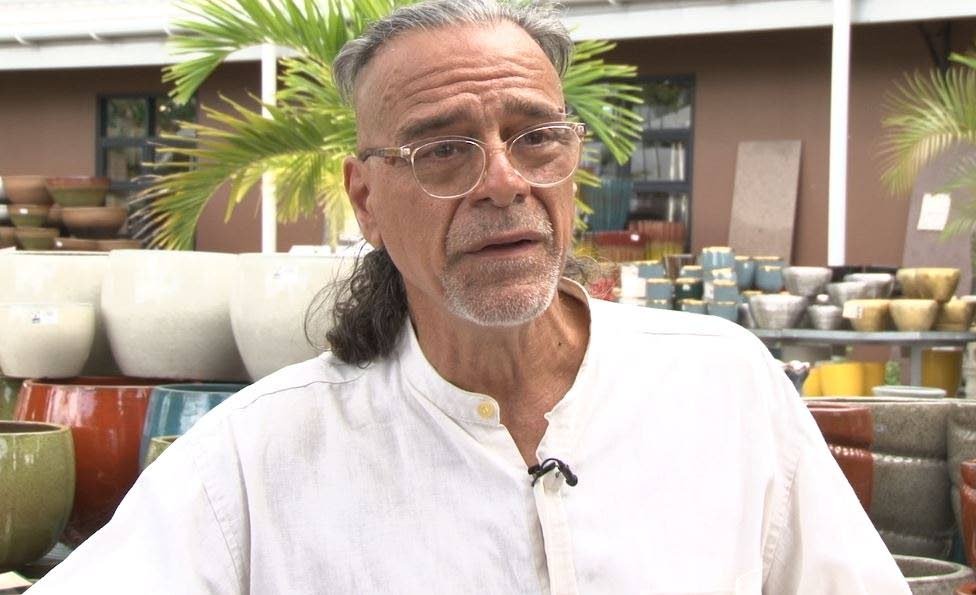
Businessman Gary Aboud is warning that members of Trinidad and Tobago’s Syrian-Lebanese community may eventually choose to leave the country if what he describes as growing racial targeting and political hostility continues.
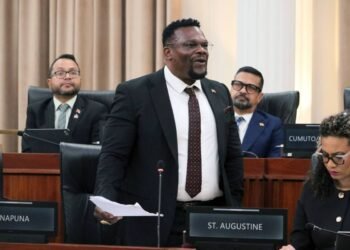
Aboud’s comments follow remarks made by Attorney General John Jeremie during Wednesday’s parliamentary debate on the extension of the State of Emergency (SoE), where he linked the ‘one per cent’ to criminal activity.
During his contribution, Jeremie signalled Government’s intention to intensify its crackdown on organised crime, stating that authorities would pursue white-collar criminals and those who facilitate criminal activity, regardless of their wealth, status or influence. He also referenced the so-called “one per cent,” which is used to refer to the Syrian-Lebanese community in T&T, arguing that individuals involved in criminal conduct would face the same treatment as gang members, regardless of their social standing.
The comments have generated public discussion, particularly among members of the Syrian-Lebanese community, some of whom have interpreted the rhetoric as unfairly casting suspicion on successful business families.
Speaking with Guardian Media yesterday, Aboud rejected the AG’s suggestion, saying the issue had evolved beyond politics and was now touching on questions of race, identity and national unity.
Aboud said he was troubled by what he viewed as an emerging narrative that equates financial success with criminal conduct.
“For me, to reduce somebody’s life success, the brilliance of their effort, their sacrifice, their family’s sacrifice and accuse them of underworld activity, I think it is irresponsible and unbecoming at best,” he said.
Aboud argued that successful entrepreneurs should be viewed as examples of achievement rather than targets of suspicion. He maintained that if the authorities possess evidence of wrongdoing against any individual, that evidence should be taken through the proper law enforcement channels.
“Take it to the police,” he said.
“My hands are as clean as I would want them to be.”
However, he said he was concerned about the narrative the Government was currently disseminating, noting it had begun before the AG’s statement.
“The UNC Government has bought into a direct line of attack of people of Mediterranean extract,” Aboud said.
The outspoken businessman argued that the political rhetoric that appears to single out ethnic groups risks deepening social divisions in a nation built on multiculturalism.
“I cannot share this racist ideology and these racist slurs,” he said.
“The sooner we address these issues in a public way, the better our flag will be and the more unified our people will be.”
While stressing that he identifies first and foremost as a Trinidad and Tobago citizen, Aboud said he has spent much of his life confronting prejudice linked to his ethnic background.
“I live by the flag of Trinidad and Tobago,” he said. “Since I was 11 years old and we had the Black Power movement, people would say the worst things about me because of my race.”
According to Aboud, some members of his extended family chose to leave the country years ago because they felt subjected to discrimination.
“Many of my first cousins have chosen not to live in Trinidad and Tobago because the racial persecution and torment was overwhelming,” he said.
Opposition Leader Pennelope Beckles also took aim at Jeremie over remarks he in the debate concerning alleged criminal elements and references to the so-called “one per cent.”
During her contribution to the debate, she too challenged the AG to take any evidence of wrongdoing to law enforcement authorities rather than making allegations under parliamentary privilege.
“If you have any evidence against me, take it to the police,” she said.
“Don’t only come and use parliamentary privilege to make all kinds of accusations when you know you have no evidence.”
Aboud and several other businessmen have had their US visas recently revoked. At the time of his visa revocation, Aboud told the media he believed the decision stemmed from his public criticism of what he had described as extrajudicial killings of alleged narco-traffickers in the Caribbean by US authorities.
According to the AG, the American government has used its intelligence capabilities to identify and ban certain individuals from travelling to the United States due to their activities.
“I support law and order within every community of T&T and urge the Police Service to investigate and prosecute blue-collar and white-collar criminals or gang members, of every racial community, bar none, including my own,” Aboud said.
Guardian Media is awaiting a response from other business owners to the comments made by the Attorney General.
Questions were also sent to the US embassy about the revocation of US visas for members of the Syrian-Lebanese community.
If you create evil,
evil will prosper
However, it was Aboud’s comments about the potential consequences of continued ethnic tension that carried perhaps the strongest warning. He questioned whether Syrian-Lebanese citizens were being made to feel unwelcome in a country where many of their families have lived for generations.
“Is the UNC saying that the 10,000-odd Syrian-Lebanese people that live in T&T should sell out everything?” he asked.
“Does she (Persad-Bissessar) want all of the people of Mediterranean extract to sell their properties and evacuate Trinidad and Tobago?”
Aboud said such conversations were no longer hypothetical.
“It is happening right now,” he claimed.
“Many people are afraid to live in Trinidad and Tobago because they’re afraid of the narrative that is being created.”
He warned that any perception of racial hostility could have far-reaching implications not only for social cohesion but also for investment and economic growth.
“If you create evil, evil will prosper,” he said.
The businessman pointed to several prominent families of Syrian-Lebanese descent who have become deeply integrated into T&T’s social and economic fabric over generations.
“These are integrated people, integrated into Trinidad and Tobago,” he said.
He argued that demonising entire communities because of the actions or alleged actions of a few individuals would ultimately weaken the country.
“There will be no national success, no economic recovery, no equilibrium in the balance of the budget if we are not unified,” Aboud said.
“Unity is the wealth that our nation can bring to the world.”
When asked directly whether the current discourse could affect investor confidence, Aboud did not hesitate.
“Absolutely,” he responded.
While emphasising his own commitment to T&T, Aboud admitted that even patriots have limits.
“Myself, personally, I am planted in Trinidad and Tobago,” he said.
“It will take 10,000 UNCs to make me even consider leaving. But I am a hardcore patriot. I would die for this flag.”
Despite that declaration, Aboud said he believes many others would not remain under similar circumstances.
“I am certain that 99.9 per cent of all people in Trinidad would have already left if the UNC did to them what they are doing to me,” he claimed.
“Any citizen would leave and I would encourage any citizen to run from a country where a Prime Minister, an Attorney General, a Minister of Housing are attacking you with racist slurs.”
He added, “If they continue, I am going to myself go on a platform to encourage every person who invests in this country to pull up their roots and find somewhere else. Fertile ground where people are loving and caring.”
Aboud suggested that there is a limit to what any community can endure.
“If the Jews could leave Germany, the Syrian-Lebanese can leave Trinidad,” he said.