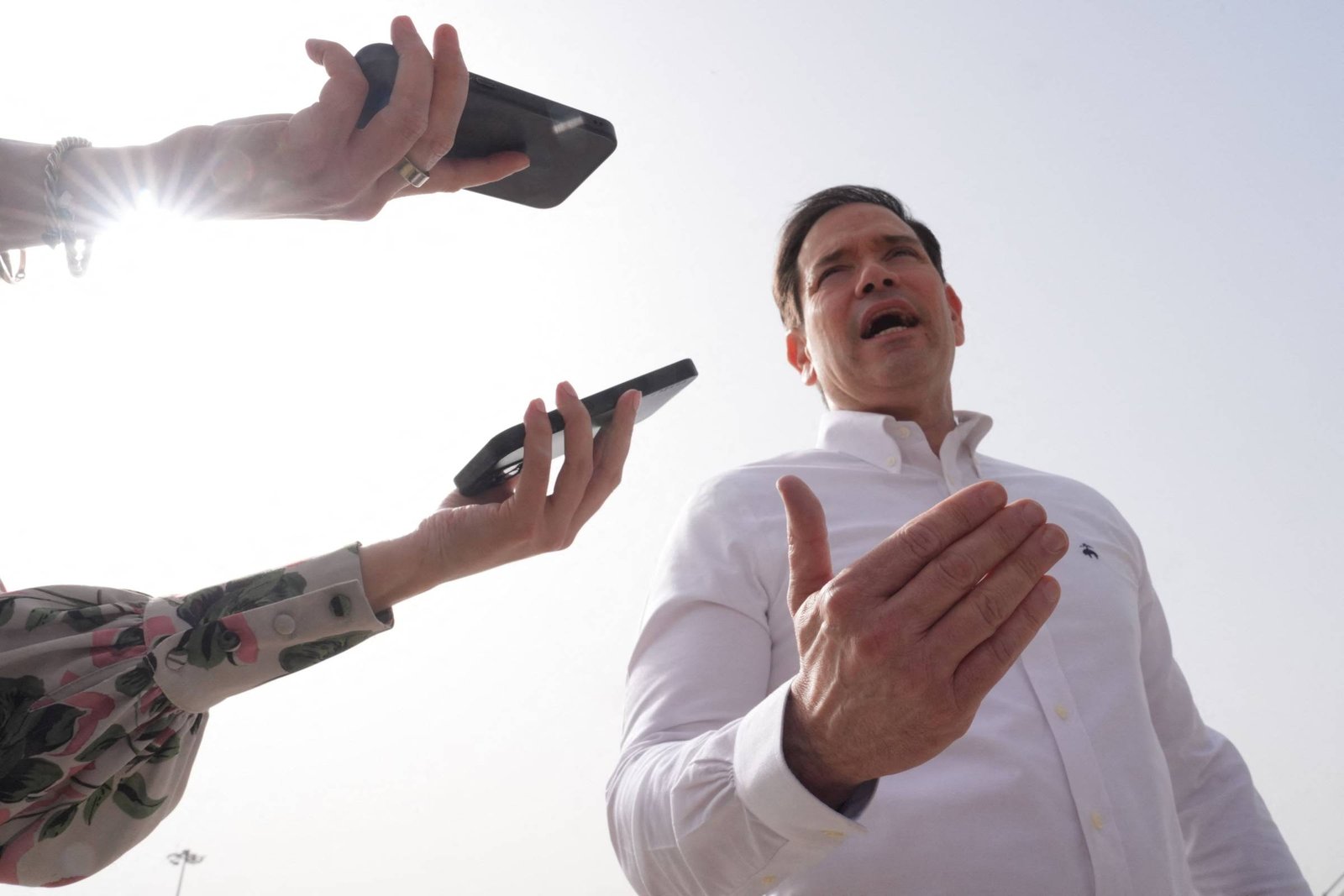
When President Lula visited donald trumpin early May, high-ranking members of the Republican’s cabinet, in addition to the vice president, JD Vance, were present. Notably absent was the American Secretary of State, Marco Rubiowho was on a brief two-day visit to Italy and the Vatican.
Less than a month later, the head of American diplomacy was called by Lulathis Tuesday (2), of “anti-Latin America“. “I already told Trump that he (Rubio) doesn’t like Brazil,” said the president.
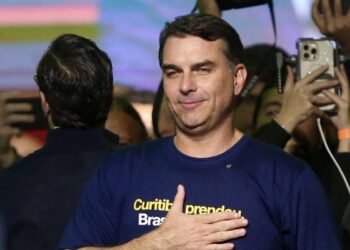
The secretary is one of the Bolsonaro family’s allies in the republican government and met with the senator Flavio Bolsonaro and former congressman Eduardo Bolsonaro on their last visit to Washington.
Since the meeting, Rubio was responsible for announcing the US decision to classify the PCC (Primeiro Comando da Capital) and the CV (Comando Vermelho) as terrorist organizations, a measure that displeases the Brazilian government and that will have still nebulous consequences.
Also this Tuesday, in a hearing in the American Senate, the head of American diplomacy excluded Brazil from the group he called US-friendly countries on the continentplacing it next to Cuba, VenezuelaNicaragua and Colombia.
Rubio has been a fierce critic of left-wing governments and dictatorships in Latin America since before he entered politics in 1999. When he was elected federal deputy, he soon became notable for his criticism of regimes such as Cuba, where his parents left before settling in Florida.
Under Trump, the secretary is one of the main articulators of the idea that, on the continent, organized crime, left-wing regimes and immigration to the US are faces of the same phenomenon: the weakening of American hegemony in the hemisphere, made possible by what he calls the negligence of previous governments and an aggressive stance by China.
Not surprisingly, his first international trip in office was not to traditional allies in Europe or in Middle Eastbut to small countries in Central America: Panama, El Salvador, Costa Rica, Guatemala and the Dominican Republic.
All of them are places that find themselves mixed up, to some extent, in the idea defended by Rubio and the Trump administration for the continent. Panama, for example, was the target of pressure that resulted in Chinese companies leaving its canal at the beginning of Trump’s term; El Salvador, under Nayib Bukele, is seen as an important ally in the fight against criminal groups. Both, among others, are the origin of thousands of immigrants in the USA.
In practice, the first target of the country’s foreign policy under Rubio was Venezuela. Six months ago, American soldiers invaded Caracas and captured Venezuelan dictator Nicolás Madurocurrently imprisoned in the USA.
“This is the Western Hemisphere. It’s where we live, and we will not allow it to be a base of operations for US adversaries, competitors and rivals,” Rubio said in an interview after the dictator’s capture.
Since then, Caracas has lived under the command of Maduro’s deputy, Delcy Rodríguez, but under American tutelage — Rubio, for example, announced at the end of May that Delcy would visit India in June, before Caracas or New Delhi even brought up the subject.
After Venezuela, the Cuban regime came into focus. After months of intensifying the blockade on the communist island, which deepened the widespread crisis in the country with new blackouts, lack of medicine and fuel shortages, the US indicted former Cuban leader Raúl Castro.
In video aimed at the Cuban populationspeaking impeccable Spanish, Rubio stated that the US was seeking a new relationship with Cuba, but that it needed to be “directly with the Cuban people, not with Gaesa“, a reference to the company linked to the regime that manages entire markets in the country.
The head of diplomacy of the United Stateson the other hand, has kept his distance from other important issues for Trump, even though he also holds the position of National Security Advisor — the first to do so, albeit on an interim basis, since Henry Kissinger in the 1970s.
Rubio does not participate, at least publicly, in the negotiations regarding the wars in Iran and in Ukraine. The president outsources contacts with Persian interlocutors and mediation between Kiev and Moscow to his special envoy, Steve Witkoff, his son-in-law, Jared Kushner, and his vice president, Vance.
“In general, it’s a mistake to stack these roles. That said, it’s not necessarily a bad thing that a two-job Rubio is out of the spotlight right now,” Matthew Waxman, who worked at the State Department and the Pentagon during the George W. Bush administration, told The New York Times. “Particularly at a time when a lot of attention is paid to sensitive diplomacy with Iran, someone needs to manage foreign policy in the rest of the world.”
If today Rubio is one of Trump’s greatest defenders in the international arena, this was not always the case. While he was a senator, he faced the Republican in the party’s primaries, when he called him the “most vulgar person” to run for President of the country.
With Trump’s term coming to an end, Rubio is now trying to position himself as the president’s heir, although he was considered, and then passed over, as vice-president on the Republican ticket.
“We have a president who is not joking. When he says he is going to do something, he is not joking. This is a president of action,” said the secretary, about Trump, after Maduro’s capture.