TO LEAD — The Dutch royal family has earned hundreds of millions from colonialism over the centuries. A large-scale historical study shows that the House of Orange has retained no less than 576 million euros in overseas assets.
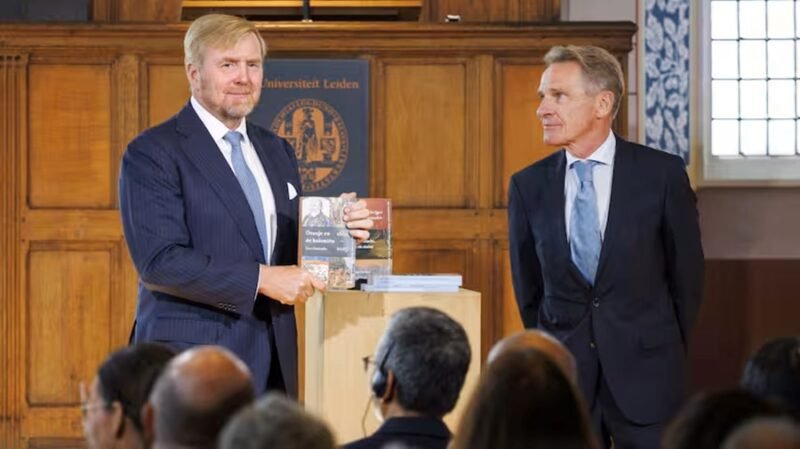
However, what is striking is the marginal financial role of Suriname and the Caribbean in this final report. Almost all of the royal family’s colonial profits were generated in what was then the Dutch East Indies, now Indonesia. The independent research, which was initiated by King Willem-Alexander himself in 2022 and was led by emeritus professor Gert Oostindie, was presented on Friday in Leiden.
“According to the researchers, the Oranges have earned virtually nothing from the transatlantic slave trade and Caribbean plantation slavery”
Sixty scientists mapped the role of the House of Orange-Nassau between 1600 and 2025. The results show an unvarnished picture of a royal family that benefited “with conviction and without reservations” from colonial oppression and white superiority.
Of the total profit of 576 million euros, no less than 566 million euros flowed from the Dutch East Indies to the royal treasury. The Oranges earned this mainly in the nineteenth century through the Dutch Trading Company and the Billiton Company, large companies that were founded at the time by King William I and Prince Hendrik for tin and ore mining.
Remarkably negligible role
Suriname and the rest of the Caribbean play a remarkably negligible role in the royal accounts. According to the researchers, the Oranges have earned virtually nothing from the transatlantic slave trade and Caribbean plantation slavery.
Lead researcher Oostindie emphasizes that this was not due to moral objections, but simply because royal investments in the West India Company (WIC) failed financially. Although the exploitation of enslaved people in Suriname made fortunes for the Dutch state and private elite, the House of Orange historically missed the net in the West.
Although the direct financial return from Suriname was minimal, the stadtholders and kings did benefit from the colonies in another way. Possession of overseas territories gave the Oranges international allure and status. “Moral considerations about slavery or forced labor played little or no role with William I, II, III and Wilhelmina,” the researchers sharply conclude. It was not until the middle of the last century, under Queen Juliana, that discomfort about the colonial system first arose within the palace walls.
King Willem-Alexander responded emotionally to the conclusions and called the results “undisguised and penetrating”. According to the monarch, the research is not a conclusion, but an encouragement to correct the impact of the past, which many people still feel every day, in the future. In doing so, he in fact repeated the ‘comma, not a period’ statement of former Prime Minister Mark Rutte.
Jetten rejects reparations
Despite the conclusions in the report and renewed calls from a UN committee for reparations for the transatlantic slave trade, Dutch politics is keeping a tight rein. Dutch Prime Minister Rob Jetten announced at his weekly press conference that there will be no new reparations as a result of this investigation.
According to Jetten, the current multi-year program that was created after the formal apology in 2023 is sufficient. Two hundred million euros were allocated for that fund at the time. For Suriname, this means that although the revelations offer some moral satisfaction about the evil role of the Oranges in the past, there will be no compensation – as demanded by some parties.