SUBMITTED
Anyone who looks honestly will see that Suriname’s macroeconomic indicators are recovering. We experience a stable exchange rate, rising employment, falling inflation, etc. We do not need the international credit rating agency Standard & Poor’s for that. This institution is influential within the international financial system. Her assessments deserve attention, but Suriname must first look at the national economy and the interests of its population. Standard & Poor’s leans more towards a strategic financial arm of the West.
Many people in Suriname have known for years what is going wrong in our economy. Between 2010 and 2020, the country entered a qualified downward economic spiral. The corona pandemic made the situation even more difficult.
“Yet important indicators for a stable economy have not been sufficiently addressed”
There was some recovery between 2020 and 2025, partly thanks to prudent economic policy. Significant debts were rescheduled through a recovery program. The International Monetary Fund (IMF) provided financial support. The agreements with China, Suriname’s largest foreign creditor, also played a role. The proven oil reserves off our coast were also significant in the international assessment of Suriname’s prospects.
A missed opportunity was that the social program did not achieve its full potential due to other priorities of those in power at the time. The electorate also gave its opinion on this on May 25, 2025. Politically ideologically speaking, there was another shift or pull from right to left.
Yet important indicators for a stable economy have not been sufficiently addressed. It concerns production, exports and strict budget discipline. The state’s estimated revenues and expenditures must remain as close as possible each year. For the time being, there is too much air in the budget, which creates a distorted picture.
Ministries budget resources for policy measures for which financial coverage is lacking. In addition, loans are sometimes included as income to reduce the financing deficit on paper. That does not provide a sustainable picture of government finances.
With more production and exports, combined with budget discipline, Suriname can work towards a more stable exchange rate. This forms the basis for reliable economic forecasts and predictable planning. Without a strong productive sector, our economy remains vulnerable and dependent on external financing.
We must also examine the subsidy policy openly and honestly. Social and healthcare institutions must continue to receive necessary support. The government does not need to cut back on this. In every society, people are permanently dependent on government support, such as young people, seniors and people with disabilities. Their protection is part of a just social policy.
A transition from object subsidy to subject subsidy has been advocated for years. The current method, in which utilities are subsidized by the state to the tune of millions every month, needs to be reviewed. The subsidy on petrol also deserves a different approach. Now the entire population often benefits from general subsidies, regardless of financial capacity. That is not efficient. There are households and companies that can pay market rates.
The policy must distinguish between people who need support and people who can bear their own costs. Those in need must be specifically protected, while others must pay the market price.
Low- and middle-income workers deserve special attention. They can receive an allowance for fuel, water and electricity within set income limits. People with high incomes, highly profitable businesses and the large gold sector should not receive blanket subsidies when they do not need them.
Ultimately, everyone at the pump must pay the market price, with targeted compensation for those who cannot afford it. In this way, government money is distributed more fairly and support reaches those who need it most.
A healthy economy requires clear choices, responsibility and discipline. We should not insist on measures that are financially unsustainable. Suriname needs policies that stimulate production, strengthen public finances and protect vulnerable groups. That is the path to a more stable and fairer future.
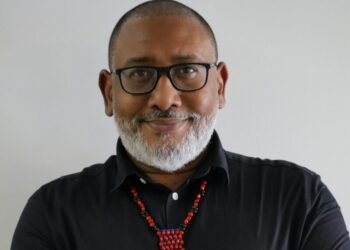
Ettiré Patra
The editorial staff of the True Time allows readers to submit articles for publication. In principle, all submitted articles will be included, unless the content is harmful, hurtful or insulting to third parties. Pieces posted do not necessarily reflect the views of the True Time. The editors reserve the right not to publish articles, or to shorten or edit them without taking them out of context.