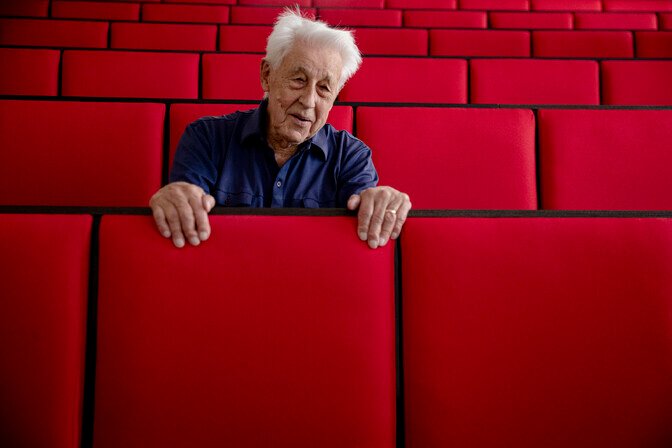
Seven takeaways:
- Oligarchs do not necessarily have to buy people’s votes with money. Brainwashing can be enough because wealthy societies can afford bad decisions without facing immediate consequences.
- The nation-state is not the endpoint of history. The future may belong to a kind of neo-feudalism: global networks of power that even great powers are unable to control.
- There is nothing inherently wrong with artificial intelligence, but it is arriving too quickly and from too far ahead. Changes that have unfolded over a decade should have been spread out over a century.
- The world’s dominant faith is consumerism: people are constantly encouraged to buy more, travel more and replace perfectly functional things with newer ones. This is increasingly colliding with the global scarcity of natural resources.
- Estonia’s purpose is to continue its slightly absurd experiment: demonstrating how 1 million people can sustain their own language, state and culture while punching far above their weight in many fields.
- Humanity should get used to the idea that each generation may not live better than the one before. Constant progress is not a human right and the expectation that everything will always improve actually makes us less happy.
- Quantitative political science is meaningful only when calculations are accompanied by substantive thinking. If researchers do not understand what to put into a model or how to interpret its results, even excellent data can produce garbage.
You fled Estonia at age 11 to escape the war, grew up in Morocco, had a distinguished scientific career in Canada and the United States and eventually returned to Tartu. Your journey spans a considerable portion of the geographic and political spectrum of recent history. Yet we still live in a time when migration, exile and the loss of a national homeland have not disappeared. What does the concept of home mean to you?
My hometown is Tartu. If home is defined as the place where you’ve accumulated the most stuff, then home is the city of Irvine in California. So my hometown is on one side of the Atlantic and my home is on the other. I’ve now lived for 30 years in Tartu’s Riiamäe neighborhood, though I have fewer possessions there. My childhood home is on Sõbra tänav in Karlova and of course I was born on Toomemägi, at the clinic that is now the Skytte Institute.
Several decades ago, you wrote that the psychological root of Estonia’s silent capitulation in 1939 lay in the subconscious peasant obedience of the country’s leaders at the time. More than 35 years have passed since Estonia regained its independence. To what extent do you see this slave mentality among today’s Estonian politicians and in what situations does it manifest itself most clearly?
A great deal has changed over the past 30 years. Of course, people continued to mature even during the Soviet period. It was not just a time of stagnation and bowing one’s head; the depth of Estonian culture expanded immeasurably. So the situation today is completely different from what it was when leaders quite literally came from peasant farmhouses. You cannot really blame them for acting the way they did because given their background, it was almost inevitable.
By now, interaction between different peoples has leveled many national differences. I see how many mixed marriages there are in Estonia today, with people from all over the world. Contact between people sometimes creates friendships and at other times friction. But the world’s population has grown so much that there is less and less room under our feet. When another person stands too close to you, it can provoke irritation.
I once wrote that reckless drivers are also carriers of this slave mentality. For a free person, freedom is built on self-respect and the desire to be a productive and caring member of society. For a slave, by contrast, opposition to society comes naturally. He feels he has no influence over anything and society offers him nothing, so this slave mentality expresses itself in various forms of self-destructive behavior.
You have warned that young democracies often stumble over overengineered electoral rules born of short-term political self-interest and argued in favor of constitutional simplicity. When you look at Estonia’s current electoral system, including its complex compensatory mandate arrangements, how do you assess its comprehensibility and its impact on voters’ trust?
One of the most complicated electoral systems I know is Switzerland’s. If I were to learn it thoroughly, it would take me about an hour to explain how it works. And if you asked me to repeat that explanation tomorrow, I would probably already have things mixed up. Yet it works!
One issue is whether people understand the electoral system and another is whether they trust it. When we buy a car, we generally do not worry about whether we truly understand how the engine works. What matters is that we have experience of how it performs.
Every new electoral system — even the best ones — is met with distrust simply because it is new. People eventually get used to it, even if the system is rather absurd in many respects. So if there were now a desire to simplify the electoral system, I would have no objection to that. At the same time, there is no need to fix something that already works.
In Estonia’s case, has 35 years been long enough for the shortcomings of the system to become apparent? And if so, what changes do you think are needed?
Generally speaking, the more complicated the electoral system, the more unexpected outcomes it can produce. I would prefer either a single nationwide electoral district with certain restrictions, such as a 5 percent threshold, or electoral districts with five seats each. That would provide a good balance, allowing room for two or three parties and thus reducing the number of parties compared with the current situation where their number tends to be unnecessarily high.
For a while, it seemed things were settling around four parliamentary parties. But we see all over the world that in countries with the same kind of system, political parties do not simply disappear. It is easier to create a new party than to shut down an old one. A couple of years ago, my former student Allan Sikk, who teaches political science in London, published a book dealing precisely with this proliferation of political parties.
Speaking of the proliferation of political parties, it has traditionally been assumed that majoritarian electoral systems tend to produce two dominant parties competing with one another. Yet in the United Kingdom, for example, where two parties shaped politics for a long time, we have seen an increasingly fragmented landscape in recent years. How do you explain this change?
It really does run counter to the conventional wisdom of political science. As long as the two-party system held, there was a very good explanation for why it was difficult for a third party to emerge, unless it was a regional party. The two major parties competed for the median voter.
At the same time, it was discovered in the United States nearly 50 years ago that the median voter is a very passive voter. Will such a person even go to the polls if they are wavering between two options anyway? Since many countries are concerned about low turnout, it is more effective to excite and provoke your most committed supporters. That way, people who would otherwise do nothing more than complain about the government at the bar actually show up to vote. Unfortunately, parties can do very little to raise turnout by trying to convince the median voter that they are just a little better than their opponent.
Around the world, the conflict of interests between the rich and the poor has traditionally explained the distinction between the political right and left. That division reflected a real social reality when the poor were on the brink of starvation and politics aligned accordingly. Today, however, starvation is rare in developed countries and economic interests have become secondary. People are more likely to divide along ideological lines.
If you think purely in economic terms, you have to consider that if you vote for a party with only limited support, your vote may be wasted and from an economic perspective that is inefficient. But if you are motivated by ideology, you vote according to your conscience even if your party loses election after election. This was the case in Europe and Japan, for example, where supporters of communist parties continued voting for them for decades despite their limited success.
So economic prosperity and material well-being unfortunately tend to encourage people to pursue politics that is less practical and, in some ways, more antagonistic. It may cause some harm to the economy, but when people feel they are living in abundance, they tend not to worry too much about that.

Let’s continue with the issue of inequality. Around the world, and here in Eastern Europe as well, we see how severe economic inequality and the concentration of capital can begin to make politics oligarchic. Those who control the media or a major political party also wield power. To what extent are free competition and representative democratic institutions still capable of genuinely shaping societies in such a world?
We are facing a new situation. There have always been obscenely rich people and, at the same time, desperately poor ones. The difference now is that while the obscenely rich still exist, wealth can be accumulated globally, allowing fortunes to grow larger than they could even in the days of the Roman Empire. On the other hand, ordinary people are living quite comfortably.
The problem is that oligarchs may be able to buy their votes — mainly through brainwashing rather than money. People sometimes say that things have to get very bad before common sense returns. We are living in a strange world, one unlike anything that has existed before. At the moment, we can afford the luxury of letting common sense drift elsewhere again without facing any immediate punishment.
I don’t know whether this is connected to these changes, but lately I have been spending more time studying the systematics of world history over a span of 5,000 years and looking for lessons we might draw from it. Right now, there are too many people and too little land, air and water per person. I think that probably makes us psychologically more hostile.
At the same time, we have a level of prosperity that we do not quite know what to do with. Today, we need to produce goods so that people have jobs and something to occupy themselves with; at the same time, we need those goods to be consumed. Whatever the official religion or ideology may be, all the way to India and beyond, the dominant faith is really the religion of consumption. Through advertising and social pressure, people are constantly urged to consume as much as possible — to travel here and there, buy this and that, acquire the newest things and throw away the old ones even when they still work.
This consumerist creed collides with a world in which natural resources are becoming scarcer, especially because the global population continues to grow at an extraordinary rate. The paradox is that while humanity is still growing rapidly, the rate of growth is slowing. This means, for example, that there are too many elderly people relative to the working-age population. The burden on working-age people leaves them less able to have more children, which in turn ensures that birth rates decline even further. We are living through a transitional period in which there is an exceptionally large elderly population and all these problems are accumulating at once. To some extent, a similar situation existed 2,000 years ago, though on a much smaller scale.
We’ll return to history in a moment. But first, let’s talk about your approach to political science — logical modeling. Critics often accuse quantitative political science of being little more than envy of physics. They argue that people are not atoms and that looking for Newton’s laws in society is naive. You, however, have a background in physics and take almost the opposite view: Social scientists simply do not know how to use the models and methods of physics properly. In your view, what is the current state of political science? Have we progressed from describing and explaining phenomena to predicting them?
I don’t know how far a modern physicist would get, but as for this idea of envying physics — let’s look at how physicists are trained. They are required, mercilessly, to master mathematics. I have jokingly suggested something that I don’t believe will ever happen, though I actually mean it quite seriously: before someone is allowed to study political science, they should first have to write a bachelor’s thesis in one of the natural sciences. It’s similar to how medicine is studied in the United States only at the doctoral level: first, you have to earn a bachelor’s degree in something else.
Political scientists, however, did not know how to calculate and when computers arrived, they found an escape route. The idea emerged that there was no need to learn calculation at all — you could simply click around on a computer and it would do the work for you. But one thing is performing calculations; another is making sense of them — knowing what to put into the calculation and how to interpret the results afterward.
Then political scientists discovered linear regression. I usually give my students an example. What do we need to stay alive? We need food — fine, let’s call that F. We need air — let’s call that A. We also need water — call that W. Then I write E in front of them and say that life, E, equals food plus water plus air. Does that make sense?
It doesn’t.
Exactly. Some students immediately feel that it doesn’t make sense, but the question is why. What should be changed? After a while, someone raises a hand and says that instead of addition, it should be multiplication… and political scientists still haven’t discovered that. They add and subtract, but they do not multiply or raise things to powers. Apparently, high school mathematics is too difficult for them.
People have told me not to use mathematics that political scientists cannot understand. My answer is: then don’t call it political science.
Of course, there is a very simple way to apply linear regression. Physical formulas usually involve multiplication for precisely this reason: air and water do not add together, they multiply. High school mathematics tells us that when factors are multiplied, their logarithms are added.
So if I were to offer one piece of advice to a political scientist who does not want to relearn mathematics from the beginning and truly understand it, it would be this: at the very least, do not add your inputs together — multiply them. Only then apply the linear regression of logarithms that you are so fond of.
When computers first appeared, their creators and physicists used to say: “Garbage in, garbage out.” I would add that I have seen many cases where excellent data goes in and garbage still comes out.
Throughout my life, I have tried to steer political science toward thoughtful quantification. Thoughtful qualitative political science is valuable, and without it there is nothing on which to build quantitative analysis in the first place. But mindless quantification makes me sick.

Following on from that, your experiment using data derived from the law of gravity showed that without a logical hypothesis, social scientists’ models are unable to identify even the fundamental laws of nature. In 2026, artificial intelligence models analyze data in seconds, searching for correlations in vast datasets. How is this affecting scientific thinking?
The whole point of human thinking was originally to save energy. A machine could do digging, for example, with less human effort. When computers arrived, it initially seemed that paperwork would decrease. In reality, the opposite happened: paper production and consumption increased.
What is alarming now is how energy-intensive artificial intelligence is. Instead of reducing our energy consumption, it is increasing it substantially. As a result, humanity’s global dead end is approaching more quickly, driven by many factors acting at once. There is nothing inherently wrong with artificial intelligence, but it has arrived from too far ahead and too fast. What has happened in the space of 10 years should have unfolded over a century. That would have given people time to absorb the changes and avoid their harmful consequences.
As for science, AI will quickly pick all the low-hanging fruit. In my quantitative political science course, an AI would earn an A+ because it does not suffer from the mental blind spots that humans do. At the same time, AI is backward-looking — it systematically repeats and extends what has already been established.
It can solve mathematical problems far beyond human capability, but it lacks a vision of the future. I don’t know whether that can be built into it. Life found a solution to this problem 3 billion years ago by inventing sexual reproduction. That created competition, which in turn provided direction and that sense of direction lies behind everything human. Perhaps, to make AI truly creative, we would have to make it two-sexed as well.
Have you yourself tried using any generative AI models?
No. Things are changing far too quickly as it is and for the past 30 years I have devoted myself to slowing down this foolish acceleration.
Let’s talk about demographics. Decades ago, you shocked the Estonian public with your “toilet bowl” metaphor for demographic trends. You warned that the birth slump of the 1990s would, as a matter of mathematical inevitability, lead to another free fall in the mid-2020s. Now, in 2026, we have reached the bottom of that trough. How should the state respond to something that appears to be an inexorable law?
My wife Mare sighed when she first heard that expression, though she admitted it was apt. There is very little the state can do apart from rearranging the chairs. The main thing people can do for their own benefit and for society is to begin questioning their values and goals.
At the same time, overpopulation does not mean we should stop having children in reasonable numbers. The desire to have children is biologically ingrained in us and gives us a sense of direction. Seven years ago, I wrote a book titled “Empowering Parenting: How to Take Joy in Children?” In it, I contrasted empowering parenting with what I saw a great deal of in Estonia 30 years ago — restrictive parenting: “Don’t do that, don’t do that, you’ll fall and get hurt.”
At the other extreme is the grotesque model of permissive parenting where children do whatever they want and which is now spreading in Estonia as a reaction to the attitudes of the 1990s. Empowering parenting is also broader than simply teaching responsibility. A free person takes joy in their abilities and finds satisfaction in their ability to take responsibility. Consumerism, which frames all of this, offers the appearance of satisfaction, but it is like alcohol: it gives you a pleasant feeling of bliss for one evening, yet in the long run it solves nothing.
Are those who believe they lack the economic security needed to have children right? Looking back, Mare and I were like little birds perched on a branch. When our first child was born, we did not even know how to pay to have the baby released from the hospital. In the United States, newborns were not discharged until the birth costs had been paid. But we simply rejoiced in our children. Some people will certainly say that those times are gone and the situation is different now. Yet many of the things people today consider essential prerequisites for having children would have been unimaginable to us 60 or 70 years ago.
What can the state and society more broadly do? Don’t make parents’ lives so difficult through social pressure. Nowadays, it is almost as if, once you are foolish enough to have children, you are sentencing yourself not quite to prison, but to becoming a prison guard — suddenly you are obligated to drive your children here and there to practices and activities because everyone else is doing it. In the United States, there have been cases where leaving a baby stroller outside a store is treated as neglect and parents are sent to prison, even though that means their other children are left without parental care. We are making life too difficult for parents.
More generally, states and civilizations tend to decline because more and more well-intentioned regulations accumulate — whether in raising children or renovating a bathroom. Things that required no permit 30 years ago now require one.
Let’s take this discussion to the global level for a moment. Your global models are based on the idea that technology has steadily and consistently increased the planet’s carrying capacity. Now there is finally growing awareness of the climate crisis and environmental degradation and some fear that these forces could reverse that long-standing trend. What do your models show in a scenario where the planet’s carrying capacity begins to decline?
When I developed a model of the interaction between population and technology 15 years ago, I felt relieved because the seemingly alarming population explosion appeared to level off rather elegantly at around 10 to 11 billion people. But there was one inconsistency in the model: 2,000 years ago, the world’s population declined. For years I tried to ignore that fact because it spoiled my beautiful mathematical models, but eventually I could no longer disregard it.
Thousands of years ago, when the first stone tools were invented, technology advanced gradually and helped the population grow. Progress was very slow, but it gathered momentum over time: technology and population began reinforcing one another. Around 500 BC, growth reached its peak, when the world’s population doubled in the span of 330 years, and then it came to a halt.

All of this took place in four cultural regions: the Mediterranean, Mesopotamia, India and China. In each of these regions, the population declined by roughly 33 to 35 percent over a couple of centuries, while the global population as a whole fell by about 10 percent. Something stalled. Technology continued to advance, but it no longer produced results that allowed larger numbers of people to survive. For example, Greece had more inhabitants 2,500 years ago than it did in 1800. The flourishing of ancient Greece saddled it with a setback that lasted nearly 2,000 years.
Today we have a single global civilization. If the earlier pattern repeats itself, there will be a steep decline a hundred years from now. But history never repeats itself exactly, which leaves the question open: Will this decline be milder or even harsher than the one 2,000 years ago? I do not know the answer to that.
Is there any way for humanity to adapt to this and prepare itself?
We can prepare by lowering our expectations. We have grown accustomed to the idea that each generation should live better than the one before, as if that were a human right. It is not a human right. Nature does not work that way. Life gets better at times and worse at others — it oscillates. The expectation that everything must constantly improve actually makes us all less happy.
My own sense of happiness does not depend on how much wealth I have or how many relationships I have, but on where I set my baseline. I am an optimistic pessimist: I set my expectations low enough that I am happy if next year is not much worse than this one. Some religions place great emphasis on precisely this attitude of contentment. Perhaps it is no coincidence that they emerged during the last period when the population grew rapidly and then collapsed.
Let’s talk a little about empires. In one of your texts on the history of empires, you point out that the last time population growth stagnated for an extended period, the world’s major empires collapsed at roughly the same time. You mentioned a moment ago that we may be approaching another plateau. Based on these historical patterns, what conclusions can we draw about today’s empires and their future?
I am very skeptical about cyclical theories because most of them are based on, at best, one and a half cycles. My own data suggest that population growth has so far gone through about one and three-quarters of a cycle. Against the backdrop of such deep historical currents, 100 years is just a speck — rather like a climatologist trying to predict tomorrow’s weather.
In the 19th and 20th centuries, the great powers grew to extraordinary size, but then they began to fragment. The first serious sign of this was Japan’s victory over Tsarist Russia. If you look at these developments from the perspective of 5,000 years of history, the question arises whether the current downward swing has gone far enough that a new phase of consolidation could begin.
It was very difficult for me to accept that several trends which had held true for 5,000 years ceased to apply around 1850. For example, the relationship between the population and territorial size of great powers no longer holds. According to that old pattern, India should be twice the size of Russia.
Reluctantly, I had to conclude at the end of my book that although we have discovered regularities that persisted for millennia, at precisely the moment when we might finally enjoy using them to make predictions, we discover that they no longer apply.
At the same time, you have put forward the idea of a world state — that if current trends continue, humanity could consolidate into a single global state by the year 4000. How does that idea strike you today?
Even if that trend were to continue — and I am by no means certain that it will — a single state would achieve a hegemonic position much earlier. At the same time, it would be foolish to try to bring the entire world under one’s control. Areas with lower productivity would probably remain outside such a system. Why take responsibility for the world’s poorhouse when you can keep it at a safe distance and provide humanitarian aid instead?
In some ways, global governance has already emerged. Compared with the League of Nations a century ago, the United Nations is an enormous advance. It has the capacity to mitigate conflicts by providing a forum where people can talk. During World War I, that was physically impossible. In addition, we have international aviation and maritime organizations. They may appear nonpolitical, but it is very difficult to opt out of them.
Then again, perhaps the future holds a kind of neo-feudalism. For almost my entire life, I found the feudal era unappealing. Yet the colorful complexity of the Middle Ages — where one state overlapped another and a king could be the vassal of his vassal’s vassal — created a network that is very different from today’s world, but in some respects remarkably similar to it. A global network has emerged, one against which even great powers are powerless.
As we know, the nation-state is a relatively recent invention in world history and it is possible that its era is beginning to draw to a close. The idea that a single government exercises exclusive authority over a given territory dates back to the tribal age, before states even existed. The only period that broke this pattern was the feudal era when spheres of power overlapped geographically — and that may turn out to be the shape of the future as well.

Together with Oliver Nahkur, you demonstrated mathematically that violence in the world has been declining exponentially, yet different countries seem to live in entirely different eras: according to your model, Russia lags centuries behind Western countries. How do you look back on this model of the long-term decline of violence in light of the war raging in Europe?
That is difficult to quantify. My assumption is that when, during the hunter-gatherer era, stone tools allowed us to become meat-eaters, it may have made us more savage than the other great apes. Agriculture, by contrast, made us more civilized.
For example, there is data on homicide rates in Western Europe stretching from the Middle Ages to the present day. They show astonishingly rapid changes. In medieval England, there were about 25 murders per 100,000 people each year. By 1700, the figure had fallen to just five and by the beginning of the 20th century to 1.5. Human behavior has generally become less violent. In biological terms, this transformation over the course of 1,000 years is remarkably fast.
As for our neighbor, they are behind the rest of the world historically, while at the same time the world as a whole seems to be becoming more hostile again. Take the case of Bucha in Ukraine. If we had told a European 1,000 years ago what happened there, he would have yawned and said that in wartime it is only natural that when an army captures a city, looting, rape and killing follow.
Speaking of Estonia, you have emphasized the importance of being among the very smallest. We are an example of how a small language community can sustain a functioning state and culture. What could be the mission of such a country in 2026 and what can Estonia offer the wider world through its experience as a small state?
We should proclaim to the world that we are something of a curiosity: a country of just 1 million people that has things it supposedly should not have, from encyclopedias to world-class musicians. We are interesting to the world because of our slight absurdity. We could also be more interesting to ourselves. If we have ended up in such a unique role, why not continue playing it?
As soon as people have enough to eat and a roof over their heads, they begin asking what the meaning of life is. Often they do not find an answer and simply choose overconsumption instead. But for us as a nation, that meaning has been handed to us on a silver platter. The meaning of our existence is to continue this fascinating experiment.
Seen from afar, it would seem perfectly natural to assume that what we have achieved is impossible — creating our own culture, translating world literature, punching a hundred times above our weight in top-level science and so on. Take, at random, a million Chinese or Indians living in some village — what do they have to show for themselves? This experiment of ours is more than interesting enough to preserve as the purpose of our national existence.
And finally, if a new political science textbook is written 100 years from now, on what page will we find the name Taagepera and which of your models will still be there?
I don’t know, because my model of parliamentary size — the cube root of the population — assumes that parliamentary systems still exist. Whether that will be the case in this increasingly feudalized world, I cannot say. Nor am I certain that party-based elections will still exist. The same question applies to information itself: will it still be stored in books or in some entirely different form?
But if, 100 years from now, people still remember five political scientists who are alive today or have died only recently, I will be one of them.
—