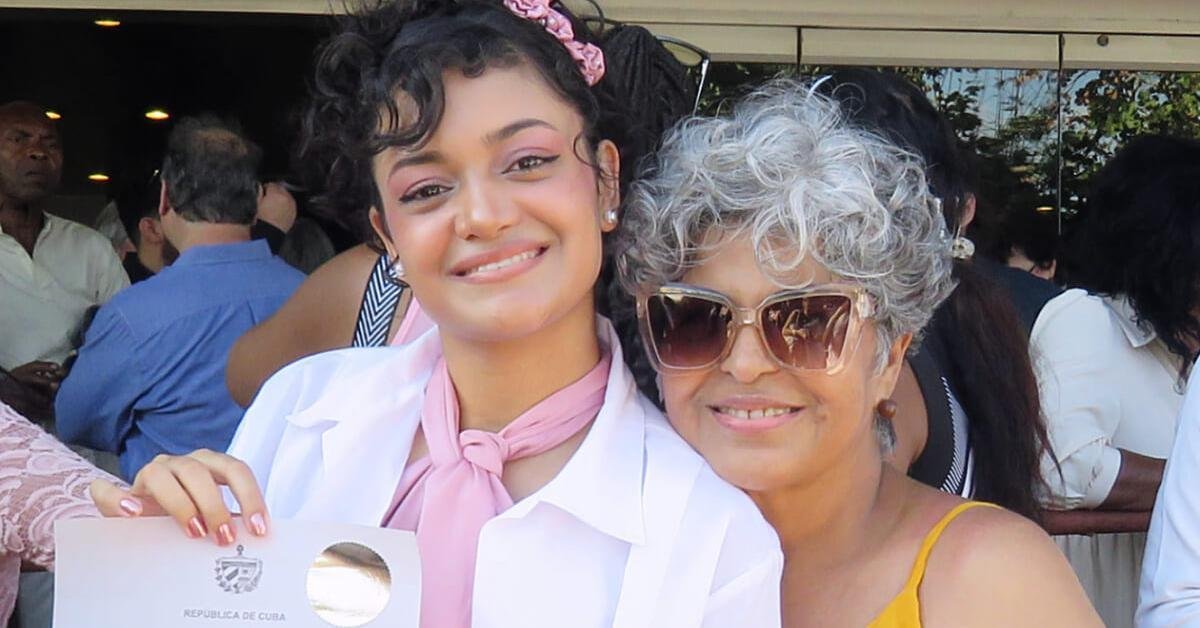
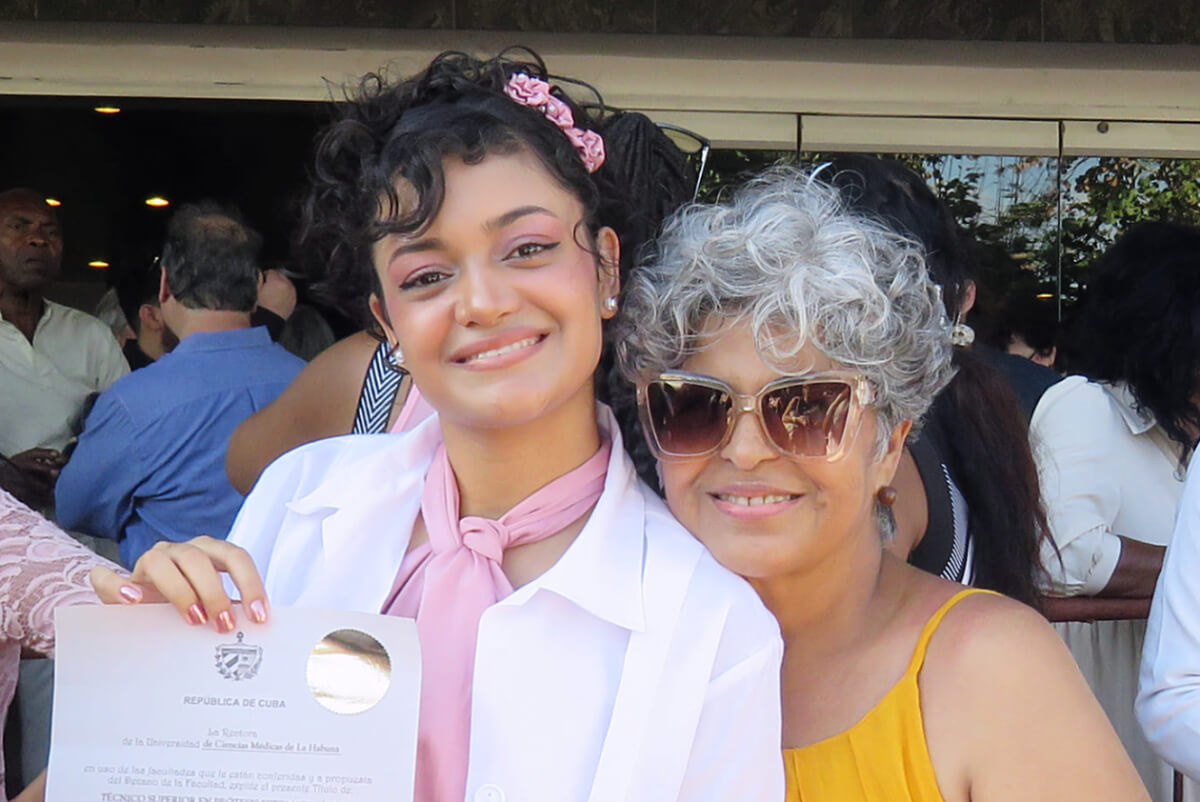
Havana/The Cuban content creator Anna Sofía Benítez Silvente, known on social networks as Anna Bensi, was once again a victim of harassment by State Security. In several publications, she reported this Monday that she and her mother, Caridad Silvente, were hacked their WhatsApp accounts and that their Etecsa telephone lines were deactivated.
Through Facebook, the 21-year-old indicated that her application had been closed, along with a screenshot showing that WhatsApp was telling her that her number was no longer registered with them. Minutes later, he reported that the same thing happened to his phone line. Finally, in another postnoted that they were “trying to access” his mother’s account.
“The repression is constant. The dictatorship has deactivated our lines and we are completely cut off,” he indicated in a publication in which he explained that, “by having the lines deactivated, we cannot receive calls or messages, much less connect.” In fact, by disabling the phone line, the possibility of recovering access to the messaging application is also automatically blocked, since the platform requires receiving a verification code via text-only message (SMS) or call, which is no longer possible.
Therefore, the influencer He ironized and assured that “Etecsa is the employee of the month when it comes to supporting the regime’s repression of the people.”
“Etecsa is the employee of the month when it comes to supporting the regime’s repression of the people”
In another message he described how the authorities are “making their lives a yogurt” and added that everything is “very diabolical, as the Cuban dictatorship always does.”
Harassment against youtuber and her family has been growing since the young woman began to gain followers on social networks. His videos are played thousands of times, and he has almost 200,000 followers on Facebook and 12,000 on YouTube. The most recent volley was recorded at the beginning of this month, after a visit to her and her mother in the Alamar neighborhood by the head of the United States mission in Cuba, Mike Hammer.
The meeting, which occurred in the middle of the criminal proceedings that were open against the young woman and her mother (already filed definitively by the Provincial Prosecutor’s Office of Havana), caused his sister Elmis Rivero Silvente, a US citizen who was visiting Cuba, to be summoned to the Immigration Unit of the Playa municipality, just hours before her return flight, under the pretext of an “interview for immigration control of stay.” During questioning, officers attempted to find out if he had coordinated Hammer’s visit to the family home in Alamar.
Those who also suffered the blocking of their telephone services were the opponents Ángel Moya and Berta Soler. The activist, partner of the leader of the Ladies in White, reported on social networks that he was arrested, around 10 a.m. this Monday, along with Soler, in Havana. According to testimony, they were detained on Luyanó Avenue, between Concha and Porvenir, by State Security forces, the National Revolutionary Police and paramilitaries.
Moya says that they were transported separately in patrol cars to the Aguilera police unit.
In his publication, Moya says that they were transported separately in patrols to the Aguilera police unit.
Almost 10 hours later, after an interrogation in which they received threats of being taken to prison for “having a precautionary measure of house arrest” and “being in debt to fines,” the authorities transferred them again separately to other police units: Soler was taken to El Cotorro and Moya to Guanabacoa. Both remained detained in cells with people accused of common crimes until approximately 7:45 p.m., when they were independently released near the national headquarters of the Ladies in White, in Lawton, Havana.
When we left, Moya says, “Berta and I did not have internet and cell phone services. Etecsa, by order of State Security, blocked our services.”
Regarding the use of the Etecsa network to carry out hacks on social networks and messaging services, 14ymedio has also confirmed a similar situation on Telegram, after testing based on a complaint received in the Editorial Office.
“The Government/Etecsa is capturing the security codes in the ‘air’ to enter the accounts”
One of the methods is the interception of text messages (SMS) at the national network level. With this, according to the accusation, “the Government/Etecsa is capturing the security codes in the ‘air’ to enter the accounts.”
“The serious thing,” they say, “is that the code is validated by the attacker even when the owner’s phone is turned off or without coverage, which shows that access is directly from the telephone exchange.” “The situation is real and recurring,” they warn.
For this reason, they urge you to activate the additional password or two-step verification in Telegram, “since it is the only thing that is preventing mass access to users’ private information.”