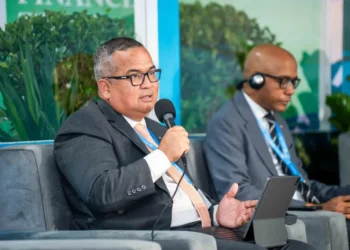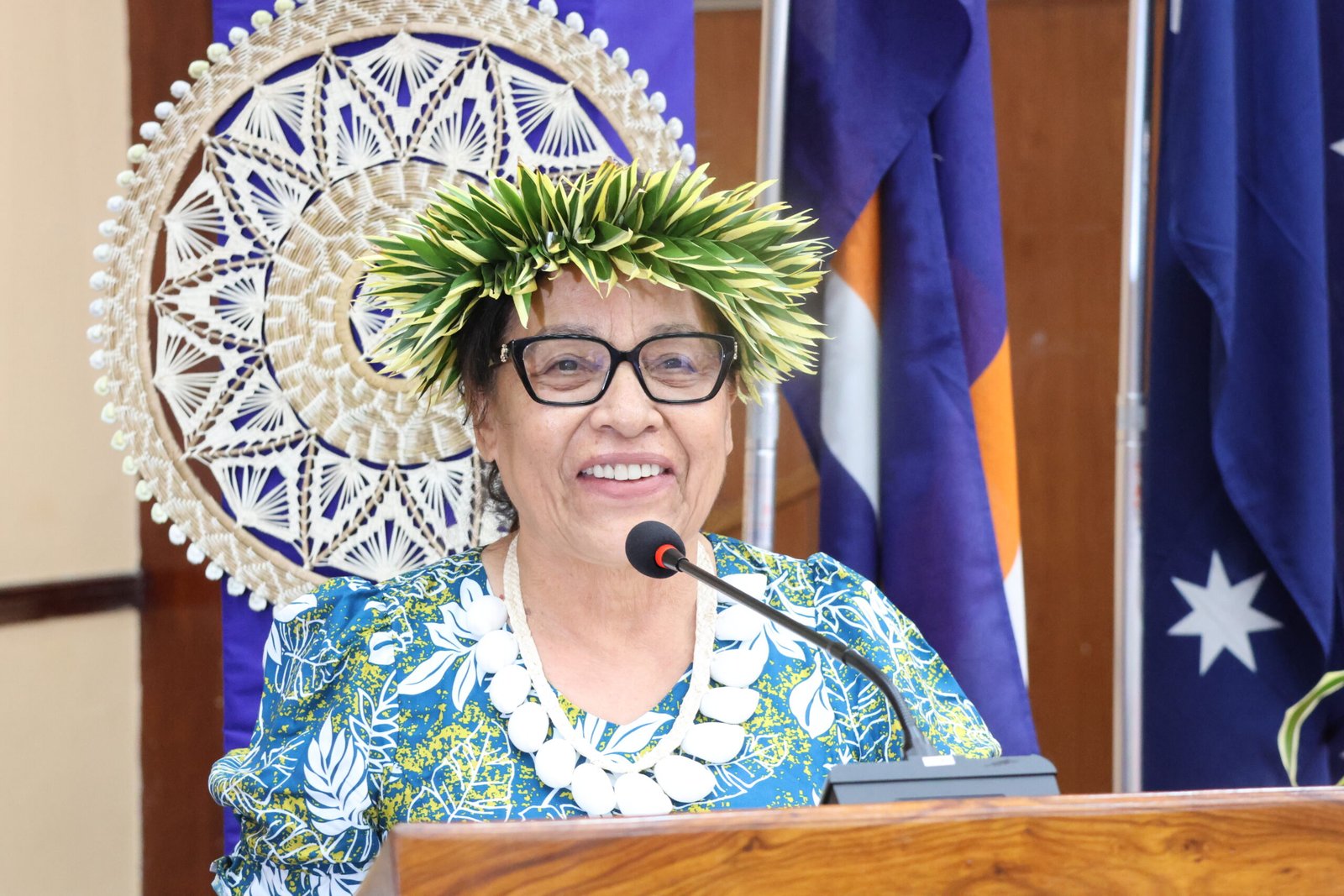
Welcome Address by H.E. Dr Hilda C. Heine, President of the Republic of the Marshall Islands at the opening of the Forum Economic Ministers’ Meeting.
Theme: Economic and Financial Inclusion in the Pacific
June 23, 2026, Majuro, Marshall Islands
Kamolol Irooj kin rainin i’m kin wonake eo an ejjab jemlok.
Kile Chairman Lanny Kabua and members of the Council of Irooj, aolep Irooj ro ibelakin im illikin Aelon Kein, Cabinet Ministers ro, Speaker Brenson Wase and Vice Speaker Isaac Zachras and members of the Nitijela.
I extend my formal recognition to fellow leaders present, Excellencies, Secretary General Waqa, honorable ministers, distinguished guests of the Blue Pacific family, ladies and gentlemen.
Yokwe, and good morning to you all.
It is my sincere pleasure and distinct honor to stand before you today to extend the warmest karuwainene – our heartfelt welcome – to each and every one of you. On behalf of the People and Government of the Marshall Islands, we are privileged to host the esteemed Forum Economic Ministers Meeting here in Majuro.
Many of you have travelled across vast stretches of ocean to be here. That distance – the ocean that connects rather than divides us – is exactly what I wish to reflect on as you begin your work this week.
I welcome this year’s theme – Economic and Financial Inclusion in the Pacific – whole-heartedly because it speaks directly to the lived realities of our people and reflects both undeniable challenges and some of the most hopeful, forward-looking possibilities for our Blue Pacific. Across our island nations, the wellbeing of our people depends on economies that are resilient, equitable, and capable of withstanding the shocks of an increasingly complex world. It is within this broader context that we consider the path ahead.
This year, financial inclusion is more within reach than it has ever been, not because the challenge has grown smaller, but because our collective capacity to meet it has grown stronger.
Let me begin with the problem as we live it here in the Marshall Islands.
Like many Pacific economies, ours is fragmented and does not operate at scale. Our people, our businesses, and our public services are scattered across vast distances and, too often, cut off from the broader financial systems that much of the world takes for granted. A family on an outer atoll, a small enterprise on a distant island — they are not asking for charity. They are asking to be connected: to send and receive money reliably, like anyone else.
For years, that connection was being taken from us — not by our own doing, but by forces far beyond our shores. After 2001, the world rightly moved to protect the global financial system. Laws such as the United States’ Bank Secrecy Act and the Patriot Act tightened the rules on how money moves across borders. We do not dispute the purpose; the integrity of the system protects all of us. But for small Pacific states, the consequences were severe.
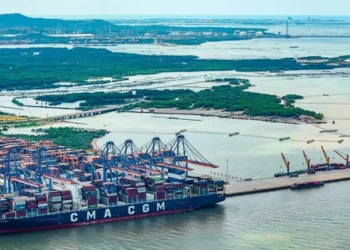
The cost and risk of serving our markets began to outweigh the business we represented, and one by one, international banks withdrew. The correspondent banking relationships – the very links that connect a small economy to the global one — were cut. Across our region, they fell by roughly sixty percent in a decade, twice the global rate. The smallest and most remote among us suffered the most, because our financial rails were the first to be abandoned, and in many cases were never fully built.
Across our islands, we have faced a hard truth: the same compliance burden designed to keep the system safe had become a barrier that kept our people out of it. Distance was already pushing financial services beyond reach. De-risking pushed them further still.
For a long time, that was simply where the story ended. What has changed — and why this theme is so timely now — is that it no longer has to end there.
Approaches that were impossible ten years ago are possible today. Connectivity has transformed. New low-earth-orbit satellite networks, such as Starlink, now reach households on the most remote atolls, closing the “last meter” between a citizen and a functional financial
service. The cost of moving money has collapsed; modern digital rails can settle a payment in seconds, for a fraction of a cent, on a basic mobile phone.
And, just as importantly, the world has learned how to do this safely. Over the past decade, shared standards and best practices have emerged for providing oversight and ensuring compliance while using digital assets. This time, the requirements do not shut us out. With the right regulatory framework, even a small nation can meet them.
We can now turn toward bringing the economies of the Pacific closer: closer to one another, and closer to the wider world. That is the heart of why I am hopeful. Financial inclusion is no longer a question of whether it is possible. It is a question of which paths we choose, and how quickly and carefully we walk them.
In the Marshall Islands, we have not waited. We have explored digital approaches — built to international standards, with proper oversight — one more advanced and I’m sure my Minister of Finance is most anxious to showcase it later this week. I will not get ahead of that conversation now. I offer our digital exploration not as the answer, but as one piece of
the evidence for a larger claim: that this problem is solvable, and that even a small nation, working deliberately and responsibly, can begin to solve it.
But no single nation can solve this alone, nor should any of us try. Ours is one path. Many of you are advancing other paths — in mobile money, in digital identity, in national payment systems and regional settlement. That is precisely why you are gathered here: to seek creative solutions for our regional economic and financial isolation.
The agenda before you reflects the scale of the challenges we face and the opportunities we must seize. I am encouraged to see that it captures the core economic concerns of our region and offers a platform for us to address the difficult but urgent matters that continue to test the resilience of our Pacific economies: the ongoing pressures on essential services, disruptions across key sectors, and the growing vulnerabilities faced by many of our communities.
My hope for this week is simple: that you bring forward the ideas already taking shape across our islands; that you speak candidly about what has worked and what has not; and that you leave Majuro more aligned – governments, regulators, banks, partners and private sectors together – to carry this work forward with clarity and purpose.
Because what I have described is not a Marshall Islands problem. It is a Pacific problem. It is one that the Forum Economic Ministers must rightfully challenge. The tyranny of distance, the retreat of the banks, the exclusion of our people — these challenges are shared by every
nation represented here. And so the opportunity is shared as well. A Pacific-wide problem is a Pacific-wide opportunity. Just as our ancestors courageously charted unmapped oceans, we too can face the uncharted challenges ahead, strengthened by one another.
We can not afford the luxury of delay. So I challenge each of us to shift from intentions to immediate results required to protect and advance our people today.
Let us deliver.
Kommol tata, and welcome, once again, to the Republic of the Marshall Islands.