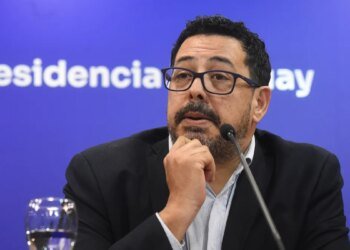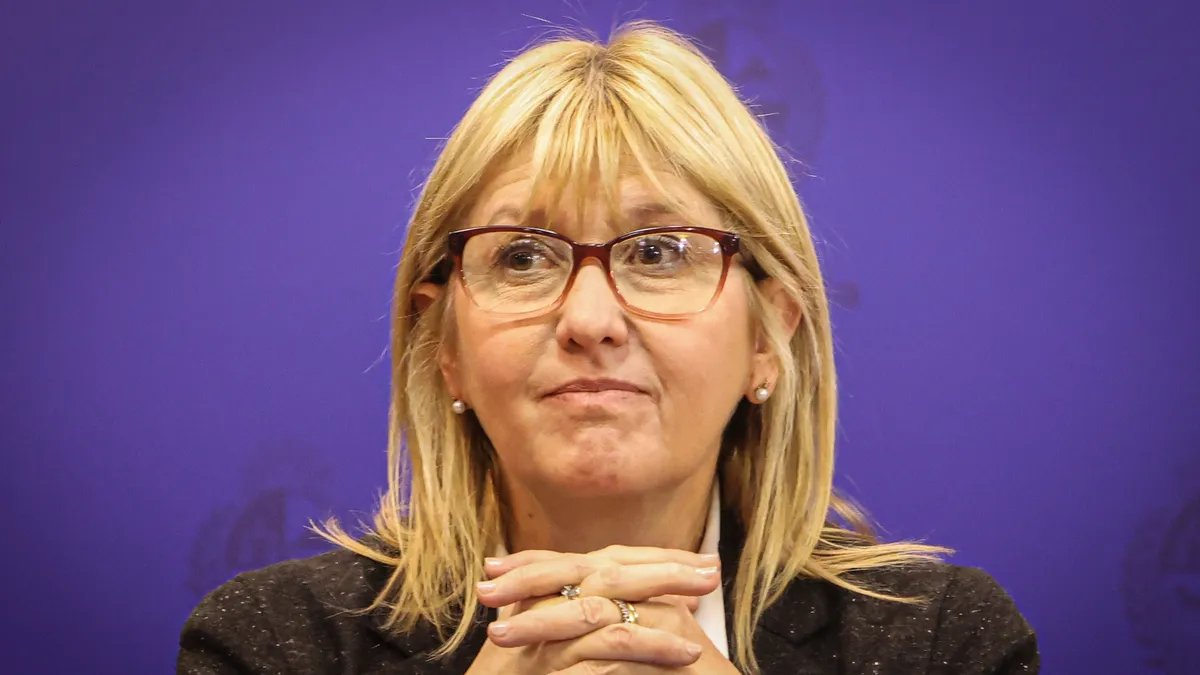
The Minister of Public Health, Cristina Lustembergwent to Parliament again to explain the reasons why it was reduced from five to three years the sanction for the anesthetist Inés Miralles for one malpractice occurred in the SMI.
The case dates back to 2023. The patient was pediatrician Soledad Barrera, who suffered cardiac arrest while undergoing gallbladder surgery. The woman had no previous complications and after the arrest she suffered a brain injury that left her in an almost vegetative state for ten months until she died.
At that time, The Observer reported that one of the The hypothesis was that the anesthetist Miralles had gone to take fentanyl in the bathroom.
With Martin Lema at the head, the opposition senators they questioned the decision of the minister given that ignored the actions of the Honorary Public Health Commission, causing the resignation of 11 of the 13 doctors who were part of it. This is because, in addition to reduce the sentence, it was without consultation and without notifying them.
According to the shorthand version of the session, the minister defended her actions by ensuring that “there was no type of departure from the rules” or “intention to favor” Miralles. “I do not know Dr. Inés Miralles, I have no connection with her”he expressed.
As he had noted on other occasions, Lustemberg said that the The reduction was based on “legal” grounds and not on the “substance of the matter.”
“The aspects for which it was understood that the quantum sanctions referred mainly and fundamentally to the principles of discretion, proportionality, reasonableness and individualization of the sanction”, he stressed.
Finally, the minister assured that The issue “is not exhausted” in the disqualification period, which is “subject to reconsideration” but is “much more complex and profound.”
Omissions that favor the anesthetist
Before Lustemberg rehearse his answers, Lema had suggested that in this case “all the movements” of the MSP had favored the anesthetist.
The legislator assured that the statement arose from “objective facts” since in addition to the reduction of the sentence, the MSP did not respond to an appeal that the anesthetist presented before the Administrative Litigation Court (TCA).
“Losing in the TCA, who does it favor? The anesthetist. The reduction of the disqualification from 5 to 3 years, who does it favor? The anesthetist. So, all the movements by action or omission that the Ministry of Public Health is carrying out favor the anesthetist, so for us it is an issue that puts the health system in general at risk,” he said.
Lema considered that the case generated a “before and after” and a “central milestone” in the “loss of authority for trust, guarantee and proper functioning of the National Integrated Health System (SNIS).”
“After that There are not many authorities or many credentials so that the guidelines of the Ministry of Public Health are reliable and respected by those who must respect them.“, hill.
After listening to the minister, Lema pointed out that Lustemberg and the MSP team had not responded to all the queries. “It is very difficult to ask questions when there is a loss of trust and when no intention to respond”, he questioned and pointed out that he had “expectations that the error would be “recognised.”
“It was not a case to lower a disqualification from five to three years”hill.
Structural failures
In his presentation before legislators, Lustemberg also took the opportunity to refer to structural flaws they were trying to correct and pointed out other mistakes made during the process.
In this sense, he said that there were video cameras in the block area but “the recording was deleted”something they didn’t know why it had happened.
At the same time, he considered that it was not “minor” for the commission to consider only Miralles’ actions. “without analyzing other responsibilities” that “result evident only from the comparison of administrative records”mainly when it comes to carry out the “pertinent checks by the SMI medical institution”.
He also wondered how it could be that commission did not have practically no legal regulation powers to order a “preventive disqualification”that is, to solve that un questioned doctor does not perform duties during the procedure.
Finally he said that “it couldn’t be” that the providers will not “immediately” begin an “internal investigation when a occurs event of these characteristics and It is only in response to the requirements of this Ministry that the data begin to be collected. evidentiary elements and to inform about what happened.”