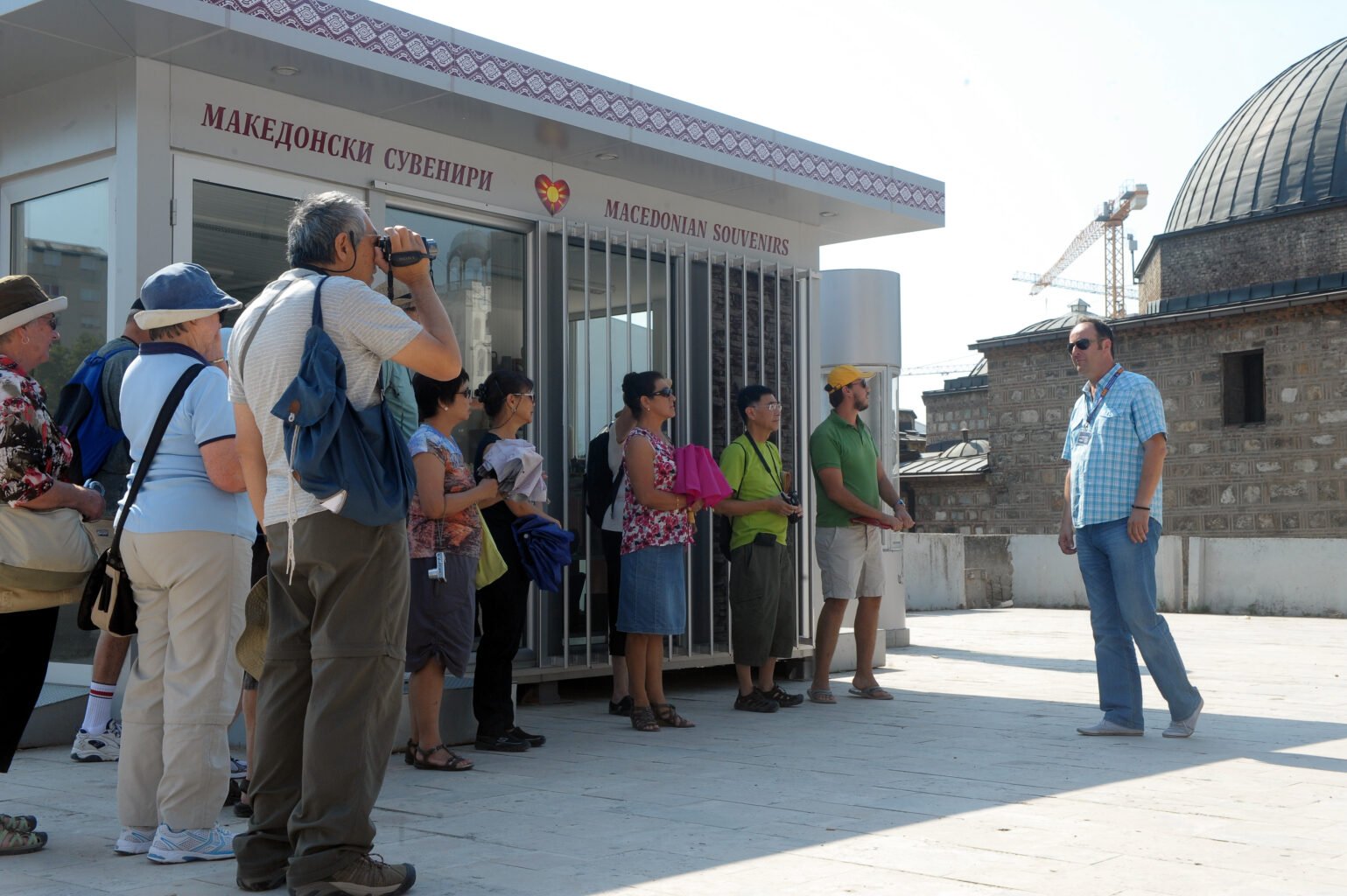
Mystical Macedonia – “museum under the open sky”
- In the heart of the Balkans, at the crossroads between civilizations, lies Macedonia, a country that still remains an underexplored territory for the global traveler. This essay explores the thesis that the tourism potential of Macedonia is not just an additional income in the budget but a fundamental economic lever that, if managed through the prism of sustainability and cultural evolution, can save, stabilize and transform the Macedonian economy
In the third decade of the 21st century, the world is experiencing a paradoxical transformation. While technological progress makes us more connected than ever, humanity, exhausted by digital hyperstimulation and urban alienation, increasingly longs for the primal. In this context, tourism ceases to be only a service industry and turns into an experience industry. The traveler no longer requires passive observation; he seeks transformation. He seeks out places that breathe history, landscapes that have not been altered by industrialization, and cultures that have retained their authenticity. In the heart of the Balkans, at the crossroads between civilizations, lies Macedonia, a country that still remains an underexplored territory for the global traveler. This essay explores the thesis that the tourism potential of Macedonia is not just an additional income in the budget but a fundamental economic lever that, if managed through the prism of sustainability and cultural evolution, can save, stabilize and transform the Macedonian economy.
To understand Macedonia’s opportunity, we must understand the profile of the 21st century tourist. The traditional model of “sun and sea” is losing its primacy to that of “exploring and experiencing”. The modern traveler is informed, environmentally conscious and seeks specific, often authentic, experiences. He avoids the massiveness that leads to genericity. Macedonia, with its relatively small but geographically and culturally compact territory, offers something that is rare in Europe: an authenticity that is not “directed” for the needs of travel agencies. Here, nature and cultural heritage are intertwined in a way that creates the feeling of an “open-air museum”. From the ancient archaeological sites that bear witness to the power of ancient Macedonia, through the Byzantine sacred architecture, all the way to the untouched mountain ranges, the state offers an ecosystem that perfectly meets the demand for “slow tourism” and spiritual travel.
Economic theory about small countries often suggests a focus on export-oriented industries. However, for a country like Macedonia, which has a huge potential in cultural and natural heritage, tourism is an export of “invisible services”. When a tourist buys a product from a Macedonian craftsman or spends the night in a traditional village, the money goes directly into the local economy without intermediaries. Tourism based on nature requires its preservation. This means that the economic justification for environmental protection becomes greater than the need for its exploitation. Cultural and ecotourism are often less susceptible to global economic crises, which affect mass tourism, because they attract a specific segment of consumers who are willing to invest in quality experiences, even in times of economic uncertainty. Despite the obvious benefits, Macedonian tourism suffers from several structural weaknesses that prevent its breakthrough on the global map. Current supply is often fragmented. The accommodation facilities are not related to the cultural offer, and the guides often work without a single strategy for representing the Macedonian identity. There is a gap between the potential on the ground and institutional support. The protection of cultural heritage often remains only on paper, while the buildings fall into disrepair due to a lack of sustainable management. Too often we rely on influencers whose effect is short-lived instead of expert research and marketing aimed at specific segments (for example, archeology enthusiasts, mountaineers, foodies).
How can Macedonia turn the “hidden paradise” into an economic force? Abandoned villages are not a burden, but are our greatest unused tourism resource. Through models of “cultural villages”, the state can stimulate the conversion of neglected buildings into centers for ecotourism. This not only develops tourism, but also stops the migration of young people to urban centers. The tourist does not like concrete hotels; he likes to sleep in a century-old house, eat food cooked by a local woman and listen to stories from the elderly residents. It is necessary to involve experts from different fields: historians, archaeologists, ecologists, economists. The tourist product must be scientifically based – each locality must have its own story (storytelling), which is authentic and verifiable. Tourism must be part of the national strategy for the preservation of culture, not its commercial destroyer. In the era of digitization, Macedonia must offer modern logistics. Digital platforms for self-guided tours, interactive augmented reality (AR) applications of archaeological sites and accurate databases are what the “conscious tourist” is looking for. This infrastructure allows the tourist to explore the country in a way that is adapted to his rhythm, without the need for expensive and rigid agency arrangements.
We cannot talk about the Macedonian tourist potential without mentioning the cuisine. Macedonian food is a “liquid” and “solid” product that has the potential to be a global brand. The flavors of the climate, indigenous grape varieties and traditional recipes are the basis of gastronomic tourism. If every restaurant in the country were an ambassador of local cuisine, with a clear quality standard, the effect on agriculture would be huge. Farmers would produce for tourists, and tourists would pay a premium price for authenticity.
Macedonia is at a crossroads. On the one hand, there is the temptation of mass tourism, which can quickly bring money, but also destroy the resources we have even faster. On the other hand is the path of sustainable, smart and conscious tourism – a path that requires patience, knowledge and vision. The tourist potential is not only in the rocks, mountains and churches. It is in our relationship to those values. The “conscious tourist” comes because he’s looking for something he doesn’t have anywhere else.
He is looking for spirituality, authenticity and stories. If Macedonia succeeds in preserving its cultural and natural wealth through sustainable management, it will not only raise the standard of living but also strengthen its national pride. It is time for Macedonia to stop being a “hidden” paradise and become a consciously chosen destination. This is not the task of state institutions only, but of every individual – to be a good host, to preserve nature and to value one’s own tradition. Because, at the end of the day, the economy is only a result of how well we know how to present what we are, what we have and what we create. Macedonia is ready – the question is whether we are ready to take on the burden of that responsibility and turn our homeland into an example for the whole world. Tourism can save the Macedonian economy, but only if we understand its nature: it is not a tool for using the space, but a medium for its knowledge, respect and permanent preservation. This is our biggest economic project, our biggest chance and, finally, our biggest duty to future generations.
Nikola Ristevski, M.Sc
(to be continued)