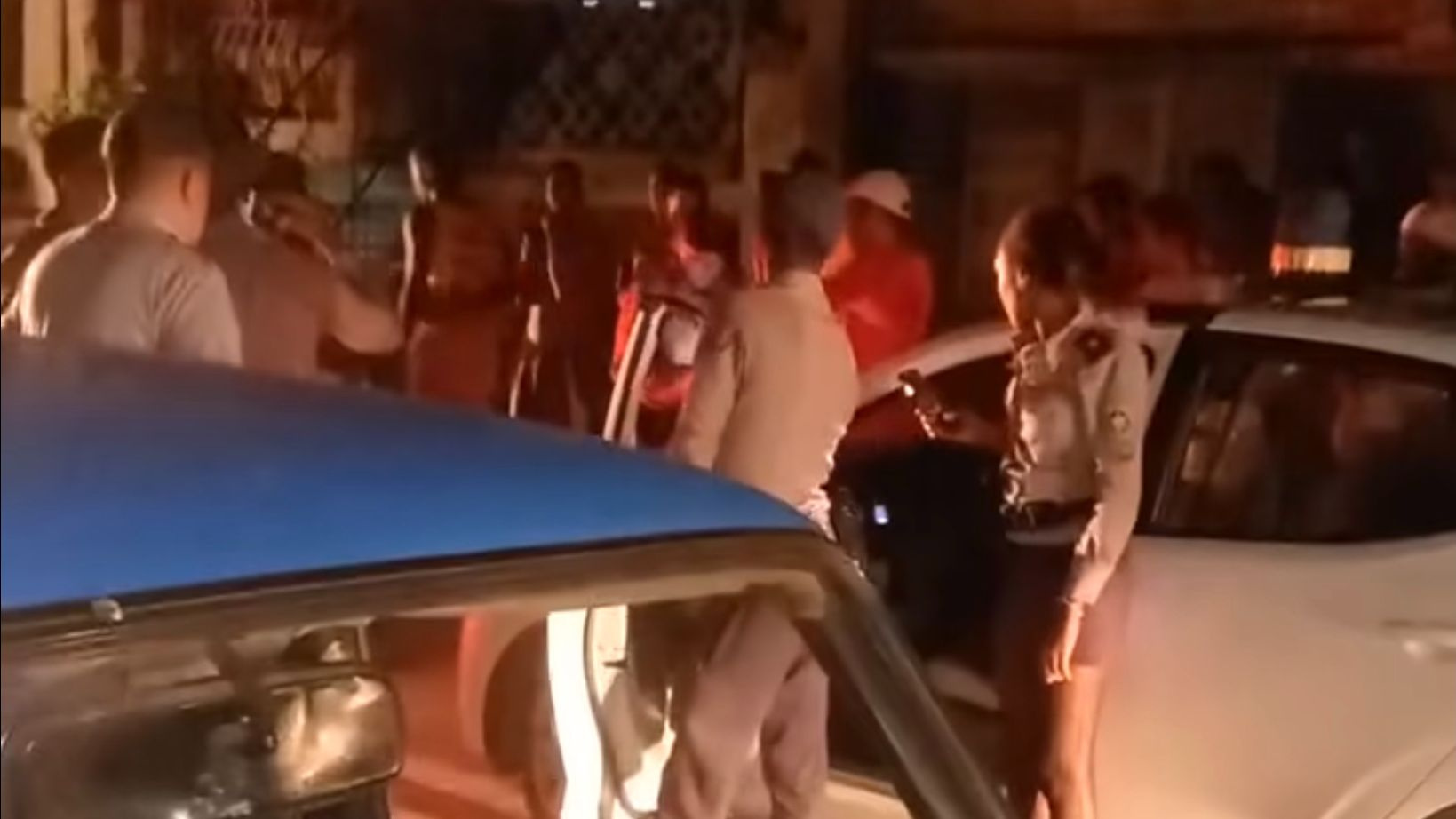
Havana/Protests against long blackouts by banging cauldrons no longer just happen at night. This Wednesday, the cacerolazos took place again in several neighborhoods of the capital, with the difference that some of them took place in broad daylight.
A neighbor of Santos Suárez, in the Diez de Octubre municipality, recounts on Facebook with sympathy: “Five blocks from here, around 3:00 pm, following the concert number 1 in B flat for cauldron and ladle starring the residents of that area, the police came and immediately the light came on!” As has happened on other occasions, the authorities have responded to the cacerolazos with the restoration of electrical service, always temporarily.
“Did fuel appear only for that little piece of neighborhood?” asks the same woman, who ironically expresses: “At this rate, five Cubans with pots could well open the Strait of Hormuz.”
Videos spread on social networks They show neighbors banging pots and pans during the day in that neighborhood, but also in Centro Habana and others, where blackouts have lasted up to 30 hours.
We want food, we want light, we want water
Other testimonies collected by Martí News, They credit the banging of pots and pans that, in fact, could be heard in different neighborhoods of Diez de Octubre in the afternoon, accompanied by slogans such as: “We want food, we want light, we want water.” The same media reports the statements of a resident: “We have been without electricity for a day and a half. It’s crazy, you can’t sleep.”
During the night, similar demonstrations were also reported in other areas of the capital. In the Bahia neighborhood, Videos released show that, in addition to the pots and pans, the church bells were ringing as a form of protest for more than 24 hours of blackout.
In the Zamora neighborhood, in the municipality of Marianao, after three consecutive days of blackouts lasting more than 12 hours, residents also made their pots and pans ring. According to the published testimony, Electrical service was restored almost 20 minutes after the start of the protest.
Repressive forces were deployed, including trucks wearing black berets, plainclothes police and around five patrol cars.
On Tuesday night, banging pots and pans were also recorded in Guantánamo, in the Caribe and Norte neighborhoods. The intensity of the protest led to the presence of police authorities, which the independent legal organization Cubalex warned like a “risk of repression, arbitrary arrests and other human rights violations,” following the arrests reported in the context of demonstrations that have been repeated daily since last March 6.
“Repressive forces were deployed, including trucks with black berets, plainclothes police and around five patrol cars,” Cubalex reports in its publication, accompanied by videos documenting the demonstration and the police presence.
According to the report of Martí News, Authorities restored electricity to quell the protest. But the service was only running for an hour. Then the blackout continued, accompanied by an internet outage that lasted until the morning of the next day.
The cacerolazo in Guantánamo took place about five blocks from the provincial headquarters of the Communist Party of Cuba (PCC). The first secretary of the PCC in the province and authorities from the Ministry of the Interior went there. This deployment responds to the fear that the protests will acquire a political connotation.
Although no arrests were reported during these latest protests, it has been noted that arrests usually occur days later
The demonstrations, caused by the shortage of basic services, have begun to acquire that political character by pointing out in their slogans the state administration as responsible for the crisis. In several of them, cries such as “Freedom!”, “Down with communism!” and insults against the Cuban president Miguel Díaz-Canel.
Although no arrests were reported during these latest protests, it has been noted that the arrests They usually occur days later, as happened after the demonstrations of March 13 in Morónwith more than 16 arrested later, including minors, such as the case of the adolescent Jonathan David Muir.
The lack of electricity prevents pumping water, preserving food and sleeping in the heat of this spring on the Island. Mosquitoes and the climate aggravate the discomfort, making it more difficult every day to lead a basic daily life in the midst of the energy crisis.
The National Electric System (SEN) has been severely affected recently by this monday’s breakdown of the Antonio Guiteras thermoelectric plant – the largest generating plant in the country –, and the failure that caused the disconnection of unit 1 of the Ché Guevara plant, in Villa Clara, already restored at this time.
The SEN still does not cover basic demand due to the accumulated wear and tear of its plants and the lack of maintenance
He today’s report of the Electrical Union of Cuba (UNE) reports that unit 2 of the Felton thermoelectric plant is offline due to a breakdown, while unit 5 of Mariel, units 5 and 6 of Renté and 5 of Nuevitas remain out of service for maintenance. This generates a projected deficit of 1,775 MW in today’s peak hours, compared to a national demand of 3,020 MW.
Despite the recent arrival to the Island of oil Anatoly Kolodkin With 100,000 tons of Russian crude oil, the SEN still does not cover basic demand due to the accumulated wear and tear of its plants and the lack of maintenance. The fuel shortage, aggravated by the sanctions and tariffs imposed on Cuba by the United States, further deteriorates the country’s energy crisis.