The author is a foreign policy advisor to the Czech President Petr Pavel, he was the ambassador of the Czech Republic to the USA, Israel and Great Britain
When he was German chancellor Konrad Adenauera convinced democrat and one of the founders of European integration, the object of criticism for the slow progress of denazification in the German state administration, defended himself by saying: “Before you pour dirty water out of the sink, you should be sure that you have clean water instead.”
The same objection can be applied to those who shout more and more vehemently about the end of the North Atlantic Alliance and call for its replacement by a European defense structure or rapprochement with Russia.
Where is the truth?
Certainly, Europe should be able to stand on its own two feet in all directions, including security and defense. But she is not, and even if she decided, she will be building such a capacity for years. If it would NATO now it is over, it will not be replaced by a European defense alliance, but by a security vacuum. Nature abhors a vacuum, but Russia would like it very much.
Those who are serious about a European defense identity should see what is happening now not as an opportunity to break out of the Alliance, but as the beginning of a long and arduous journey to ensure the ability to stand on its own two feet if necessary.
As long as this journey lasts, they should at all costs strive for the continuation of a maximally actionable North Atlantic Alliance. Actually, they should strive for it even after that. No conceivable security arrangement will provide Europe (or the United States) with greater security than a close alliance on both sides of the Atlantic Ocean.
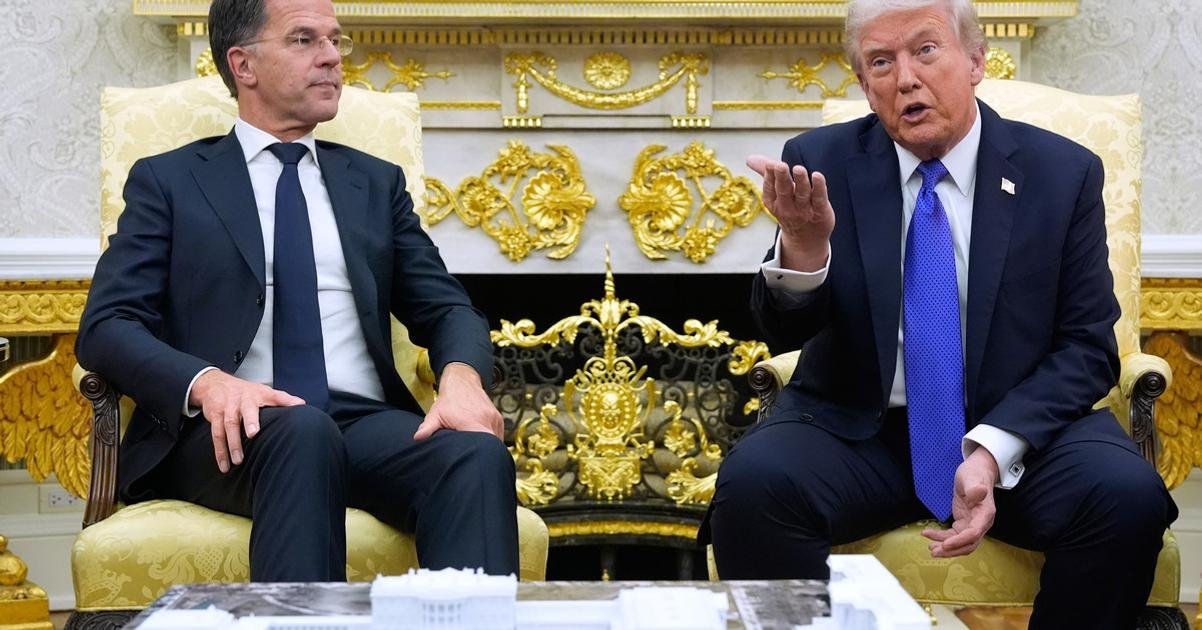
The current outrage in Europe arose thanks to the outrage of the American president over the European reluctance not only to contribute with its own forces to the success of the American-Israeli operation against Iranbut not to allow the United States to use air bases on allied territory for the transfer of weapons, equipment and armed forces. As usual in such cases, both sides have their share of truth.
It’s not just that Trump he speaks to the Europeans in the tones of an insulted patriarch who does not belong among the Allies. The Europeans say, for the most part, rightly, that no one asked them for help or asked for their opinion before the latest operation began. In fact, the US operation against Iran is technically unrelated to the Washington Treaty, which is a kind of NATO constitution.
The treaty applies only to the North Atlantic area (preamble), the United States did not contact any member state before the start of the operation regarding a threat to their territorial integrity, independence or security (Article 4), and above all, it is not an armed attack against a member country of the alliance in Europe or North America, which could trigger its collective defense according to the key article. 5.
Insulted patriarch and spoiled children
However, a true alliance is governed not only by the letter of the contract, but also by the spirit of reciprocity and solidarity that made its creation possible. Already in 1993, a senator came Richard Lugar with the thesis “out of area or out of business”, i.e. with the idea that NATO must also be involved in areas of conflict outside of its area of competence so far.
Thanks to the adoption of this idea by the Allies, NATO operations in Afghanistan and Iraq took place after September 11, 2001. And it is also true that during the duration of the North Atlantic Treaty the United States bore the lion’s share of the costs of defending Western Europe against the Soviet threat, and thus has reason to expect at least basic European cooperation in other situations. If Trump reminds Europeans of an insulted patriarch, they may remind him of spoiled children.
The greatest danger, however, are those who see this latest turbulence in alliance relations as an excuse to dance on her grave. They occur in all allied states and also in the Czech Republic.
Former president Václav Klauswho was never a big supporter of NATO he reasoned that “international agreements and rules are an expression of the distribution of power at the moment of their signing and that these agreements are thrown into the trash when the distribution of power changes” (Lidové noviny, 20/3). Trump is “largely indifferent to Europe”, while “Putin’s interests outside the borders of the original Soviet Union are not indicative…(!) Let’s act accordingly,” adds Klaus cryptically. Judging by his long-term consistent positions, he probably does not mean strengthening the European Union.
Klaus’ studious pupil, a former MEP, is even more apt Jan Zahradil. “It is obvious that Article 5 of NATO no longer guarantees anything. And without the ‘hard power’ of the US, the rest is just a paper tiger… It is time to change the strategy,” he writes in a tweet on X April 1. How, one would like to ask.
Let’s not get upset by Trump
The only meaningful strategy in an increasingly dangerous world is to rise to new challenges, but not abandon existing mechanisms to defend against them. The European pillar of NATO, which has been talked about for several years, can be built within the alliance without strong speeches about the as yet non-existent European strategic autonomy or rejoicing over the death of the still-living alliance organism. Only enough clean water will give us freedom of maneuver.
Moreover, we should not get so excited about the provocative statements of the American president. Some people’s need to speak out is stronger than their need to actually act. In two and three-quarter years, we will be dealing with another American president, who may not necessarily be more in favor of Europe, but will most likely be closer to reality. In other words, there is nothing fatal or predetermined about the split between Europe and the United States. Only those who wish for such a separation say so.