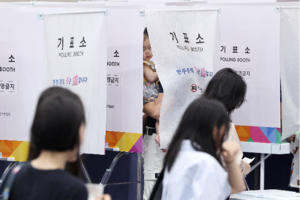
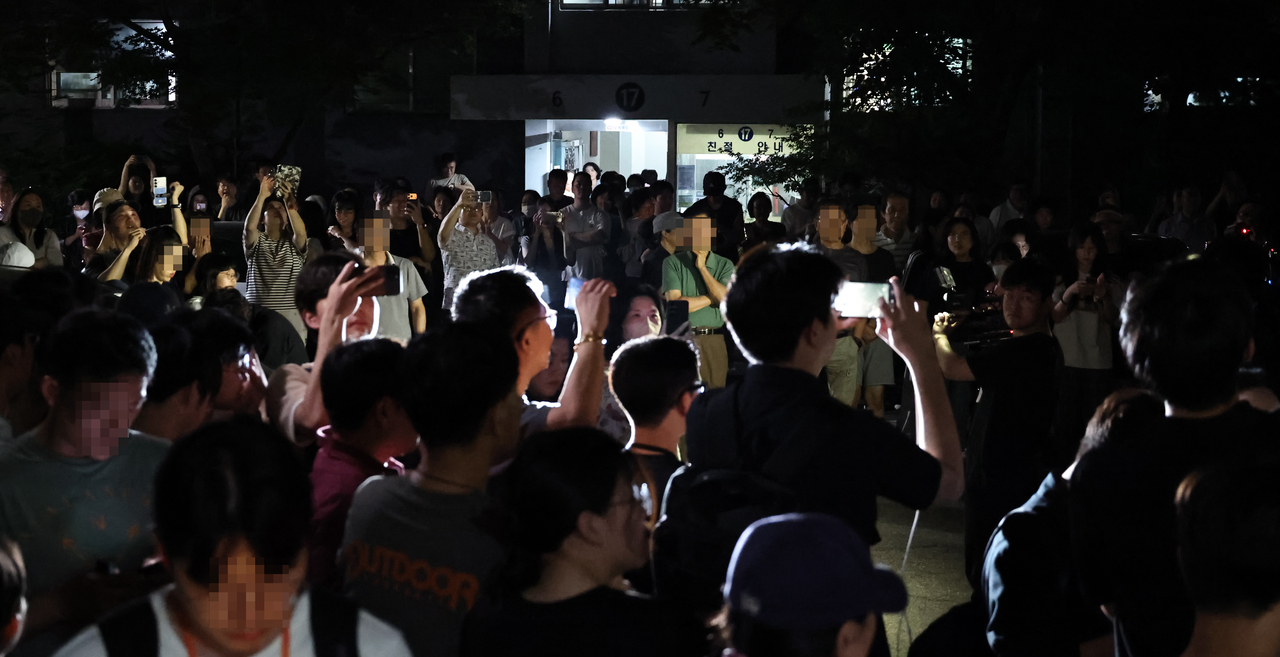
Unprecedented ballot shortages at polling stations across Seoul disrupted Wednesday’s local elections, forcing some voters to cast ballots hours after polls had officially closed and triggering confusion, long delays and protests at voting sites.
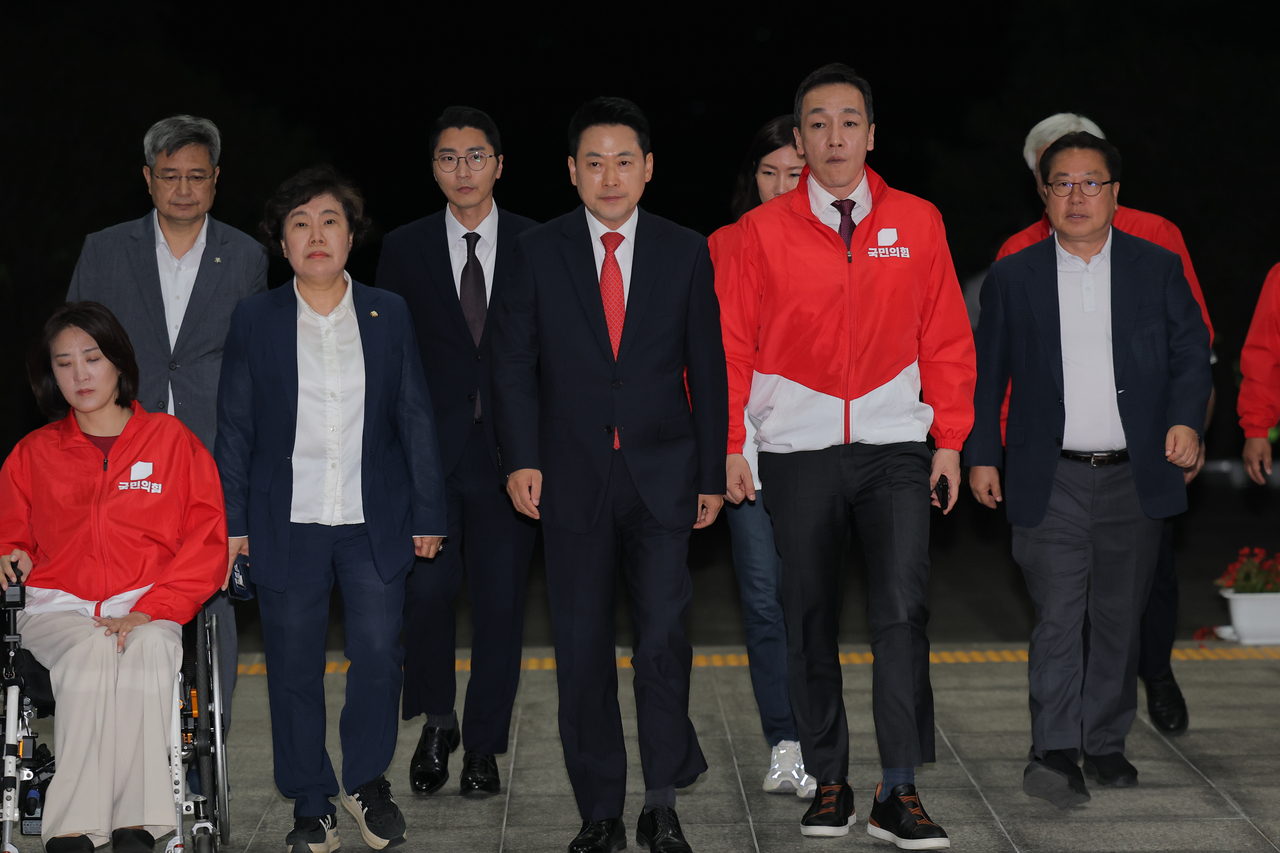
The controversy swiftly escalated into a political firestorm, with the main opposition People Power Party demanding an immediate halt to vote counting in Seoul and calling for a possible redo of the election in Seoul.
Rep. Jang Dong-hyeok, the People Power Party chair, argued that the ballot shortages may have forced some voters to abandon voting altogether. He also claimed voters who cast ballots after 6 p.m. may have been influenced by televised vote-counting broadcasts that had already begun.
“Therefore, this Seoul election was one in which voters’ right to vote and political participation were seriously infringed upon. The fairness of the vote has already been compromised,” Jang said during a news conference.
“Even now, vote counting must be immediately suspended until the facts are established. Depending on the outcome of that fact-finding process, Seoul must hold a new election.”
Jang further argued that the National Election Commission’s explanation for why it ran short of ballots was “impossible to accept.”
According to the People Power Party’s Seoul chapter, the number of polling stations affected by ballot shortages stood at 17 in the Greater Seoul Region of Seoul, Incheon and Gyeonggi Province as of 8 p.m. The party included polling stations in Seoul’s Songpa, Gangnam, Gwangjin, Dongjak and Seocho districts, as well as polling stations in Incheon’s Yeonsu-gu and Hwaseong, Gyeonggi Province.
The People Power Party’s Seoul chapter also said it had received a flood of reports, including one alleging that at Jamsil 7-dong polling station No. 2, election officials attempted to remove a ballot box while voters were still waiting for ballots, leading to a standoff between citizens and police.
People Power Party Seoul mayoral candidate Oh Se-hoon said, “Vote counting must be suspended until corrective measures are completed in areas where voters were unable to cast ballots due to ballot shortages.”
Oh urged the NEC to take “responsible corrective measures on how to restore the voting rights of citizens affected by the ballot shortages.”
However, Rep. Jo Seoung-lae, chief campaign manager of the ruling Democratic Party of Korea, dismissed the People Power Party’s demand to halt vote counting and hold a new election.
“First, we express disappointment regarding the NEC’s poor management of ballots,” Cho said. “This is not an issue that can be brushed aside with an apology. Those responsible for poor election management must be held accountable.”
Cho, however, contended, “The People Power Party’s calls to halt vote counting and hold a revote are not worth considering. … We urge the NEC to thoroughly manage the ongoing vote count so that it proceeds smoothly.”
Responding to the ballot shortages, Cheong Wa Dae said, “This is a matter that the National Election Commission must address.”
Additionally, at some of the affected polling stations, frustrated voters reportedly protested the delays and long lines, with several arguing that ballots cast there should be declared invalid.
South Korea’s election watchdog, the NEC, issued a public apology on Wednesday while admitting that 14 polling stations in Seoul — including 12 in Songpa-gu and one each in Gangnam-gu and Gwangjin-gu — had run short of ballots during the local elections.
The NEC acknowledged that it had printed ballots for only about 50 percent of eligible voters in Seoul’s Songpa-gu district, but was unable to provide a clear rationale for how the figure had been calculated.
“We deeply apologize while keenly acknowledging our responsibility for causing inconvenience to citizens who came to polling stations to exercise their precious sovereign right to vote, and for damaging public trust in the fair administration of elections,” Heo Cheol-hoon, NEC’s secretary-general, said during a live-broadcast news conference.
Heo explained that the NEC had immediately dispatched additional ballots to affected polling stations facing shortages as soon as it became aware of the situation.
The secretary-general added that voters waiting at those polling stations were allowed to cast their ballots normally even after the official close of polls at 6 p.m.
“The National Election Commission takes this matter very seriously,” Heo said. “As soon as vote counting is completed, we will accurately identify the causes and problems behind the ballot shortages at some polling stations and prepare measures to prevent a recurrence.”
However, at press time, local reports could not confirm that some polling stations in Incheon’s Yeonsu-gu district had also experienced ballot shortages.
Earlier Wednesday, the NEC first acknowledged that ballot shortages at polling stations in Seoul’s Songpa-gu had been caused by higher-than-expected turnout. The NEC said it customarily does not print ballots for every eligible voter in local elections, given historically lower turnout.
dagyumji@heraldcorp.com