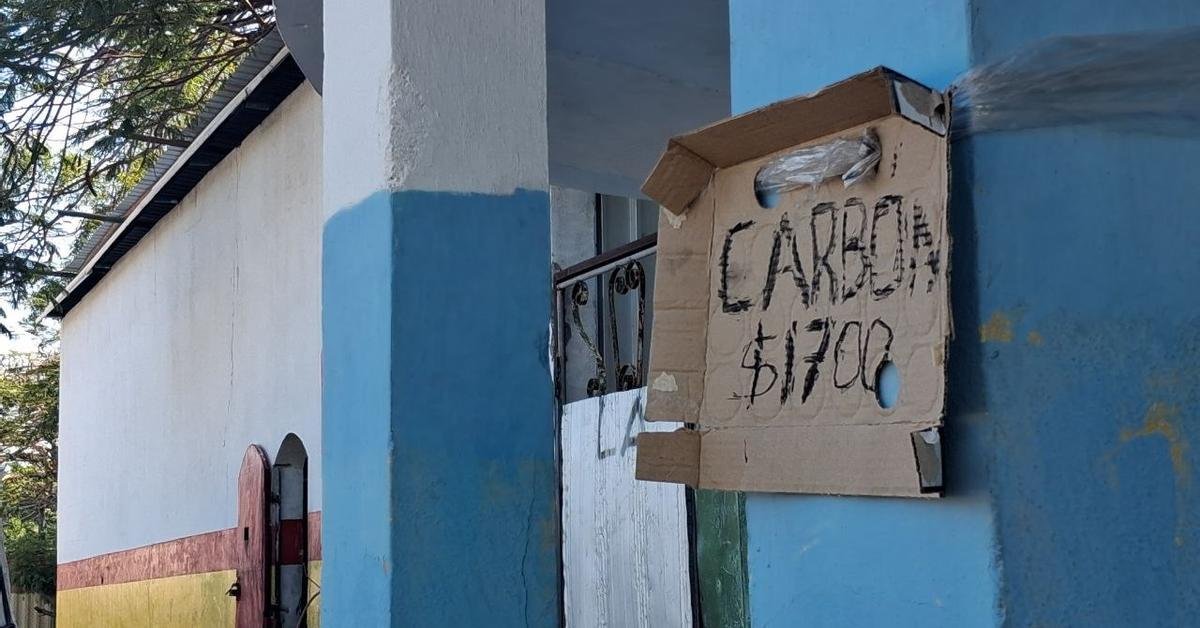
Havana/At the intersection of Rancho Boyeros and Santa Catalina avenues, in Havana, where for decades the smell of gasoline marked the pulse of city traffic, another aroma now dominates, more rustic and persistent: that of charcoal. This Tuesday, the service center looked deserted, without cars in line or clerks dispensing fuel. The pumps remained motionless, like museum pieces, while on one side of the store, the one facing Rancho Boyeros Avenue, the real business of the day was moving: the sale of bags of charcoal for 1,700 pesos each.
The scene is the faithful portrait of the crisis. The site conceived to fuel engines has become a supplier of embers. Where once the metallic click of the hoses could be heard as they were inserted into the tanks, now the harsh scraping of the sacks resounded as they were dragged along the ground. A man carries one on his shoulder with the naturalness of someone transporting an essential good. It’s not difficult to understand: in a city where blackouts last for hours, coal has gone from an emergency resource to an everyday item.

/ 14ymedio
The gas station, empty of fuel and customers, seems to have adapted to the new times with pragmatism. The supply of gasoline and diesel is sporadic, subject to uncertain logistics that forces drivers to register in long virtual queues and pay in foreign currency for each liter. Many no longer even try to get fuel; They have left the car parked indefinitely or use it only on exceptional occasions. Meanwhile, the need to cook cannot wait, and the electric stove becomes a useless ornament when the power disappears. That’s where coal comes in, converted into a domestic lifesaver.
From the sidewalk, the transformation of the service center is almost symbolic. The structure remains intact: high ceilings, aligned fountains and the yellow and red paint on the walls, which could be seen from afar. But the flagship product no longer flows through pipes but is sold in black sacks, stacked against a wall. Less fossil fuels to power vehicles and more solid fuels to sustain daily life.
A woman approaches, asks the price and, after a brief mental calculation, pays the 1,700 pesos without haggling. In other parts of Havana it already reaches 2,500. “This takes me several days,” he says, before accommodating the bag on an electric tricycle. His gesture reveals the resignation with which many Havana residents have incorporated charcoal into their routine. Because cooking with firewood, a practice that seemed relegated to rural areas or to times gone by, has once again been installed on balconies and rooftops throughout the city.