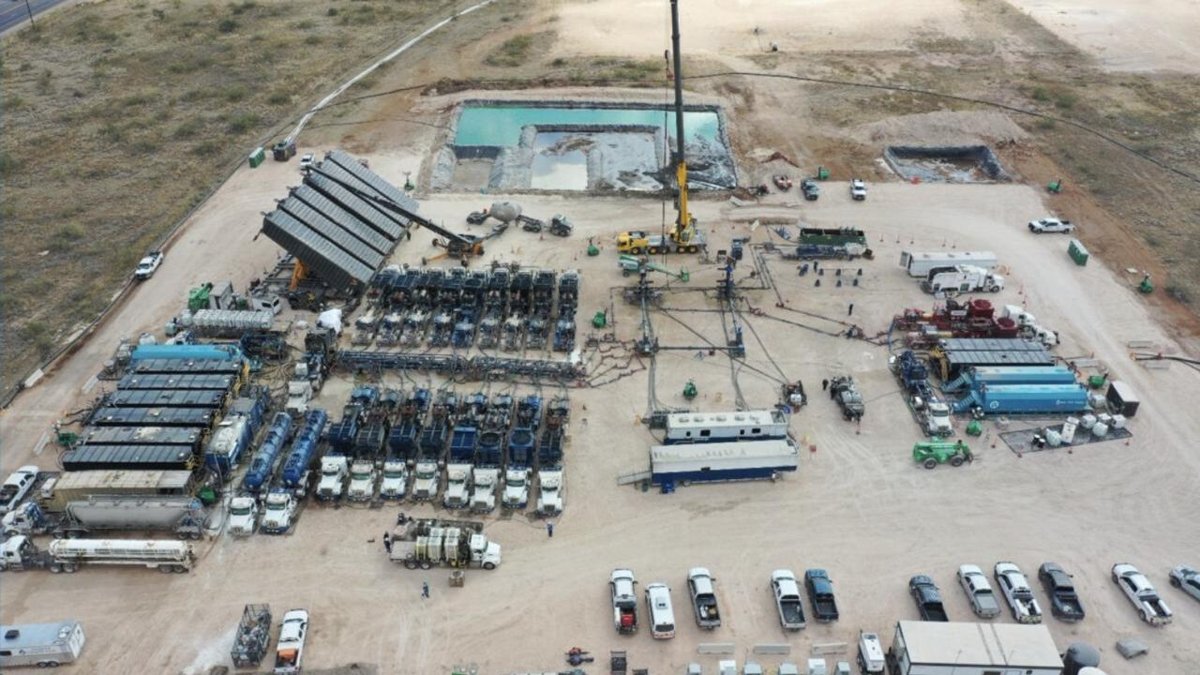
The Ministries of Mines and Energy and Environment They announced that the next July 20during the installation of Congress for the constitutional period 2026-2030, they will formally file a bill to ban fracking in Colombia.
This legislative initiative of the Government of Gustavo Petro seeks definitively prohibit said practice in the national territory, based on the existence of “scientific evidence which warns about serious environmental, social and public health risks that it entails”.
“I have agreed with the Minister of the Environment that the next July 20during the installation of the new Congress of the Republicwe will present together with the congressmen of the Historical Pact he bill that prohibits fracking in Colombia“said the Minister of Mines and Energy, Edwin Palma.
Furthermore, the official highlighted that this initiative aims to “protect water, life and our ecosystems. For years they tried to sell fracking as the solution for the country; “There were even governments that promoted that bet and failed.”
READ ALSO
Photo:Ecopetrol
“We will defend the energy transition and we will do everything in our power to prevent this practice from putting our territories and the environmental heritage of Colombians“added the minister Edwin Palma.
The announcement of the antifracking law occurred during the launch of two large solar energy projects in the municipalities of Becerril and Curumaniin the department of Cease.
There, the National Government delivered 2,494 solar panels that will transform the lives of more than 4,300 inhabitants by guaranteeing them, for the first time, reliable access to electricity. This work required a investment of 36,000 million pesos and will generate 1,870 MWh (megawatt-hour) of clean energy per year.
READ ALSO

Minister Edwin Palma. Photo:Ministry of Mines and Energy
In addition to its economic impact, the project has a high environmental value by mitigating the climate crisissince it will avoid the emission of 340 tons of carbon dioxide (CO₂) annually.
With an estimated useful life of 25 yearshe solar complex assures long term benefits for these historically vulnerable communities. For Minister Palma, the true value of these works lies in their social and equity impact.
“The energy transition It only makes sense when it transforms people’s lives. These projects demonstrate that the democratization of energy It is a reality that reaches historically excluded territoriescarrying clean energyreducing the social gaps and strengthening the participation of communities in the construction of a fairer and more sustainable energy system for Colombia“said the Minister of Mines and Energy.
READ ALSO

Photo:Mineenergy
A national scale model: Energy Communities
The intervention in Cesar is not an isolated event, but is part of the national energy communities strategya government bet to decentralize and democratize energy generation in the country.
To date, the balance of this strategy reflects progress in Colombian regions:
- 848 energy communities have already been implemented.
- 567,558 people have been directly benefited.
- 42,200 users They now have optimized attention and service.
- 29.68 MWp (Peak Megawatt) is the total installed capacity achieved.
- More than 382,913 million pesos have been invested in its execution.