Tuesday, September 8, 2026
    The GeoStrategic Consensus
    No Result
    View All Result
    • Login
    • HOME
    • AMERICAS
      • Argentina
      • Brazil
      • Canada
      • Chile
      • Colombia
      • Costa Rica
      • Cuba
      • Dominican Republic
      • Ecuador
      • El Salvador
      • Greenland
      • Guatemala
      • Honduras
      • Mexico
      • Nicaragua
      • Panama
      • Paraguay
      • Peru
      • United States
      • Uruguay
      • Venezuela
    • ASIA-PACIFIC
      • Australia
      • Brunei Darussalam
      • Cambodia
      • China
      • Federated States of Micronesia
      • Fiji
      • Indonesia
      • Japan
      • Kiribati
      • Laos
      • Malaysia
      • Marshall Islands
      • Mongolia
      • Myanmar
      • Nauru
      • New Zealand
      • North Korea
      • Palau
      • Papua New Guinea
      • Philippines
      • Samoa
      • Singapore
      • Solomon Islands
      • South Korea
      • Taiwan
      • Thailand
      • Timor-Leste
      • Tonga
      • Tuvalu
      • Vanuatu
      • Vietnam
    • CARICOM
      • CARICOM – Non-English
        • Haiti
        • Suriname
      • CARICOM Associates
        • Anguilla
        • Bermuda
        • British-Virgin-Islands
        • Cayman-Islands
        • Curacao
        • Turks-and-Caicos
      • CARICOM English
        • Antigua and Barbuda
        • Barbados
        • Belize
        • Dominica
        • Grenada
        • Guyana
        • Jamaica
        • Montserrat
        • Saint Kitts and Nevis
        • Saint Lucia
        • Saint Vincent and the Grenadines
        • The Bahamas
        • Trinidad and Tobago
    • EURASIA
      • Armenia
      • Azerbaijan
      • Balarus
      • Georgia
      • Kazakhstan
      • Kyrgyzstan
      • Moldova
      • Russia
      • Tajikistan
      • Turkmenistan
      • Ukraine
      • Uzbekistan
    • EUROPE
      • Albania
      • Andorra
      • Austria
      • Bosnia and Herzegovina
      • Bulgaria
      • Croatia
      • Cyprus
      • Czech Republic
      • Denmark
      • Estonia
      • Finland
      • France
      • Germany
      • Greece
      • Holy See
      • Hungary
      • Iceland
      • Ireland
      • Italy
      • Kosovo
      • Latvia
      • Liechtenstein
      • Lithuania
      • Luxembourg
      • Malta
      • Monaco
      • Montenegro
      • Netherlands
      • North Macedonia
      • Norway
      • Poland
      • Portugal
      • Romania
      • San Marino
      • Serbia
      • Slovakia
      • Slovenia
      • Spain
      • Sweden
      • Switzerland
      • United Kingdom
    • MIDDLE EAST AND NORTH AFRICA
      • Algeria
      • Bahrain
      • Egypt
      • Iran
      • Iraq
      • Israel
      • Jordan
      • Kuwait
      • Lebanon
      • Lybia
      • Morocco
      • Oman
      • Palestinian Territories
      • Qatar
      • Saudi Arabia
      • Syria
      • Tunisia
      • Turkey
      • United Arab Emirates
      • Western Sahara
      • Yemen
    • SOUTH ASIA
      • Afghanistan
      • Bangladesh
      • Bhutan
      • India
      • Maldives
      • Nepal
      • Pakistan
      • Sri Lanka
    • SUB-SAHARAN AFRICA
      • Angola
      • Benin
      • Botswana
      • Burkina Faso
      • Burundi
      • Cabo Verde
      • Cameroon
      • Central African Republic
      • Chad
      • Comoros
      • Cote d’Ivoire
      • Democratic Republic of the Congo
      • Djibouti
      • Equatorial Guinea
      • Eritrea
      • Eswatini
      • Ethiopia
      • Gabon
      • Gambia
      • Ghana
      • Guinea
      • Guinea Bissau
      • Kenya
      • Lesotho
      • Liberia
      • Madagascar
      • Malawi
      • Mali
      • Mauritania
      • Mauritius
      • Mozambique
      • Namibia
      • Niger
      • Nigeria
      • Republic of the Congo
      • Rwanda
      • Sao Tome and Principe
      • Senegal
      • Seychelles
      • Sierra Leone
      • Somalia
      • South Africa
      • South Sudan
      • Sudan
      • Tanzania
      • Togo
      • Uganda
      • Zambia
      • Zimbabwe
    • HOME
    • AMERICAS
      • Argentina
      • Brazil
      • Canada
      • Chile
      • Colombia
      • Costa Rica
      • Cuba
      • Dominican Republic
      • Ecuador
      • El Salvador
      • Greenland
      • Guatemala
      • Honduras
      • Mexico
      • Nicaragua
      • Panama
      • Paraguay
      • Peru
      • United States
      • Uruguay
      • Venezuela
    • ASIA-PACIFIC
      • Australia
      • Brunei Darussalam
      • Cambodia
      • China
      • Federated States of Micronesia
      • Fiji
      • Indonesia
      • Japan
      • Kiribati
      • Laos
      • Malaysia
      • Marshall Islands
      • Mongolia
      • Myanmar
      • Nauru
      • New Zealand
      • North Korea
      • Palau
      • Papua New Guinea
      • Philippines
      • Samoa
      • Singapore
      • Solomon Islands
      • South Korea
      • Taiwan
      • Thailand
      • Timor-Leste
      • Tonga
      • Tuvalu
      • Vanuatu
      • Vietnam
    • CARICOM
      • CARICOM – Non-English
        • Haiti
        • Suriname
      • CARICOM Associates
        • Anguilla
        • Bermuda
        • British-Virgin-Islands
        • Cayman-Islands
        • Curacao
        • Turks-and-Caicos
      • CARICOM English
        • Antigua and Barbuda
        • Barbados
        • Belize
        • Dominica
        • Grenada
        • Guyana
        • Jamaica
        • Montserrat
        • Saint Kitts and Nevis
        • Saint Lucia
        • Saint Vincent and the Grenadines
        • The Bahamas
        • Trinidad and Tobago
    • EURASIA
      • Armenia
      • Azerbaijan
      • Balarus
      • Georgia
      • Kazakhstan
      • Kyrgyzstan
      • Moldova
      • Russia
      • Tajikistan
      • Turkmenistan
      • Ukraine
      • Uzbekistan
    • EUROPE
      • Albania
      • Andorra
      • Austria
      • Bosnia and Herzegovina
      • Bulgaria
      • Croatia
      • Cyprus
      • Czech Republic
      • Denmark
      • Estonia
      • Finland
      • France
      • Germany
      • Greece
      • Holy See
      • Hungary
      • Iceland
      • Ireland
      • Italy
      • Kosovo
      • Latvia
      • Liechtenstein
      • Lithuania
      • Luxembourg
      • Malta
      • Monaco
      • Montenegro
      • Netherlands
      • North Macedonia
      • Norway
      • Poland
      • Portugal
      • Romania
      • San Marino
      • Serbia
      • Slovakia
      • Slovenia
      • Spain
      • Sweden
      • Switzerland
      • United Kingdom
    • MIDDLE EAST AND NORTH AFRICA
      • Algeria
      • Bahrain
      • Egypt
      • Iran
      • Iraq
      • Israel
      • Jordan
      • Kuwait
      • Lebanon
      • Lybia
      • Morocco
      • Oman
      • Palestinian Territories
      • Qatar
      • Saudi Arabia
      • Syria
      • Tunisia
      • Turkey
      • United Arab Emirates
      • Western Sahara
      • Yemen
    • SOUTH ASIA
      • Afghanistan
      • Bangladesh
      • Bhutan
      • India
      • Maldives
      • Nepal
      • Pakistan
      • Sri Lanka
    • SUB-SAHARAN AFRICA
      • Angola
      • Benin
      • Botswana
      • Burkina Faso
      • Burundi
      • Cabo Verde
      • Cameroon
      • Central African Republic
      • Chad
      • Comoros
      • Cote d’Ivoire
      • Democratic Republic of the Congo
      • Djibouti
      • Equatorial Guinea
      • Eritrea
      • Eswatini
      • Ethiopia
      • Gabon
      • Gambia
      • Ghana
      • Guinea
      • Guinea Bissau
      • Kenya
      • Lesotho
      • Liberia
      • Madagascar
      • Malawi
      • Mali
      • Mauritania
      • Mauritius
      • Mozambique
      • Namibia
      • Niger
      • Nigeria
      • Republic of the Congo
      • Rwanda
      • Sao Tome and Principe
      • Senegal
      • Seychelles
      • Sierra Leone
      • Somalia
      • South Africa
      • South Sudan
      • Sudan
      • Tanzania
      • Togo
      • Uganda
      • Zambia
      • Zimbabwe
    No Result
    View All Result
    Agentially
    No Result
    View All Result
    Home AMERICAS Canada

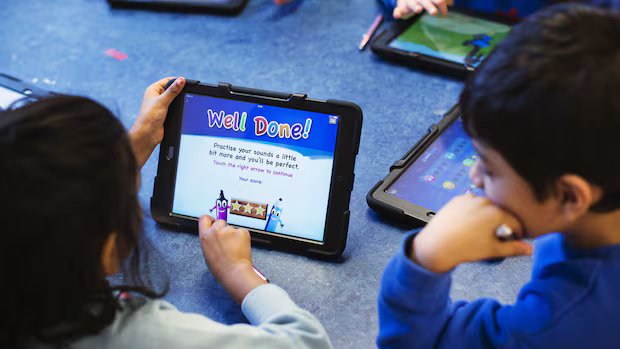
    Parents are pushing back on classroom screen time in a ‘techlash’ over too much technology in schools

    The Analyst by The Analyst
    September 8, 2026
    in Canada
    Parents are pushing back on classroom screen time in a ‘techlash’ over too much technology in schools


    As an occasional substitute teacher for middle- and high-schoolers in Nova Scotia, Kim Herrick often gets a front-row seat seeing how teens use tech at school.

    READ ALSO

    Trump to Canadian plane maker Bombardier: You can’t sell in U.S. unless you build in U.S.

    Cape Breton storm yet another one for the history books

    Whether students are tasked with assignments, work for another class or granted free time, Herrick regularly sees them checking Snapchat, TikTok or Instagram accounts, shopping online, gaming or even trading Bitcoin — easily bypassing school board security methods aimed at blocking such use.

    The ubiquity of students engaging in non-educational online activities — and the futile attempts to clamp down on it — have contributed to her view that we need to reconsider the tech used by default in classes today.

    But the alarm bells really started going off for Herrick when she discovered her elder daughter — who’s starting Grade 2 this fall — has had a school Google account for three years, without Herrick knowing. Herrick said she couldn’t log into the account and school officials said she couldn’t opt-out or have it deleted, saying it was necessary for access to educational apps and “a requirement” for learning.

    We have hundreds of years of going to school as humans, Herrick said. “We do not need a Google account to learn.”

    Many parents, educators, advocacy groups and experts are pushing back against the amount of screen time in schools and the prevalence of tech tools woven into the current education system, with some making links to a range of woes, from behavioural issues to distracted students to data breaches that put youngsters’ privacy at risk.

    Yet a rollback to classroom practices of the past isn’t the answer to the current “techlash,” say some education experts, who favour intentional and thoughtful use of technology as the way forward.

    WATCH | Where did ‘techlash’ come from?:

    Tom D’Amico, recently retired director of education for the Ottawa Catholic School Board, explains a movement pushing back and questioning device and technology use in schools.

    Changing approach to tech in education

    For years, a one-to-one student-to-device ratio, web access and learning through game-like applications have been seen as symbols of educational progress. But amid a worldwide push to reduce teen smartphone and social media use, a vocal wave of parent groups — including Skills Before Screens in Canada, the U.K.-based Close Screen Open Minds, as well as Schools Beyond Screens and ScreenSense in the U.S. — is broadening this scrutiny to encompass educational tech usage more generally.

    After having prioritized digital schooling for the past decade, for instance, Sweden has recently shifted back toward physical textbooks, pen-and-paper homework, reinvesting in libraries and screen-free classrooms (particularly for younger students), citing falling scores on international assessments.

    Poor reading scores have tech-friendly Norway making a similar return to physical books in its schools, as well as introducing a near-ban on Generative AI usage in elementary, with restrictions for high-schoolers.

    In the U.S., parental demands have led to stricter tech policies at the country’s two largest school boards. The Los Angeles Unified School District has already started the school year with limits on screen time in every grade, including a total device ban before Grade 2. On the opposite coast, New York is restricting one-to-one device time for Grade 2 and below and suggesting caps for older elementary students. It’s also halting student-facing Generative AI use through Grade 8 and limiting use for high schoolers, for now.

    A smiling woman sits on the floor with a game laid out before and reaches for a card while looking to a man at left. Kids sit across and next to her.
    Kim Herrick, seen playing a game at home with her husband and daughters, has had a front-row seat into classroom tech use across different grades and ages, both as a parent to two young kids and an occasional substitute teacher for middle and highschoolers in Nova Scotia. (CBC)

    Herrick says many parents, such as herself, are in the dark about the screens and apps their youngsters access in class, let alone what the responsible use or data privacy agreements are regarding those apps and school accounts.

    Beyond privacy, the mother of two and former wilderness leadership educator in the U.S. is also concerned about what unfettered school tech use means for the long term.

    She worries about susceptibility to distraction — she’s had secondary students claim they’re multitasking as they juggle a bevy of browser tabs, apps or screens — not to mention negative impacts on their mental and physical health down the road.

    In the meantime, overreliance on tech also bogs down educators’ precious time with policing student usage and dealing with tech support, rather than teaching, Herrick said.

    A woman with blonde hair, glasses and wearing a white shirt, crosses her arms while standing in a backyard. Toys, a hammock and trees are behind her.
    Herrick says she worries about wide-ranging impacts of overrelying on technology in schools, from the effects on student cognition, mental and physical health to data breaches that leak their info online. (Paul Poirier/CBC)

    Intention versus novelty

    Classroom tech use varies across Canadian regions, schools and educators, but it’s indeed integrated into teaching today, according to Johanathan Woodworth, an assistant professor at Mount Saint Vincent University in Halifax.

    Whether teachers are getting students to research a project online, study the solar system via a virtual reality simulator or test out an AI chatbot, Woodworth emphasizes that tech use must be intentional, thoughtful and directly connected to the skills students are expected to learn.

    “A lot of times teachers use technology in the classroom because of the novelty effect and engagement — but the novelty effect wears off,” Woodworth said from Halifax, where he teaches educational technology to existing and prospective teachers.

    A man with short black hair, glasses and wearing a blue shirt with dark dots, clasps his hands together as he sits in an office, a desk behind him.
    When he’s teaching educators about how to incorporate tech in their classrooms, Mount Saint Vincent University assistant professor Johanathan Woodworth emphasizes intention, judiciousness and connection to students learning goals. (Eric Wiseman/CBC)

    “The first step is to think about ‘Do I even need to use it? What is the purpose of me using it? Does it actually help me in my classroom?'”

    It’s important teachers are supported with guidelines and enough training on how to carefully and effectively use technology, he says, in order to understand it and, in turn, teach and model that knowledge to their students.

    Striving for balance

    Rolling back to no-tech classrooms isn’t necessarily the answer either, Woodworth said, since a main reason schools employ tech today — text-to-speech and speech-to-text applications, for instance — is to accommodate students with disabilities.

    Schools must balance “purposeful” tech use with the need to prep students for a tech-filled world, while also ensuring it’s “not used as a distraction,” according to education consultant Tom D’Amico, former director of education of the Ottawa Catholic School Board.

    A man in glasses, dark suit jacket and white dress shirt stands inside a school, a hallway of lockers seen behind him.
    Tom D’Amico, the former director of education for the Ottawa Catholic School Board, says he’s seeing a shift across Canada toward schools taking a more developmentally and age-dependent approach to incorporating tech in classrooms. (Mathieu Theriault/CBC)

    He says the concerns raised by parents — both the ones driving the current “techlash” and those pushing for their kids to build tech skills — are contributing to a “balanced and focused” approach by school boards.

    In his current work advising school districts across Canada about artificial intelligence, D’Amico says he’s noticing a shift: schools taking a more developmentally and age-informed approach to technology.

    For instance, “that means regardless of the province, you’re looking at the earliest grades not having a lot of device time, but still getting AI literacy. They still need to learn about digital citizenship, what it means to use a computer,” he said, noting gradual introduction of more technology in middle and high school.

    “Critical thinking can be [taught] without the technology as well in the early ages,” D’Amico added, emphasizing that this learning must be “embedded in the curriculum, so it happens every single year, in an age-appropriate manner.”

    Ultimately, he says, the top focus of schools should be student learning and strengthening students’ connections with teachers and their classmates.

    “What’s the number one technology in a classroom? It’s the student and their brain,” he said.



    Source link

    Related Posts

    Trump to Canadian plane maker Bombardier: You can’t sell in U.S. unless you build in U.S.
    Canada

    Trump to Canadian plane maker Bombardier: You can’t sell in U.S. unless you build in U.S.

    September 7, 2026
    Cape Breton storm yet another one for the history books
    Canada

    Cape Breton storm yet another one for the history books

    September 7, 2026
    Quebec overhauled its bottle deposit-refund system. Is it working?
    Canada

    Quebec overhauled its bottle deposit-refund system. Is it working?

    September 7, 2026
    Belugas transferred from Niagara Falls are under round-the-clock monitoring after deaths: Chicago aquarium
    Canada

    Belugas transferred from Niagara Falls are under round-the-clock monitoring after deaths: Chicago aquarium

    September 7, 2026
    Election campaign spotlights Quebec’s school system — and whether it’s fair to all students
    Canada

    Election campaign spotlights Quebec’s school system — and whether it’s fair to all students

    September 7, 2026
    Dutch elm disease ravaged Canadian cities. Can we help trees protect themselves?
    Canada

    Dutch elm disease ravaged Canadian cities. Can we help trees protect themselves?

    September 7, 2026
    Next Post
    TORBA passengers wait days after Air Vanuatu offloads 200kg luggage | News

    TORBA passengers wait days after Air Vanuatu offloads 200kg luggage | News

    POPULAR NEWS

    2026 Regional and International Conventions of Jehovah’s Witnesses

    2026 Regional and International Conventions of Jehovah’s Witnesses

    July 7, 2026
    Thaksin, Yingluck and Paetongtarn meet Indonesian President Prabowo for investment talks

    Thaksin, Yingluck and Paetongtarn meet Indonesian President Prabowo for investment talks

    July 13, 2026
    This is how Nicolás Maduro and Cilia Flores reappeared in their hearing

    This is how Nicolás Maduro and Cilia Flores reappeared in their hearing

    July 24, 2026
    India’s imports from China soar to $80 billion in first half of 2026, exports up 37%

    India’s imports from China soar to $80 billion in first half of 2026, exports up 37%

    July 16, 2026
    No deliverance: when gig workers fall prey to road accidents

    No deliverance: when gig workers fall prey to road accidents

    July 25, 2026

    EDITOR'S PICK

    Authority: 2,700 child abuse reports recorded in first half of year

    Authority: 2,700 child abuse reports recorded in first half of year

    August 21, 2026
    Quebec cardinal wins $100K defamation suit over woman’s sexual assault allegations

    Quebec cardinal wins $100K defamation suit over woman’s sexual assault allegations

    August 31, 2026
    Review of municipal election submissions under way

    Review of municipal election submissions under way

    July 21, 2026
    Transition: Specialists in Miami present a plan to rebuild Cuba

    Transition: Specialists in Miami present a plan to rebuild Cuba

    July 24, 2026

    Recent Posts

    • Parliament panel questions delay in response to Baiga child deaths in Madhya Pradesh
    • Mahipaul blasts Guyana-US deportee dealSeptember 6, 2026
    • TORBA passengers wait days after Air Vanuatu offloads 200kg luggage | News
    • Parents are pushing back on classroom screen time in a ‘techlash’ over too much technology in schools

      © 2026 Agentially - Navigating shifting sovereignties and global risk .

      Welcome Back!

      Login to your account below

      Forgotten Password?

      Retrieve your password

      Please enter your username or email address to reset your password.

      Log In
      No Result
      View All Result
      • HOME
      • AMERICAS
        • Argentina
        • Brazil
        • Canada
        • Chile
        • Colombia
        • Costa Rica
        • Cuba
        • Dominican Republic
        • Ecuador
        • El Salvador
        • Greenland
        • Guatemala
        • Honduras
        • Mexico
        • Nicaragua
        • Panama
        • Paraguay
        • Peru
        • United States
        • Uruguay
        • Venezuela
      • ASIA-PACIFIC
        • Australia
        • Brunei Darussalam
        • Cambodia
        • China
        • Federated States of Micronesia
        • Fiji
        • Indonesia
        • Japan
        • Kiribati
        • Laos
        • Malaysia
        • Marshall Islands
        • Mongolia
        • Myanmar
        • Nauru
        • New Zealand
        • North Korea
        • Palau
        • Papua New Guinea
        • Philippines
        • Samoa
        • Singapore
        • Solomon Islands
        • South Korea
        • Taiwan
        • Thailand
        • Timor-Leste
        • Tonga
        • Tuvalu
        • Vanuatu
        • Vietnam
      • CARICOM
        • CARICOM – Non-English
          • Haiti
          • Suriname
        • CARICOM Associates
          • Anguilla
          • Bermuda
          • British-Virgin-Islands
          • Cayman-Islands
          • Curacao
          • Turks-and-Caicos
        • CARICOM English
          • Antigua and Barbuda
          • Barbados
          • Belize
          • Dominica
          • Grenada
          • Guyana
          • Jamaica
          • Montserrat
          • Saint Kitts and Nevis
          • Saint Lucia
          • Saint Vincent and the Grenadines
          • The Bahamas
          • Trinidad and Tobago
      • EURASIA
        • Armenia
        • Azerbaijan
        • Balarus
        • Georgia
        • Kazakhstan
        • Kyrgyzstan
        • Moldova
        • Russia
        • Tajikistan
        • Turkmenistan
        • Ukraine
        • Uzbekistan
      • EUROPE
        • Albania
        • Andorra
        • Austria
        • Bosnia and Herzegovina
        • Bulgaria
        • Croatia
        • Cyprus
        • Czech Republic
        • Denmark
        • Estonia
        • Finland
        • France
        • Germany
        • Greece
        • Holy See
        • Hungary
        • Iceland
        • Ireland
        • Italy
        • Kosovo
        • Latvia
        • Liechtenstein
        • Lithuania
        • Luxembourg
        • Malta
        • Monaco
        • Montenegro
        • Netherlands
        • North Macedonia
        • Norway
        • Poland
        • Portugal
        • Romania
        • San Marino
        • Serbia
        • Slovakia
        • Slovenia
        • Spain
        • Sweden
        • Switzerland
        • United Kingdom
      • MIDDLE EAST AND NORTH AFRICA
        • Algeria
        • Bahrain
        • Egypt
        • Iran
        • Iraq
        • Israel
        • Jordan
        • Kuwait
        • Lebanon
        • Lybia
        • Morocco
        • Oman
        • Palestinian Territories
        • Qatar
        • Saudi Arabia
        • Syria
        • Tunisia
        • Turkey
        • United Arab Emirates
        • Western Sahara
        • Yemen
      • SOUTH ASIA
        • Afghanistan
        • Bangladesh
        • Bhutan
        • India
        • Maldives
        • Nepal
        • Pakistan
        • Sri Lanka
      • SUB-SAHARAN AFRICA
        • Angola
        • Benin
        • Botswana
        • Burkina Faso
        • Burundi
        • Cabo Verde
        • Cameroon
        • Central African Republic
        • Chad
        • Comoros
        • Cote d’Ivoire
        • Democratic Republic of the Congo
        • Djibouti
        • Equatorial Guinea
        • Eritrea
        • Eswatini
        • Ethiopia
        • Gabon
        • Gambia
        • Ghana
        • Guinea
        • Guinea Bissau
        • Kenya
        • Lesotho
        • Liberia
        • Madagascar
        • Malawi
        • Mali
        • Mauritania
        • Mauritius
        • Mozambique
        • Namibia
        • Niger
        • Nigeria
        • Republic of the Congo
        • Rwanda
        • Sao Tome and Principe
        • Senegal
        • Seychelles
        • Sierra Leone
        • Somalia
        • South Africa
        • South Sudan
        • Sudan
        • Tanzania
        • Togo
        • Uganda
        • Zambia
        • Zimbabwe

      © 2026 Agentially - Navigating shifting sovereignties and global risk .

      This website uses cookies. By continuing to use this website you are giving consent to cookies being used. Visit our Privacy and Cookie Policy.