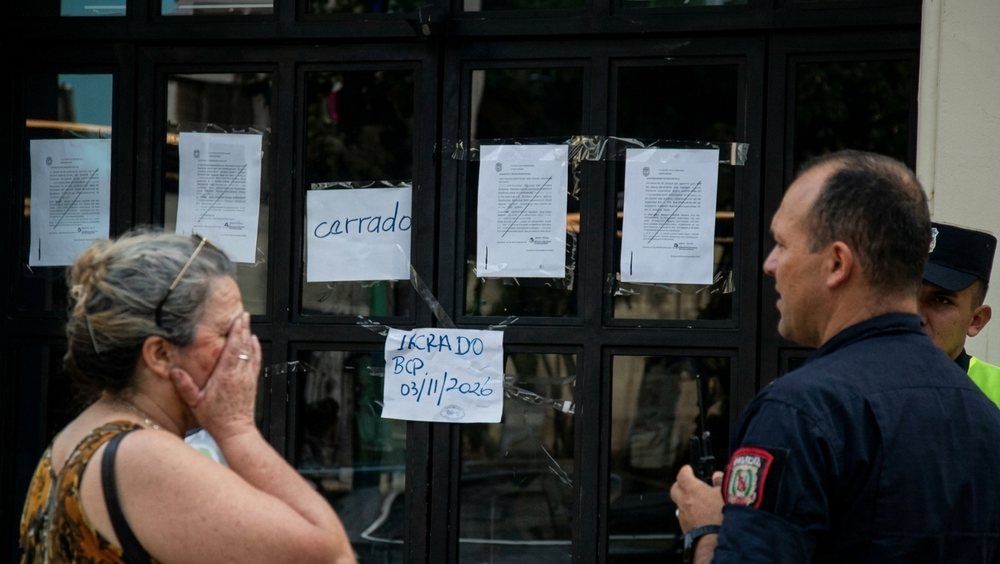
An unprecedented financial and social crisis has erupted in Paraguay following the lightning collapse of ueno bank, the country’s first and largest digital institution. Within hours, the Latin American country’s financial system was on the brink of chaos, leaving some 3 million citizens — roughly 60% of the adult population — without access to their money.
What started out as one of the region’s best financial technology (fintech) success stories has turned into the worst nightmare for depositors, who now see their wages, life savings and pension funds frozen.
From the mobile screen to the “lock” of accounts
The panic started when ueno bank’s mobile app, ATM network and all payment services were suddenly shut down, following an emergency intervention by the Central Bank of Paraguay (BCP).
Regulators took the drastic decision to seize and liquidate the bank after discovering that its capital had fallen to critical levels.
According to the first audit reports, the bank’s managers had broken the most basic rules of financial security. They are accused of making over $150 million in dubious, unsecured loans to shell companies that were secretly controlled by the bank’s own managers and their parent company, Grupo Vázquez.
Chaos on the streets and empty banks
In the capital Asunción and major cities, the final scenes are dramatic. Long lines of desperate people have surrounded closed bank branches and government officials, demanding the return of their funds.
Many of them can’t even pay their monthly bills or buy food, as all their money was linked to ueno bank digital cards.
“I came to withdraw my salary and everything is blocked. We were told that digital banking was the safe future, but they left us on the street without a single penny,” declared an affected citizen outside one of the liquidation centers.
Political tsunami: Resignation of the President
In addition to the economic tragedy for millions of families, this bankruptcy has also caused a powerful political earthquake. The country’s president, Santiago Peña, resigned from office to avoid an ignominious impeachment by Congress.
Recent investigations have revealed that Peña had not only been a shareholder in the bank’s controlling group until 2025, but his government had transferred over $800 million in public funds and state pensions to the failed bank.
Moreover, the former director of ueno bank was appointed by the president himself to head the Central Bank, creating a blatant conflict of interest that allowed the crisis to be hidden for months.
What will happen to the savings?
While the government has passed emergency laws to initiate the activation of the deposit insurance scheme, fears remain high. Local law only guarantees refunds up to about $38,000 per person.
For medium-sized businesses and large pension funds that had deposited millions in this institution, the likelihood of recovering the money remains minimal.
This scandal has thrown into serious question the security of the entire new digital banking system in Latin America, serving as a grim warning that behind the glitz of technology can often be hidden older schemes of financial fraud.