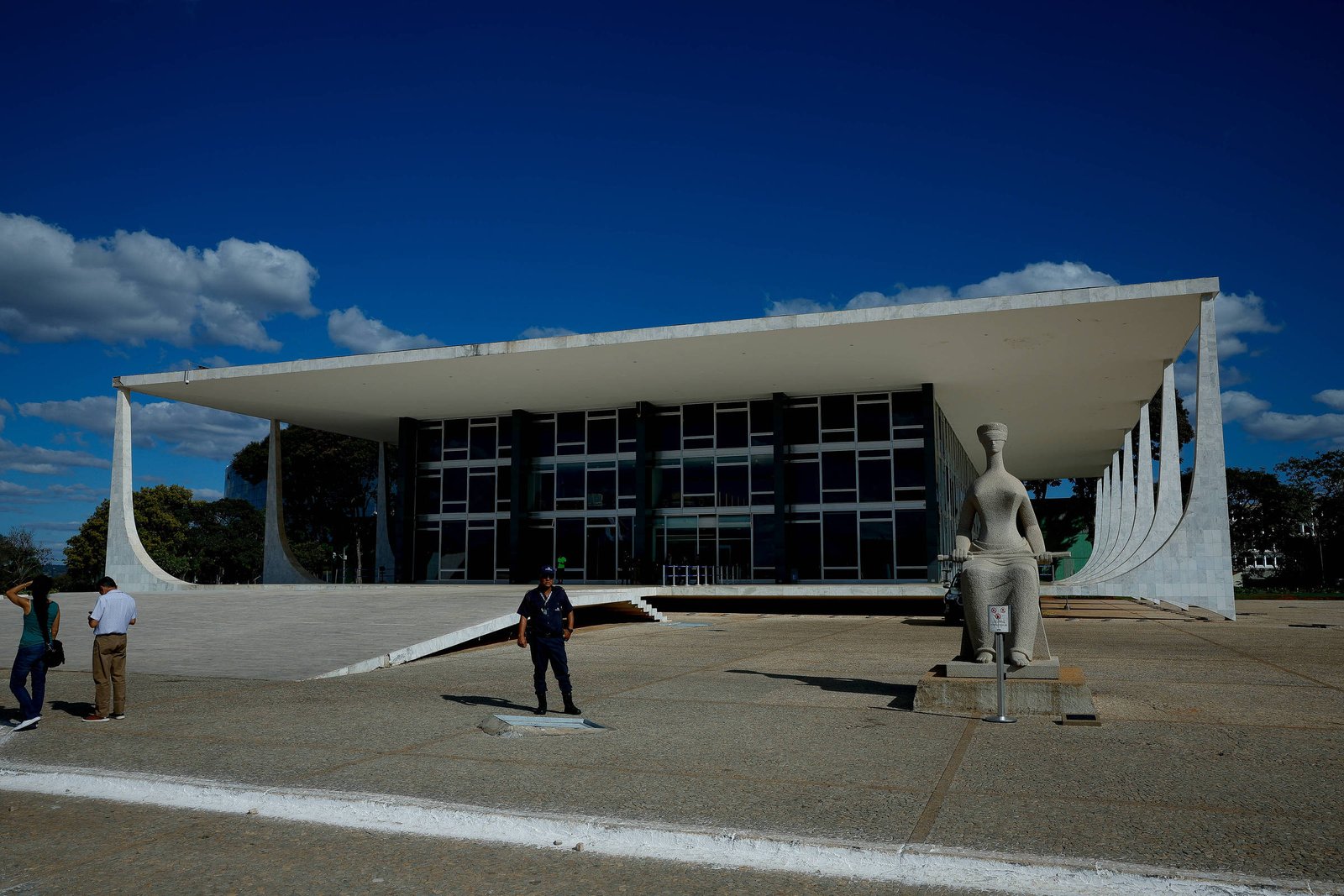
promoters of Public Ministry of Pará want to increase the number of districts considered difficult to access to expand the number of members entitled to additional for working in distant locations. That type of pendant was not blocked in the STF decision (Federal Supreme Court) on super salaries.
The proposal sent by the state Attorney General’s Office foresees that the total number of locations will increase from the current 16 to 77, number almost five times greater. The measure, which is being debated by the Superior Council of the MP of Pará, had the vote interrupted this Wednesday (30), when one of the council members asked for a review (more time to analyze the case).
After the end, Ampep (Association of the Public Ministry of the State of Pará) sent a message to prosecutors, via the messaging application WhatsApp, criticizing the suspension of the session.
In the report, he said that the request for review, although regimented, “in practice postpones an urgent and necessary decision, frustrating the legitimate expectation of the class to face the serious effects arising from the decision of the STF“.
Later, the entity sent another statement, this time without citing the Supreme Court and with the statement that the measure “directly impacts the structure of the service and working conditions, especially in the most sensitive regions”.
He also declared that the matter should only return to the agenda in June, “which requires the institution and its members to prolong an already critical scenario.”
The bonus for accommodation and residence in a region with difficult access corresponds to a percentage of 10% of the subsidy, according to state legislation. The salary of a prosecutor at the beginning of his career is close to R$35,500. Therefore, the benefit reaches R$3,500.
In addition to the significant increase in districts considered difficult to access, the municipalities included in this classification caught the attention of members of the class who received the message. Among them, for example, Acará, which is 100 km from Belém, Moju, 128 km, and Igarapé, 143 km.
But the proposal from the promoters who are part of the council also foresees a change in the concept of difficult provision, in addition to the distance from the capital and precarious access.
It would include, for example, the analysis of the city’s HDI (Human Development Index), the deficiency of human or material resources, demand incompatible with the structure of the Prosecutor’s Office and the location in a strategic region.
The prosecutors also cite the national guidelines established by the National Council of Justice and the National Council of the Public Prosecutor’s Office on the policy of encouraging capacity and permanence in units that are difficult to fill.
Currently, only districts with transport, communication, subsistence and accommodation obstacles are considered difficult to access, resulting in precarious conditions for the effective action of the Public Prosecutor’s Office in the location.
The proposal also states that it is up to the Attorney General of Justice to define the value of the bonus for working in a Public Prosecutor’s Office that is difficult to fill and classify the units into different degrees of difficulty, considering the criteria established in the resolution.
When contacted, prosecutor Ana Maria Magalhães, president of Ampep, said that the measure does not aim to compensate for advantages, “but to face a concrete problem, recognized by the STF itself, which is the real difficulty of providing services to certain districts”.
“The focus here is to guarantee institutional presence where it is most needed. Reducing this debate to a logic of compensation does not reflect the complexity of the problem nor the impact it has on the provision of services to the population”, he declared.
She also suggested checking how many federal judges, public prosecutors, public prosecutors, and court judges there are in Pará and these other states.
“The region is challenging. Check how many reporters there are in these difficult-to-staff cities?”, he asked.
The STF’s thesis established that compensation funds in the Judiciary and Public Prosecutor’s Office should be subject to a limit of 70% of civil servants’ salaries.
The rules were defined at the end of March and came into effect for the base month of April, with payment in May.