The jurists assumed the representation with the mandate to participate in all phases of the process, from the investigation to its eventual conclusion within the Cuban penal system.
Four Cuban lawyers They were hired by the Government, through the Embassy of Panama in Cuba, to reinforce the legal defense of Panamanians detained in Havana, who have remained in custody since the end of February.
As will be remembered, the Cuban authorities detained ten Panamanian citizens in Havana on February 28, 2026, accused of carrying out “propaganda against the constitutional order” through graffiti critical of the Government. He Ministry of the Interior of Cuba He alleged that those involved, held in Villa Marista, were seeking to create subversive signs and would face sentences of up to eight years in prison.
The jurists assumed the formal representation of citizens, with the mandate to participate in all phases of the process, from the investigation to its eventual conclusion within the Cuban penal system.
The mission
According to sources linked to the process, the appointed lawyers have the task of ensuring the rights of the detainees and ensuring compliance with the procedural guarantees established in Cuban legislation.
On March 4, Panama’s ambassador to Cuba, Edwin Pitty, made his first visit to the group at the Detention Center for Crimes against National Security, known as Villa Marista, in Havana. During the meeting, the diplomat handed out personal hygiene products and medicines, in a gesture aimed at meeting basic needs while the judicial proceedings progress.
Subsequently, on March 25, the Foreign Minister of Panama, Javier Martínez-Acha, traveled to Havana and held a direct meeting with the ten detained citizens. After the visit, the minister claimed to have verified that the Cuban authorities have provided them with humanitarian treatment in the midst of the process they face.

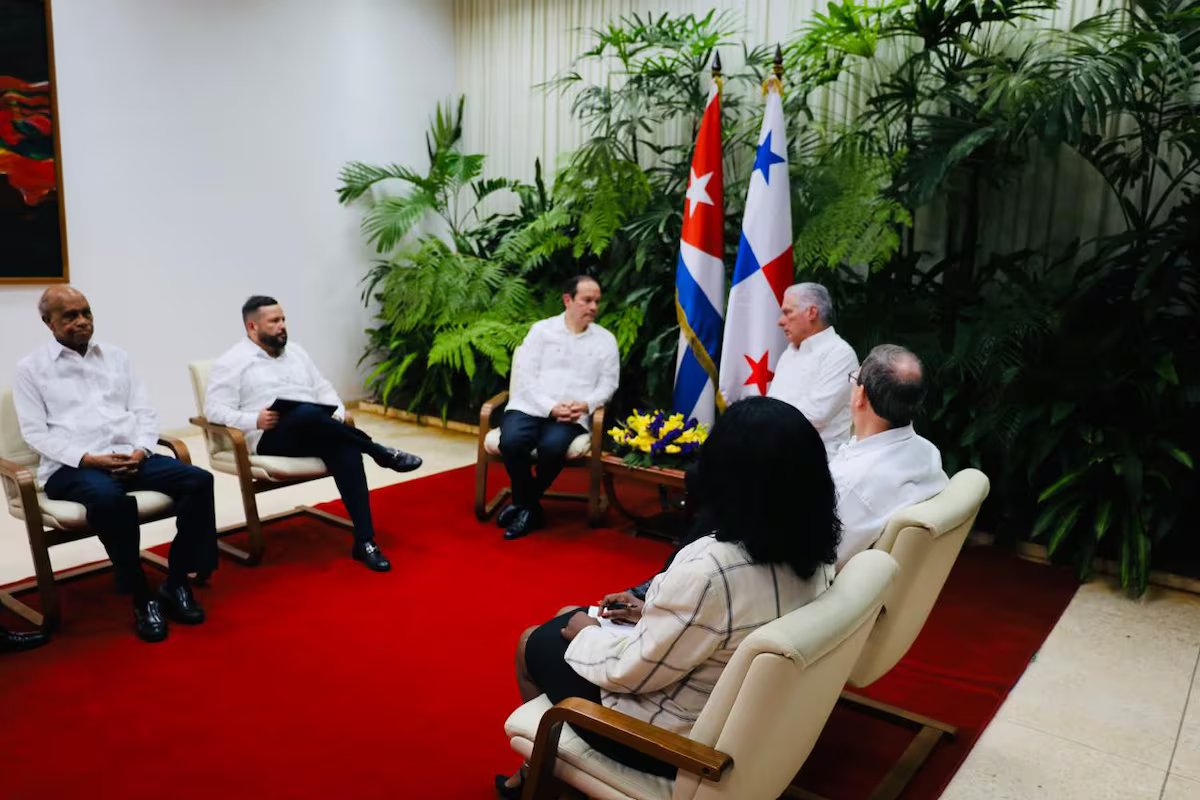
As part of his official agenda, the chancellor also met with the Minister of Foreign Affairs of Cuba, Bruno Rodríguez, and with President Miguel Díaz-Canel. According to official information, the conversations took place in a respectful tone and were focused on the search for a solution that combines humanitarian considerations with respect for the Cuban legal system.
Relatives could travel
As part of the diplomatic efforts, Panama asked the Cuban Government to authorize the travel of relatives of the detainees so that they can visit them on the island. The petition is part of efforts to alleviate the emotional impact of detention and maintain contact between citizens and their loved ones while their legal situation is defined.
Among those detained are José Luis Aguirre, Patrochiny Joseph, Omar Urriola, Víctor Manuel Cedeño Pinzón, Anthony Jules and Evelyn Castro, who remain in custody while the investigations progress.
Cinthia del Carmen Camarena, Abigail Stephany Gudiño Castro, Adalberto Antonio Navarro Asprilla and Maykol Jesús Almendra Pérez join this group. All remain detained in the midst of a case that has escalated to the diplomatic level, which has motivated the intervention of the Panamanian Foreign Ministry, the hiring of local lawyers and efforts aimed at guaranteeing respect for their rights and a solution that combines legal criteria with humanitarian considerations.
On March 2, the Ministry of the Interior of Cuba confirmed that the Panamanian citizens were arrested on Saturday, February 28 in Havana, accused of carrying out propaganda actions against the constitutional order.
According to the official statement of that entity, those involved are being investigated for the alleged commission of a crime defined in article 124 of the Cuban Penal Code, which sanctions this type of behavior.