Every new study makes the picture appear even bleaker: Across Europe, and therefore also in Austria, more and more people are dissatisfied with the institutions that shape coexistence politically – such as parliament or the government. For example, around two thirds of Austrian citizens feel poorly represented in parliament. The boys are particularly frustrated. Less than half (44 percent) of 16 to 26-year-olds said in last year’s additional Democracy Monitor survey commissioned by Parliament that the political system in the country works well. In 2018, 68 percent still held this opinion. If things aren’t turned around, our democracy will come under a lot of pressure in the long term. The paradox: At the same time, approval of democracy as a form of rule remains very high worldwide.
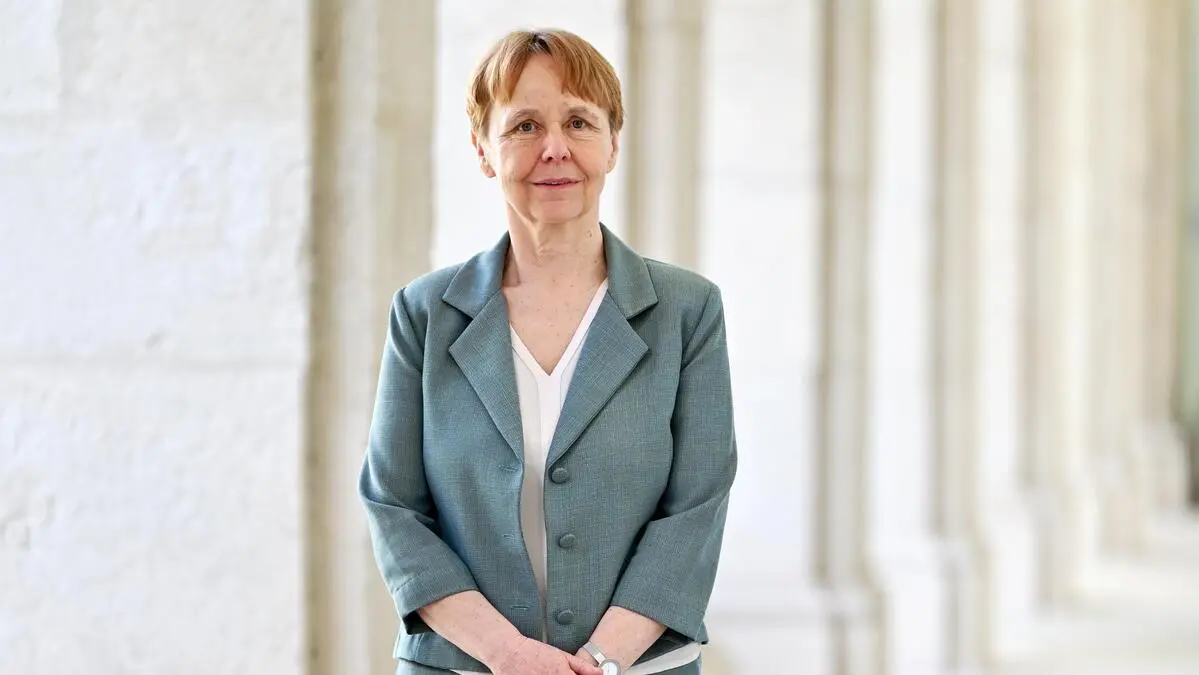
Brigitte Geißel also conducts research at the Johann Wolfgang Goethe University in Frankfurt am Main. The political scientist and political sociologist specializes in democratic innovations, new forms of governance and political actors. She recently invited the Austrian Academy of Sciences to Vienna to discuss and discuss possible ways out of the democratic crisis.

In their eyes, the fact that we ended up in such a situation is because the current design of our democratic system was designed for a social structure that no longer exists today. This development is reflected in the party system. Where two large popular parties used to get up to 80 percent of the vote, today there are significantly fewer. “Parties used to represent large groups that had very homogeneous interests. Today it is much more fragmented and differentiated. Younger people in particular think about which party comes closest to their current interests every election,” explains Geißel. The concept of parties that each represent a large group and are repeatedly elected by this group simply no longer works. That is a problem because democracy depends on parties being anchored in society and being its mouthpiece. “If only 25 percent say that they trust the parties at all, there will be an imbalance,” says Geißel. This means that it is not democracy as an idea that is outdated, but rather that its institutional form increasingly no longer fits with social reality.
And so the number of non-voters is also growing – although people still have a need to help shape their social environment, as the professor explains. “When you ask non-voters why they don’t vote, the answer is often because no party represents me, not because I don’t care.”
So in the end, is the whole thing more of a personnel question than a structural question? Do we just need better representatives? Preferably those that are completely free of their own sensitivities and only committed to the interests of the population? Scourge waves him off. “People aren’t saints, so we need institutions that keep them in check and diversify power. The idea that other recruitment mechanisms would actually lead to us having better representatives can be put aside. I don’t know where that has ever worked before.” In any case, it would help if politicians viewed the population as the undisputed sovereign, as their actual employer, instead of pursuing a kind of “education concept”. The motto “You just have to educate the stupid citizens and communicate better what we do, then they will understand” doesn’t work.
How democracy can receive an image boost is currently one of the most exciting debates in political science. Various innovation ideas are discussed. According to Geißel, the basis of a functioning democracy is that the population recognizes a legislative process as legitimate, even if not everyone supports the result. In the future, it will be crucial to involve citizens more closely in political processes through new forms of participation. Geißel has been working with citizens’ councils for some time. Randomly selected citizens discuss political issues together and then make recommendations. But because there is a lot to recommend when money is not an issue at the same time, there is a similar model specifically for the use of public money. That was the original idea of participatory budgeting.
A citizens’ assembly in the Canadian province of British Columbia is considered one of the best-known and most successful examples of deliberative democracy (i.e. based on public exchange). Back in 2003, 160 citizens who were as representative of the population as possible were selected to examine whether the existing electoral system should be reformed. After eleven months of deliberations, the Citizens’ Assembly recommended the introduction of a new electoral system and also made a proposal. In a subsequent referendum there was no necessary 60 percent majority for the new system. However, the example clearly shows that randomly selected citizens are able to delve into complex political issues and develop well-founded recommendations. Nevertheless, says Geißel, citizens’ assemblies are not a replacement for traditional parliaments. She sees them more as an additional information medium, a group that can be consulted in legislative processes, but which is explicitly not an organized interest group.
In Austria, Turquoise-Green set up a citizens’ assembly with 100 participants on climate policy in 2022. However, most of the results ended up in a drawer – and have not been taken out since. The lack of institutional commitment to participation processes is a fate that befalls many citizens’ councils, as Geißel confirms. This often leads to frustration among those involved. However, there is often simply the problem that the mandate given to the citizens’ councils is not clear and therefore vague recommendations are developed.
Internationally, Switzerland is often cited as a reference case for highly developed direct democracy. Because there are already many referendums and initiatives for popular participation there, Geißel and her colleagues did not assume that citizens’ councils would be very well received there. But the opposite was the case: the reactions to the invitations were more often positive than in Germany. “This is probably because the Swiss identify much more strongly with their democracy. That they say, this is our democracy and we make the suggestions here.”
In Austria, the demand for more direct democratic decisions based on the Swiss model has traditionally come from right-wing parties, especially the FPÖ. Scourge isn’t surprised. When right-wing parties are in opposition, direct democratic procedures are often a method to address people, because the right often translates political questions into a dichotomy between “people” and “elite”. However, once right-wing parties are in government, their commitment to direct democracy often diminishes.
In fact, Switzerland has shown that direct democratic processes can also lead to greater acceptance of other opinions. “There’s the thought: ‘This decision didn’t turn out the way I wanted. But maybe I’ll win next time,'” says Geißel.
So what does the way out of the democracy crisis look like? For Geißel this is clear: “Citizens should be more closely involved in shaping democracy and its institutions.”
Focus: What lies ahead for us?
It’s been 30 years since diepresse.com went online, “Die Presse” took the step into the digital age. We are taking this anniversary as an opportunity to look forward again. Young entrepreneurs, researchers, artists and politicians are asking themselves the big questions of our time: How will our most important areas of life change in the next few decades? How will we work, believe and love? And what else do we need to know in the future?
To the focus.