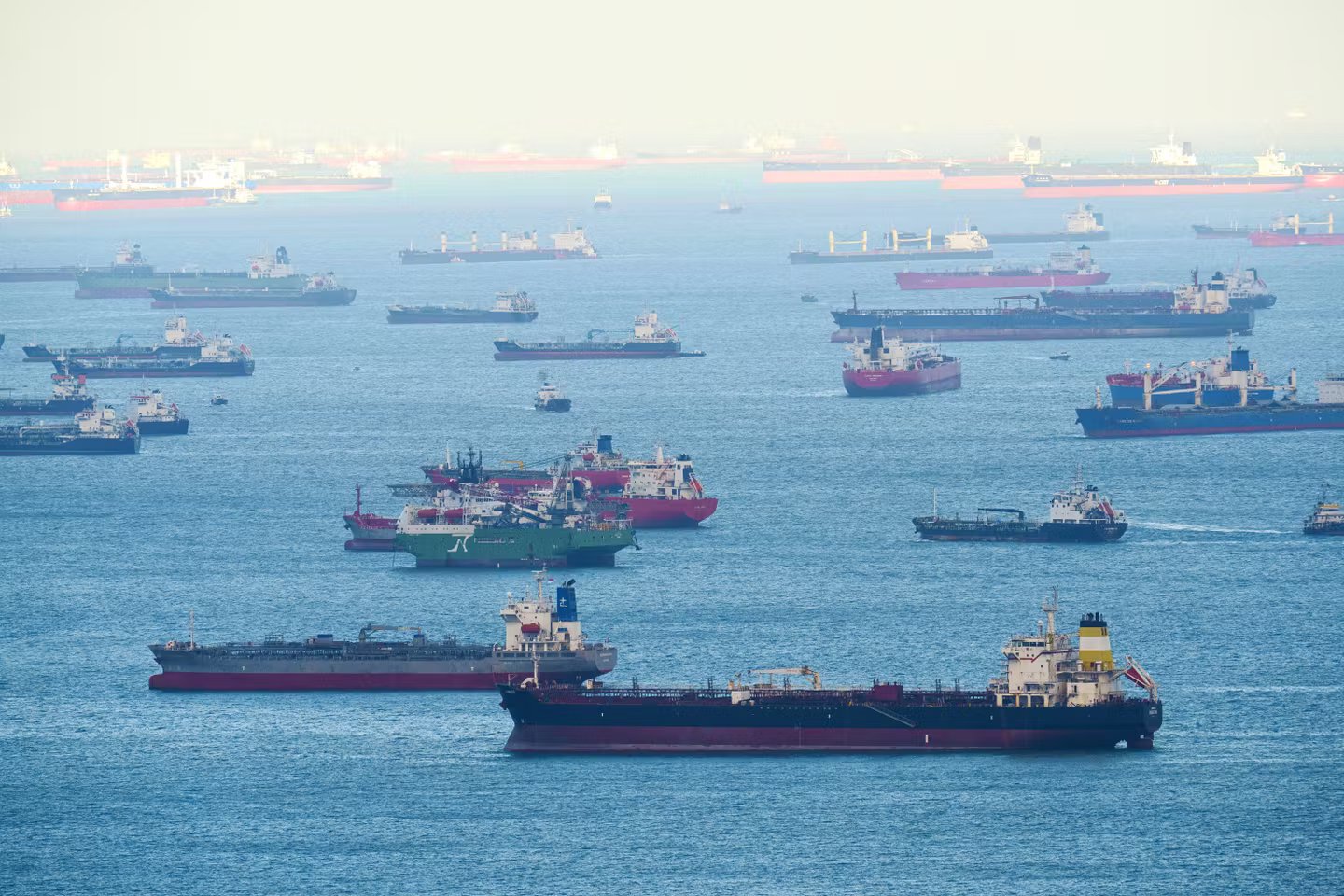
Since February 28 and the start of the joint American and Israeli attack on Iran, energy market operators have barely slept. The thunder of shells and drones exploding in the Middle East seems to echo all the way into the trading floors of Geneva, Singapore, or Houston, Texas.
A statement from the American president, Donald Trump, a tweet from his administration, a drone striking a cargo ship in the Strait of Hormuz… and crude oil or diesel prices spiral. On March 9, after the conflict escalated, the benchmark Brent price soared to $119 (€103) a barrel before dropping to $84, marking the largest single-day fluctuation ever recorded in dollars, according to data from the operator of the British stock exchange, the London Stock Exchange Group. For traders, it was a chance to make – or lose – billions.
“Every crisis, every war creates volatility in our markets, and we draw sources of income from that,” explained a female trader who requested anonymity. “We benefit from the chaos. That may be difficult to understand, which is why our microcosm remains very secretive.” To lift the veil, if only slightly, on this world at the intersection of finance and commerce, we have to go back to the day after the Iranian strikes on Wednesday, March 18, on the Ras Laffan site in Qatar, the world’s largest gas liquefaction plant.
You have 86.67% of this article left to read. The rest is for subscribers only.