The Organization of American States (OAS) is heading into its 2027 budget cycle with an ambitious reform agenda, growing concern over member-state contributions—including the substantial United States quota—and calls for a renewed political conversation about its future.
Foreign ministers and ambassadors are set to meet in Panama from June 22-24 for the 56th OAS General Assembly, where these issues are expected to dominate the agenda.
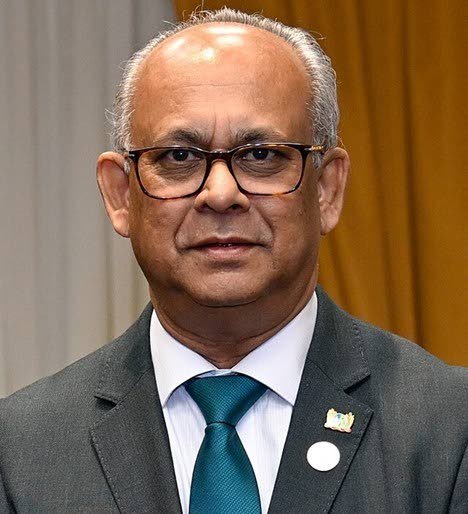
Secretary General Albert Ramdin believes the embattled hemispheric body can overcome its challenges—but not without sustained effort. The former Surinamese foreign minister has emphasised the need for institutional modernisation, renewed political dialogue and a clear commitment to placing the organisation on a more sustainable footing.
Yet, even as Ramdin projects confidence, some observers see an institution struggling to remain relevant amid declining enthusiasm for multilateralism and uncertainty over support from its most influential member, the United States.
Significant issues remain unresolved, including the political situations in Cuba, Venezuela and Nicaragua, as well as broader electoral challenges across the hemisphere.
Modernisation of the OAS itself also remains incomplete. Compounding this is the organisation’s financial strain, with several countries—including the US and Caricom members such as Trinidad and Tobago, Dominica, Haiti, St Kitts and Nevis, St Vincent and the Grenadines, and Suriname—remaining in arrears.
At the centre of the uncertainty is Washington’s contribution, which accounts for nearly half of the OAS budget.
Despite these challenges, Ramdin remains confident that member states will approve the 2027 budget at the Assembly, avoiding the delays that have plagued recent cycles.
However, it is precisely the issue of US support that concerns international relations specialist Dr Anthony Gonzales.
As far as he is concerned, the OAS is no longer functional in the sense in which it was created, given the rise of alternative regional mechanisms and shifting political alignments across Latin America and the Caribbean.
Yet, he stops short of advocating abandonment. Instead, Gonzales believes the organisation must navigate the current geopolitical moment while pursuing financial reforms and broader burden-sharing.
While the United States remains central, Gonzales also argues that other countries may need to assume greater responsibility as a means of ensuring the institution does not collapse.
Gonzales’ view is noteworthy. Indeed, it would be a mistake—and tragedy for that matter—to lose an organisation whose value extends beyond its financial challenges to its role in addressing organised crime, political instability and economic uncertainty across the Americas.
As delegates gather in Panama, the budget debate may prove to be a proxy for a larger question: whether the OAS can adapt to a changing geopolitical landscape—and, ultimately, whether its member states have the political will to make that renewal possible.