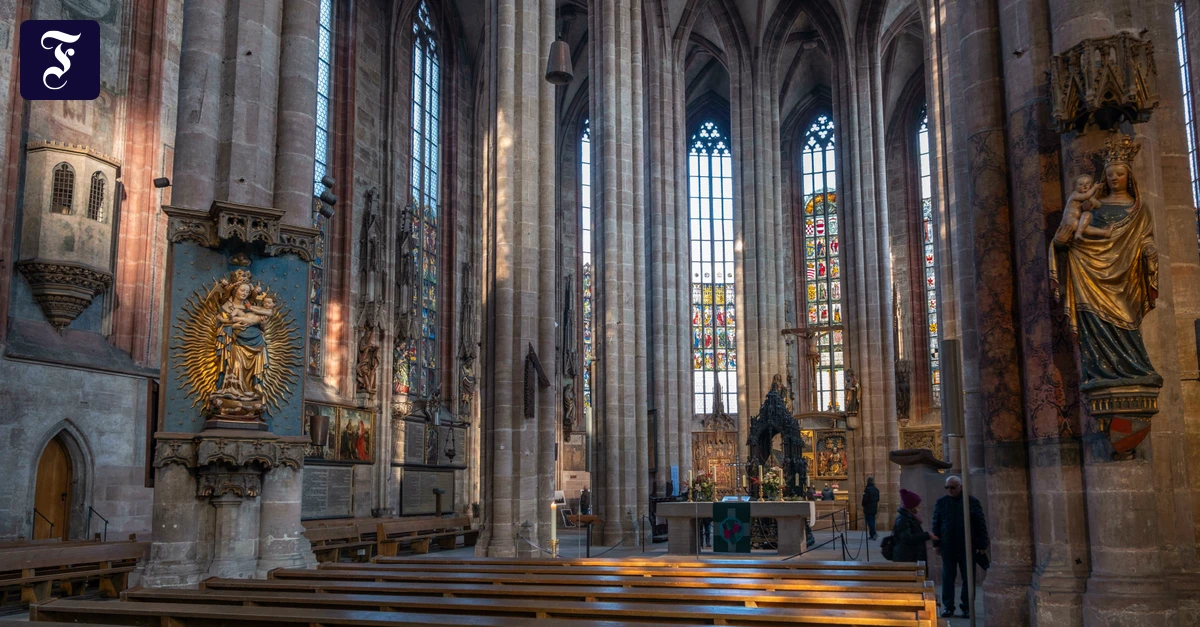
Just a few weeks after Cologne Cathedral, the next big one is announced Church to charge admission in the future: an entrance fee of five euros will be required to visit the Nuremberg city church of St. Sebald. Seniors and students pay 2.50 euros, as St. Sebald announced on Thursday afternoon. Visitors under the age of 18 can still visit the Protestant church free of charge, and access to church services and devotions also remains free. The new regulation will apply from May 17th and will therefore come into force earlier than in Cologne, where the archdiocese only starts collecting entrance fees from July.
The priest of St. Sebald, Martin Brons, explained the background to the decision in detail to the FAZ. St. Sebald is one of the three large churches in the city, along with the Lorenzkirche and the Catholic Frauenkirche. The Lorenz Church is considered the most famous and attractive in the trio. The Sebaldus Church, on the other hand, is the oldest church in the former imperial city and is also considered its most distinguished community. “Because of Nuremberg’s special history with its patrician cathedrals, we also have a lot of maintenance work to do,” explains Brons.
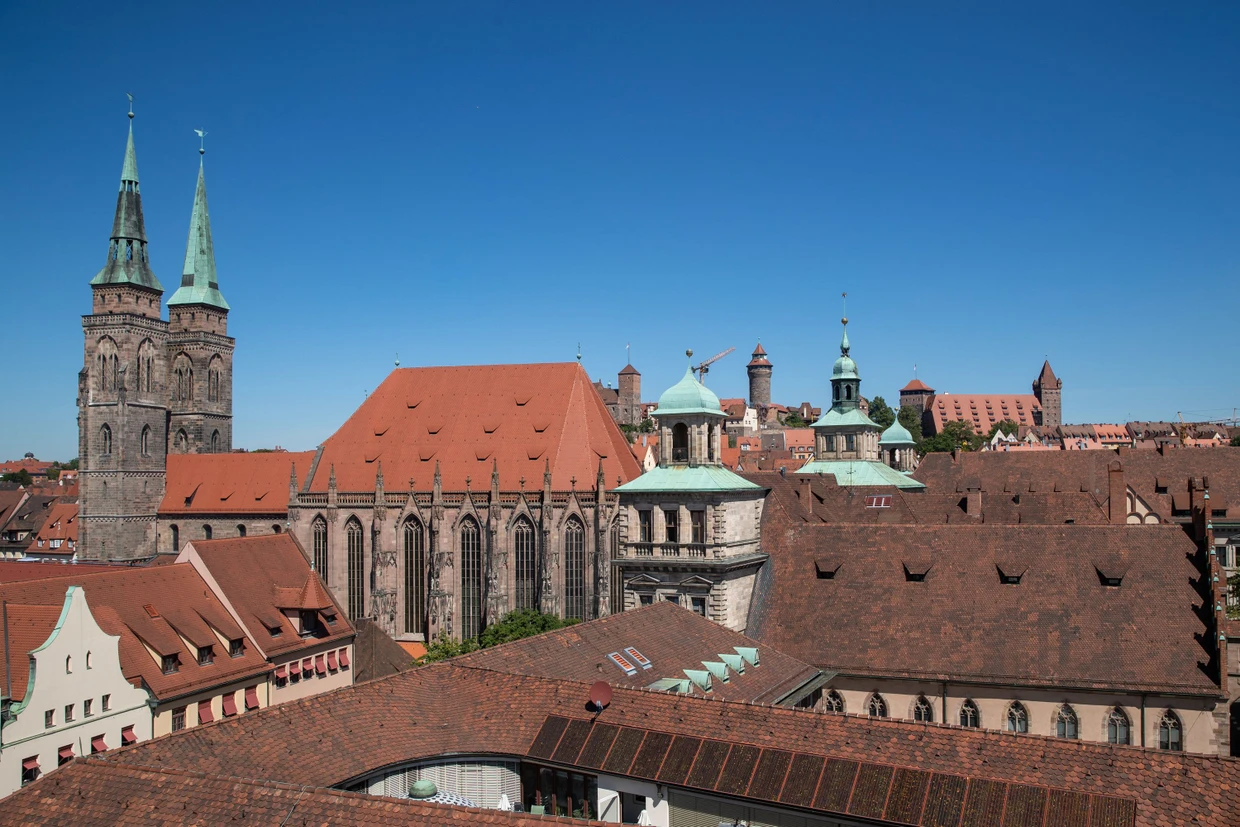
Unlike other important church buildings, the construction burden does not lie primarily with the city, the state or a large church body, but with the church community with its 2,000 members. He receives around 40,000 euros annually from the regional church and around 17,000 euros from the city, says Brons. “However, we need 320,000 euros a year for maintenance and care alone.” And the parish already knows that in the coming years it will have to invest 1.5 million euros in fire protection and two million euros in the preservation of works of art by the late Gothic sculptor Adam Kraft. In total, expenses of six million euros will be incurred over the next five years.
500,000 people visit the church every year
Even a parish like St. Sebald, whose church council is concentrated on economic expertise, cannot afford such sums. The committee includes, among others, a business professor, a notary, an architect, a Siemens manager, several entrepreneurs and two museum directors. The parish also founded a non-profit GmbH some time ago. The shareholders also include the foundation of a patrician family that has been associated with St. Sebald’s Church since the Middle Ages.

With this construct, the parish aims to expand and professionalize its offerings, including a café and a choir academy. Parish priest Martin Brons calls this strategy “ekklesiopreneurship.” Due to the strained financial situation of the regional churches, he sees little other option for the parishes. “We have decided not to keep making cuts, but rather to grow and take advantage of opportunities.” The number of people attending church services is increasing and is currently around 100 on average.
The church council did not take the decision to charge an entrance fee in the future lightly. She wasn’t quick to make the announcement either Cologne. “We analyzed the situation for years and came to the conclusion that there was no way around it,” reports Brons. The approximately 500,000 visitors who have come to Albrecht Dürer’s baptismal church each year only left an average of 30 cents per person as a donation.
“I think it’s fair to involve tourists in the preservation”
With the new model, which also includes an annual ticket for 15 euros, the community hopes to generate annual income of around 600,000 euros. The parish is counting on many visitors from abroad to accept the new model because they are already familiar with it from their home countries. “I also think it’s fair to involve tourists in the preservation,” says Brons. The priest emphasizes that visitors are offered more for the entrance fee than before. An audio walk is included in the price, and children will receive a discovery map in the future.
Nevertheless, like in Cologne, the church could face unpleasant discussions. In Germany, with a few exceptions such as the Berlin Cathedral or the Jakobskirche in Rothenburg ob der Tauber, citizens are not yet used to having to pull out their wallets at the church door. Church members in particular could ask themselves whether they are not already contributing enough to preserving Christian cultural heritage by paying church taxes. Pastor Brons understands this objection. Although they had considered letting church members into St. Sebald’s Church free of charge, membership could not be controlled in practice. This is only possible for members of your own community, who will continue to have free access.
The debate will certainly also be followed with interest in the neighboring Lorenzkirche on the other side of the Pegnitz. Both parishes have been competing with each other for centuries. Should St. Sebald suffer a (church) shipwreck with the entrance fee, St. Lorenz should stay away from it. If the model works, a combination ticket for both churches would be conceivable in the future. And churches in other cities could also increasingly think about covering the immense costs of maintaining their buildings through entrance fees.