Taiwan’s worst drought in 75 years exposed not state failure but the quiet success of a decade of water investment — a resilience story the media rarely tells and the DPP rarely gets credit for
-
By Michael Turton / Contributing reporter
The rarest media reports involve things that work. It is not news that the traffic lights function normally or medicines are dispensed routinely from hospital pharmacies. Trains come and go on time with nary a peep from the media. Only when systems fail do reporters rush to the scene.
The first half of the year saw the worst drought in 75 years in Taiwan. The Water Resources Agency (WRA) said that reservoirs south of the Hsinchu-Yilan line this winter received between 7 and 37 percent of the rainfall they received during the same period last year. Rainfall at reservoirs in Hsinchu County and northern Miaoli County were 60-80 percent of the level received during the severe drought of 2021, the WRA said.
Buried in the body of the Taipei Times report of the countermeasures taken by the WRA were the changes to the water distribution implemented under the Forward-looking Infrastructure Development Plan (前瞻基礎建設計畫) beginning in the administration of Democratic Progressive Party (DPP) president Tsai Ing-wen (蔡英文). These included measures to distribute water resources across regional lines and pipelines built between the nation’s catchment systems to move water around, along with water reuse and conservation measures. The former enabled Taiwan to move 810 million tons of water, including 232,000 tons diverted daily to Hsinchu. The pipeline system transported 390 million tons of water. The WRA proudly stated that the government’s response enabled the nation to meet current water demands.
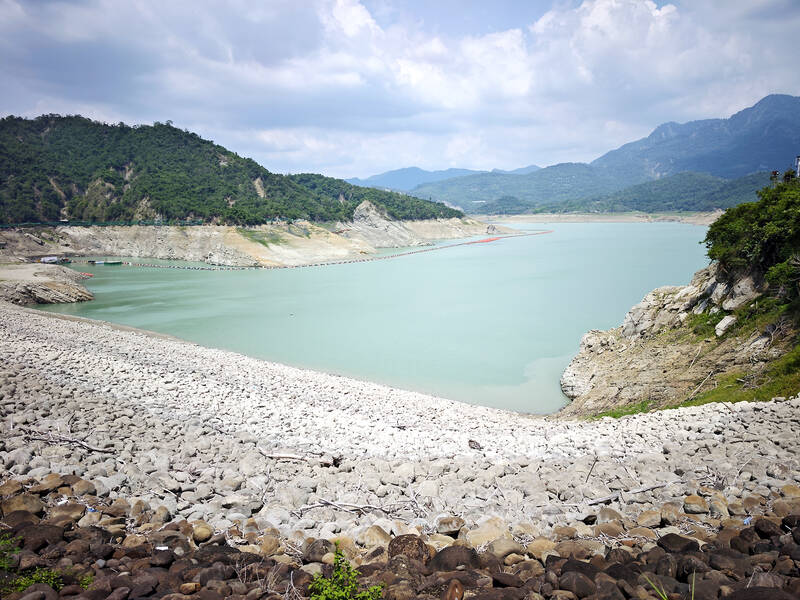
Photo: Wu Chun-feng, Taipei Times
The resilience displayed by the WRA, with minimal rationing and little disruption of industrial production in the face of the worst drought in decades was largely due to the expansion and reorganization of the nation’s water infrastructure during the last decade under the DPP’s Forward-looking Infrastructure Development Plan. This major DPP success has flown under the radar. It deserves recognition.
‘STRING OF PEARLS’
The program of connecting the reservoirs is known as the “string of pearls” (珍珠串計畫). As Justin Kollar observed in a sharp paper on water infrastructure, the program, which creates links between reservoirs on the west side of Taiwan to give water officials greater flexibility in moving water around, is marketed as an anti-drought program, but “in practice, its chief function is to safeguard continuous deliveries to science parks in Hsinchu and Tainan during dry periods.”
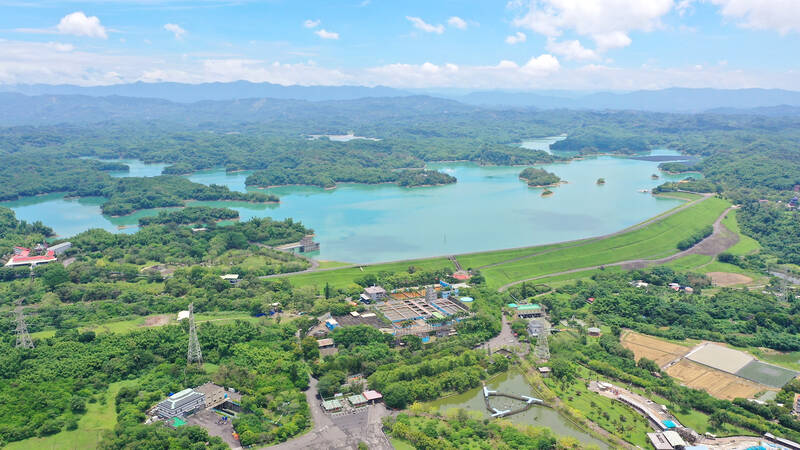
Photo courtesy of the Ministry of Agriculture
This is probably necessary: the chip factories, not agriculture or traditional industries, are driving Taiwan’s monumental economic growth, enabling it to earn foreign exchange to service imports, and preserving the nation’s outsized international relevance.
One important component of the “string of pearls” involves creating pipelines between major reservoirs. For example, the pipeline to connect Chiayi County’s Zengwen (曾文水庫) and Tainan’s Nanhua (南化水庫) reservoirs was completed ahead of schedule in 2024. It is part of a system that also connects to the Gaoping watershed to the south and in periods of abundance, enables overflow of water from the Nanhua Reservoir to the Wushantou Reservoir (烏山頭水庫). Similar systems of pipes interconnect the northern reservoirs with reservoirs in the Hsinchu area. In some areas pipelines connect major rivers, such as the Daan-Dajia River interconnection.
WATER STORAGE
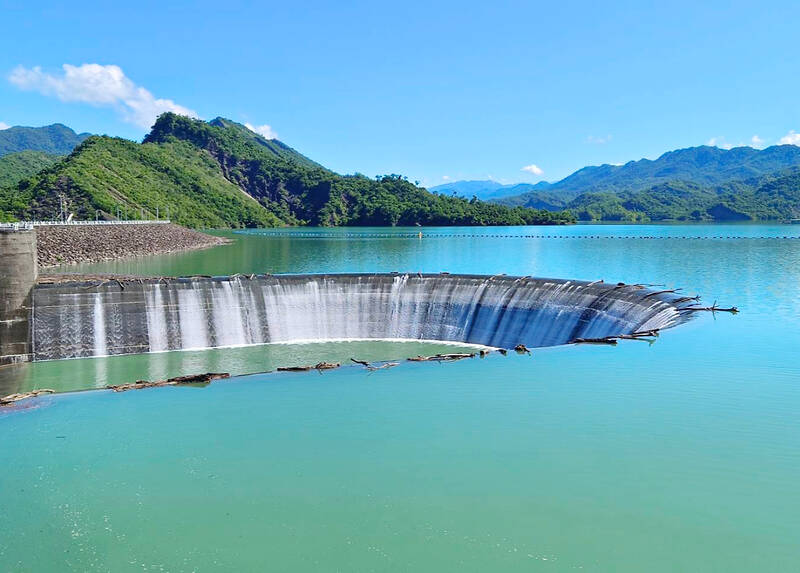
Photo courtesy of reader
Another aspect of the water infrastructure programs of successive DPP administrations is underground and surface water storage sites. The Niaozueitan (鳥嘴潭人工湖) artificial lake project near Nantou County’s Caotun Township (草屯) was completed last year. The aim of the project was to store water in an artificial lake that would provide surface water to reduce agricultural use of groundwater in Changhua County. This would in turn ameliorate that county’s severe subsidence problems.
The program also involves tunnel projects that reduce siltation in reservoirs, a major issue given the constant erosion compounded by illegal development in upstream areas. For example, the tunnel for the Shihmen Reservoir (石門水庫) was completed in 2023 and has extended that reservoir’s service life. Other projects increase water flow to reservoirs and hydropower plants.
Some projects completed under the three DPP administrations were begun in the previous Chinese Nationalist Party (KMT) administration. A hyporheic flow system that operates from upstream of the Gaoping River Weir (高屏攔河堰), the source of 70 percent of Kaohsiung’s water, was begun in 2014. Intended to provide clean water when the water in the weir becomes too turbid for human use or under drought conditions, it draws hyporheic flow water, subsurface water filtered through the sands along the river through a shallow well. Under the Forward-looking Infrastructure Development Plan, a number of such projects have been planned and executed beginning in 2017 along the Houlong (後龍溪), Daan (大安溪), Wu (烏溪) and Jhuoshuei (濁水溪) rivers, and several areas along the Gaoping River (高屏溪). These were followed in 2020 by additional hyporheic flow projects on the Youluo (油羅溪), Daan, Wu (Phases 2 and 3), and Laonong (荖濃溪) rivers.
The Plan also provides funds for local water control projects. For example, in Dongshi township (東石鄉) in Chiayi County, the low-lying areas around Gangkou (港口村), Aogu (鰲鼓村) and Xixia Villages (溪下村) are threatened by flooding during heavy rains. The county government secured NT$989.01 million from the Forward-looking Infrastructure Development Program for a pumping station and retention pond and other facilities. The project is slated for completion next year.
CRITICISM BY CHINA-ALIGNED PARTIES
Because of its potential to do good for both Taiwan and the DPP, the Forward-looking Infrastructure Development Plan has been harshly criticized by the China-aligned parties, the Chinese Nationalist Party (KMT) and the Taiwan People’s Party (TPP), who labeled it “debt-for-future.” Part of this is because the enabling legislation permits the government to bypass some of the restrictions of the Public Debt Act (公共債務法). However, this ability is limited. Some civil society organizations have more reasonably contended that the government is over-investing in rail, and in the wrong places as well.
The plan began with five major projects: railways, water, green energy, digital and urban and rural areas, the last addressing a longstanding DPP goal of reducing the divide in living standards and resource distribution between urban and rural areas. It has since expanded to include projects aimed at the low birth rates, food safety and promoting and cultivating talent. It is likely that as the government identifies urgent problems, it will evolve into new domains.
The WRA is continuing to expand its plans for Taiwan’s water supply resilience. Projects currently underway include pipelines linking the Liyutan Reservoir (鯉魚潭水庫) in Miaoli to Taichung’s Shihkang Dam (石岡壩), which is expected to be completed this month, and accelerated plans to build desalination plants in Hsinchu County and Tainan. These projects will assure a steady supply of water for the nation’s semiconductor manufacturing expansion into central and southern Taiwan.
Once designed to support agriculture, the nation’s water system has been repurposed in the last two decades as the semiconductor industry’s lifeline. At the same time it has also become more resilient and better able to handle serious drought. These achievements are triumphs deserving of greater recognition and understanding. Kudos to the DPP for pushing these programs forward.
Notes from Central Taiwan is a column written by long-term resident Michael Turton, who provides incisive commentary informed by three decades of living in and writing about his adoptive country. The views expressed here are his own.