Friday, October 16, 2026
    The GeoStrategic Consensus
    No Result
    View All Result
    • Login
    • HOME
    • AMERICAS
      • Argentina
      • Brazil
      • Canada
      • Chile
      • Colombia
      • Costa Rica
      • Cuba
      • Dominican Republic
      • Ecuador
      • El Salvador
      • Greenland
      • Guatemala
      • Honduras
      • Mexico
      • Nicaragua
      • Panama
      • Paraguay
      • Peru
      • United States
      • Uruguay
      • Venezuela
    • ASIA-PACIFIC
      • Australia
      • Brunei Darussalam
      • Cambodia
      • China
      • Federated States of Micronesia
      • Fiji
      • Indonesia
      • Japan
      • Kiribati
      • Laos
      • Malaysia
      • Marshall Islands
      • Mongolia
      • Myanmar
      • Nauru
      • New Zealand
      • North Korea
      • Palau
      • Papua New Guinea
      • Philippines
      • Samoa
      • Singapore
      • Solomon Islands
      • South Korea
      • Taiwan
      • Thailand
      • Timor-Leste
      • Tonga
      • Tuvalu
      • Vanuatu
      • Vietnam
    • CARICOM
      • CARICOM – Non-English
        • Haiti
        • Suriname
      • CARICOM Associates
        • Anguilla
        • Bermuda
        • British-Virgin-Islands
        • Cayman-Islands
        • Curacao
        • Turks-and-Caicos
      • CARICOM English
        • Antigua and Barbuda
        • Barbados
        • Belize
        • Dominica
        • Grenada
        • Guyana
        • Jamaica
        • Montserrat
        • Saint Kitts and Nevis
        • Saint Lucia
        • Saint Vincent and the Grenadines
        • The Bahamas
        • Trinidad and Tobago
    • EURASIA
      • Armenia
      • Azerbaijan
      • Balarus
      • Georgia
      • Kazakhstan
      • Kyrgyzstan
      • Moldova
      • Russia
      • Tajikistan
      • Turkmenistan
      • Ukraine
      • Uzbekistan
    • EUROPE
      • Albania
      • Andorra
      • Austria
      • Bosnia and Herzegovina
      • Bulgaria
      • Croatia
      • Cyprus
      • Czech Republic
      • Denmark
      • Estonia
      • Finland
      • France
      • Germany
      • Greece
      • Holy See
      • Hungary
      • Iceland
      • Ireland
      • Italy
      • Kosovo
      • Latvia
      • Liechtenstein
      • Lithuania
      • Luxembourg
      • Malta
      • Monaco
      • Montenegro
      • Netherlands
      • North Macedonia
      • Norway
      • Poland
      • Portugal
      • Romania
      • San Marino
      • Serbia
      • Slovakia
      • Slovenia
      • Spain
      • Sweden
      • Switzerland
      • United Kingdom
    • MIDDLE EAST AND NORTH AFRICA
      • Algeria
      • Bahrain
      • Egypt
      • Iran
      • Iraq
      • Israel
      • Jordan
      • Kuwait
      • Lebanon
      • Lybia
      • Morocco
      • Oman
      • Palestinian Territories
      • Qatar
      • Saudi Arabia
      • Syria
      • Tunisia
      • Turkey
      • United Arab Emirates
      • Western Sahara
      • Yemen
    • SOUTH ASIA
      • Afghanistan
      • Bangladesh
      • Bhutan
      • India
      • Maldives
      • Nepal
      • Pakistan
      • Sri Lanka
    • SUB-SAHARAN AFRICA
      • Angola
      • Benin
      • Botswana
      • Burkina Faso
      • Burundi
      • Cabo Verde
      • Cameroon
      • Central African Republic
      • Chad
      • Comoros
      • Cote d’Ivoire
      • Democratic Republic of the Congo
      • Djibouti
      • Equatorial Guinea
      • Eritrea
      • Eswatini
      • Ethiopia
      • Gabon
      • Gambia
      • Ghana
      • Guinea
      • Guinea Bissau
      • Kenya
      • Lesotho
      • Liberia
      • Madagascar
      • Malawi
      • Mali
      • Mauritania
      • Mauritius
      • Mozambique
      • Namibia
      • Niger
      • Nigeria
      • Republic of the Congo
      • Rwanda
      • Sao Tome and Principe
      • Senegal
      • Seychelles
      • Sierra Leone
      • Somalia
      • South Africa
      • South Sudan
      • Sudan
      • Tanzania
      • Togo
      • Uganda
      • Zambia
      • Zimbabwe
    • HOME
    • AMERICAS
      • Argentina
      • Brazil
      • Canada
      • Chile
      • Colombia
      • Costa Rica
      • Cuba
      • Dominican Republic
      • Ecuador
      • El Salvador
      • Greenland
      • Guatemala
      • Honduras
      • Mexico
      • Nicaragua
      • Panama
      • Paraguay
      • Peru
      • United States
      • Uruguay
      • Venezuela
    • ASIA-PACIFIC
      • Australia
      • Brunei Darussalam
      • Cambodia
      • China
      • Federated States of Micronesia
      • Fiji
      • Indonesia
      • Japan
      • Kiribati
      • Laos
      • Malaysia
      • Marshall Islands
      • Mongolia
      • Myanmar
      • Nauru
      • New Zealand
      • North Korea
      • Palau
      • Papua New Guinea
      • Philippines
      • Samoa
      • Singapore
      • Solomon Islands
      • South Korea
      • Taiwan
      • Thailand
      • Timor-Leste
      • Tonga
      • Tuvalu
      • Vanuatu
      • Vietnam
    • CARICOM
      • CARICOM – Non-English
        • Haiti
        • Suriname
      • CARICOM Associates
        • Anguilla
        • Bermuda
        • British-Virgin-Islands
        • Cayman-Islands
        • Curacao
        • Turks-and-Caicos
      • CARICOM English
        • Antigua and Barbuda
        • Barbados
        • Belize
        • Dominica
        • Grenada
        • Guyana
        • Jamaica
        • Montserrat
        • Saint Kitts and Nevis
        • Saint Lucia
        • Saint Vincent and the Grenadines
        • The Bahamas
        • Trinidad and Tobago
    • EURASIA
      • Armenia
      • Azerbaijan
      • Balarus
      • Georgia
      • Kazakhstan
      • Kyrgyzstan
      • Moldova
      • Russia
      • Tajikistan
      • Turkmenistan
      • Ukraine
      • Uzbekistan
    • EUROPE
      • Albania
      • Andorra
      • Austria
      • Bosnia and Herzegovina
      • Bulgaria
      • Croatia
      • Cyprus
      • Czech Republic
      • Denmark
      • Estonia
      • Finland
      • France
      • Germany
      • Greece
      • Holy See
      • Hungary
      • Iceland
      • Ireland
      • Italy
      • Kosovo
      • Latvia
      • Liechtenstein
      • Lithuania
      • Luxembourg
      • Malta
      • Monaco
      • Montenegro
      • Netherlands
      • North Macedonia
      • Norway
      • Poland
      • Portugal
      • Romania
      • San Marino
      • Serbia
      • Slovakia
      • Slovenia
      • Spain
      • Sweden
      • Switzerland
      • United Kingdom
    • MIDDLE EAST AND NORTH AFRICA
      • Algeria
      • Bahrain
      • Egypt
      • Iran
      • Iraq
      • Israel
      • Jordan
      • Kuwait
      • Lebanon
      • Lybia
      • Morocco
      • Oman
      • Palestinian Territories
      • Qatar
      • Saudi Arabia
      • Syria
      • Tunisia
      • Turkey
      • United Arab Emirates
      • Western Sahara
      • Yemen
    • SOUTH ASIA
      • Afghanistan
      • Bangladesh
      • Bhutan
      • India
      • Maldives
      • Nepal
      • Pakistan
      • Sri Lanka
    • SUB-SAHARAN AFRICA
      • Angola
      • Benin
      • Botswana
      • Burkina Faso
      • Burundi
      • Cabo Verde
      • Cameroon
      • Central African Republic
      • Chad
      • Comoros
      • Cote d’Ivoire
      • Democratic Republic of the Congo
      • Djibouti
      • Equatorial Guinea
      • Eritrea
      • Eswatini
      • Ethiopia
      • Gabon
      • Gambia
      • Ghana
      • Guinea
      • Guinea Bissau
      • Kenya
      • Lesotho
      • Liberia
      • Madagascar
      • Malawi
      • Mali
      • Mauritania
      • Mauritius
      • Mozambique
      • Namibia
      • Niger
      • Nigeria
      • Republic of the Congo
      • Rwanda
      • Sao Tome and Principe
      • Senegal
      • Seychelles
      • Sierra Leone
      • Somalia
      • South Africa
      • South Sudan
      • Sudan
      • Tanzania
      • Togo
      • Uganda
      • Zambia
      • Zimbabwe
    No Result
    View All Result
    Agentially
    No Result
    View All Result
    Home MIDDLE EAST and NORTH AFRICA Algeria

    No bag of money… No crowding… No bureaucracy! – Al-Shorouk Online

    The Analyst by The Analyst
    October 12, 2026
    in Algeria
    No bag of money… No crowding… No bureaucracy! – Al-Shorouk Online


    Al-Shorouk reveals smart solutions from China that have changed the lives of 1.4 billion people:

    “Shorouk” envoy to Beijing: Iman Kimouche

    The Chinese no longer need a wallet for many of their daily transactions, after their country turned into one of the largest mobile payment experiences in the world, led by the “AliPay” and “WeChat Pay” platforms, which made buying a meal or a bottle of water from a small store, paying for purchases and transferring money, all done in seconds by scanning an electronic code or tapping on the screen. The journey began with “AliPay” in late 2004, then expanded with the spread of smartphones, before “WeChat Pay” provided payment. Digital has made a strong push since 2013, benefiting from its connection to an application used by the Chinese to communicate and exchange messages, as the phone began to perform the function of a wallet in a large number of transactions, in an experiment that raises a question that goes beyond technology to the future of financial transactions, and what can Algeria benefit from as it moves towards expanding electronic payment and reducing dependence on cash liquidity, and even approved new procedures to circulate it through the draft finance law for the year 2027, which is currently on the parliamentary table.

    READ ALSO

    Having fun in the midst of pain and loss – Al-Shorouk Online

    Reassurances about fuel prices, deficits, and 9 priorities during 2027! – Al-Shorouk Online

    In the first days of our arrival in China, as part of a training stay and press exchange organized by the Chinese International Press Exchange Center, I made sure to put money in my bag before going out, as I do whenever I arrive in a new country, until I began to discover that some of the things that we consider necessary in other countries are not present here in the same way in the daily lives of many people, as the Chinese deal with the phone more than they deal with a wallet. They open “WeChat” to communicate with their colleagues and friends, and then use it to pay, exchange information, and get things done. Another, after a few days, I and the entire press delegation that came to Beijing from different countries realized that the money we had prepared in anticipation of emergencies was not necessary in a large number of daily situations, because the phone had become accepted by a wide segment of merchants and service providers, and using it for payment had become a normal matter that did not require explanation or surprise.
    We thought about that whenever we remembered the number of times a person needs money, to search for the appropriate denominations and wait for the rest, and then I return to the question that interests me as an Algerian journalist: What prevents this ease from becoming a larger part of our lives as well? Algeria has made strides in this field, but launching an application is not enough to change habits that have been stable for years. The phone does not pay alone, but rather it needs services that work, merchants that accept digital payments, reliable networks, and rules that protect people’s money and data, while providing an alternative for those who cannot use the phone.

    One of the Chinese professors who teaches us at Renmin University in Beijing has alerted us to the need to be wary of suspicious links, especially in a time when artificial intelligence has become capable of creating images that mimic people’s features and imitate their voices. The voice we hear or the face we see is no longer always sufficient evidence of the identity of the speaker. Hence, electronic payment is no longer just a technical issue, but rather a matter of trust and security, and knowing that money will not be lost due to a defect and that the data will not become accessible to those who do not have the right to use it.

    From neighborhood stores to trillions of yuan

    The spread of electronic payment in China, whose population exceeds 1.4 billion people, was not just a result of the development of technology, but also came in response to a daily need to facilitate transactions and reduce time and effort. The Alipay and WeChat Pay platforms allowed merchants, including small shop owners, to receive money via electronic codes that do not require expensive banking equipment. The spread of sending money in digital red envelopes during the Chinese New Year celebrations in 2014 contributed to the introduction of larger numbers of users. By service.
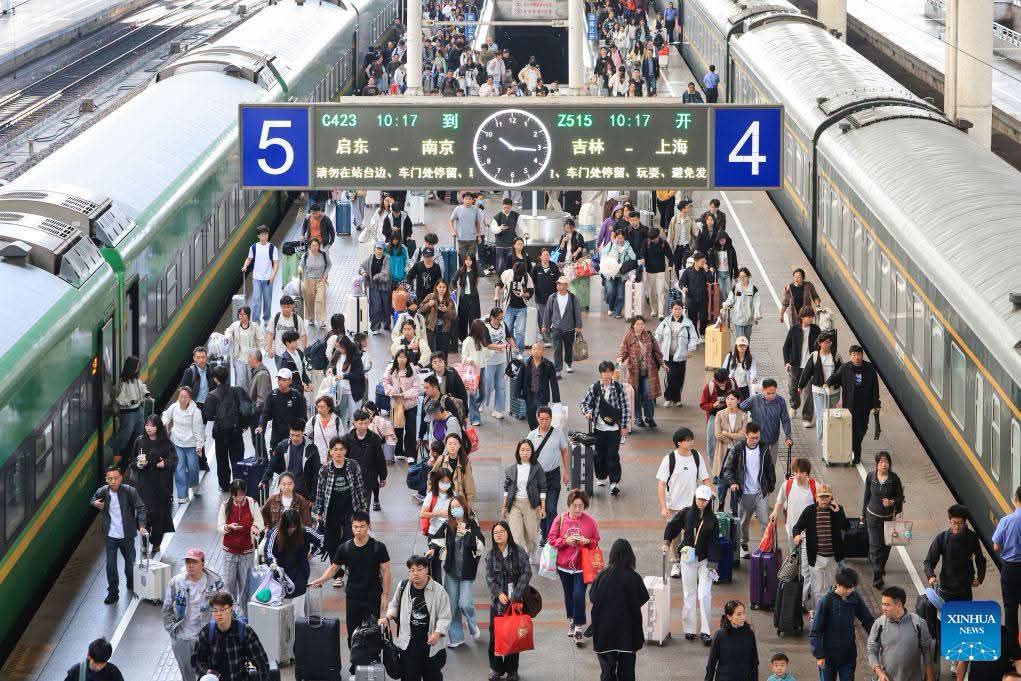
    The numbers reveal the scale of this transformation, as data from the People’s Bank of China indicates that during the year 2024, banks implemented about 210.98 billion mobile phone payments, with a total value of 563.7 trillion yuan, while non-banking payment institutions processed about 1.34 trillion online payments worth 331.68 trillion yuan, which is a separate statistical category from phone banking payments. The number of monthly active users of the “WeChat” application and its international version also exceeded 1.4 billion users globally by the end of the first quarter of 2026, according to the developer, while the average commercial payments via WeChat Pay have exceeded one billion transactions per day since the last quarter of 2019. These numbers do not mean that all WeChat users use the payment service or that all of these transactions take place within China.

    The success of the experiment was not limited to the ease of payment, but rather was linked to the wide acceptance of this method by merchants and its spread among citizens, as the more stores that accept payment by phone, the more beneficial its use becomes for the consumer. Studies on Chinese rural families have shown that payment by phone can help increase consumer spending by facilitating transactions and improving access to financial services, with results varying according to the circumstances of families and regions. However, this shift did not lead to a complete dispensation of banknotes, as the Chinese authorities still stress the necessity of ensuring the acceptance of cash and providing means of payment for those who cannot use applications. Especially the elderly and some foreign visitors.

    At five in the morning… the city does not wait for everyone to wake up

    When our professors talked about the Chinese, I stopped when I noticed that they tend to go to bed early and wake up early, and I began to think about it in a different way when I linked it to the rhythm of life in Beijing. At five in the morning, some people have gone out to the parks to exercise, and others begin their day preparing for work, while transportation prepares to receive passengers. This does not mean that Beijing is a city that all sleeps early, but the morning gives an opportunity to see an aspect of people’s lives before the roads become crowded and work hours begin, and to think about how to manage the lives of this large population.

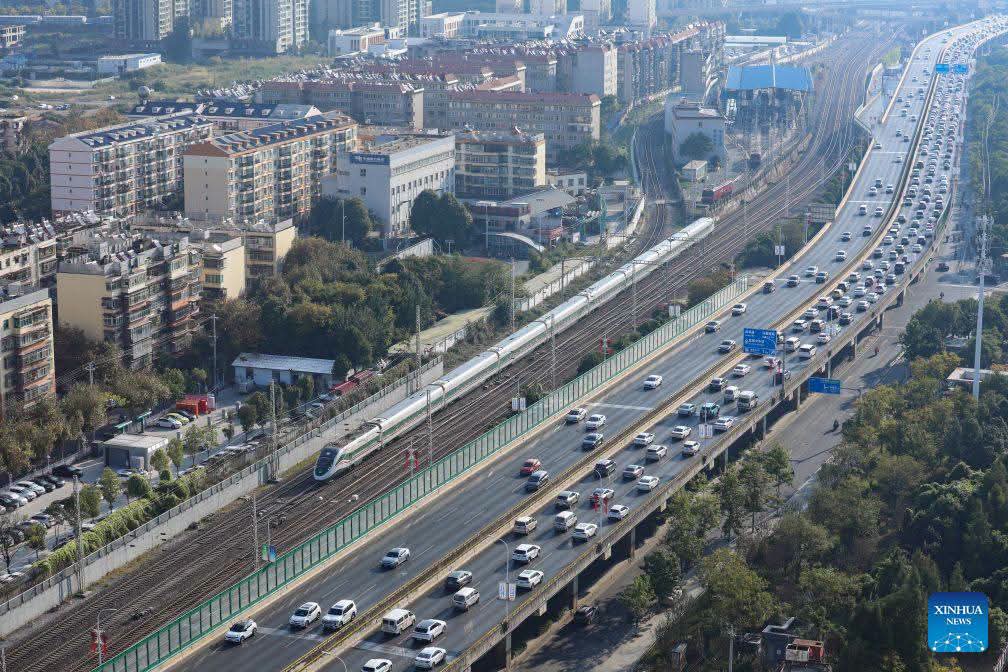
    In Beijing, the metro provides an important means of transportation, and buses complete part of the network, while bicycles and electric bicycles help to cover short distances, and some buses benefit from dedicated routes that help improve their movement. However, crowding does not disappear, and the metro does not become the best choice for every trip. Sometimes choosing the route is more important than choosing the means of transportation itself, and sometimes leaving early is more effective than spending time in traffic congestion.

    This is what makes us stop at the way of thinking about congestion in Algeria. Often the talk focuses on the cars that fill the roads, while the question deserves to be expanded to include the alternatives available to their owners. Can an employee rely on a bus whose arrival time can be predicted? Are the new neighborhoods connected to a transportation network that allows residents to access workplaces and services? When the citizen does not find a reliable alternative, the car becomes a necessity, even if the trip is short, and when an integrated transportation network is available, the choice becomes possible. Therefore, the lesson is not only that people wake up early, but that city traffic management begins with planning services and distributing means of transportation.

    The professor also pointed out the rules for electric bicycles and wearing a helmet to reduce accidents, and control procedures can range according to local rules from a warning to a fine and then more severe measures in some cases. One procedure cannot be generalized to all Chinese cities, but the spread of a new means of transportation requires clear safety rules, as the road brings together the car driver, the bus, the cyclist and the pedestrian, and if the use of bicycles expands without taking into account the safety of others, the means that saves time may turn into a source of danger. On the other hand, punishment alone is not sufficient if the roads are not prepared or The rules were not clear to users.

    Face recognition in train and metro stations

    At train stations, the visitor gets to know another aspect of digital life, as some transportation systems can allow passengers to be verified through facial recognition to speed up entry and transit procedures, but what deserves attention is not the speed of traffic alone, but rather what happens when human data becomes part of the service system. The face is not a card that can be replaced if we lose it. Therefore, the more facial recognition technologies expand, the more important it is to know the limits of their use and the entities that can access the data and the guarantees that protect it.

    We noticed a feeling of reassurance in many public places during our stay. This is a personal observation that alone is not sufficient to make a comprehensive judgment about security in China, but regulation is present in many details of public life, and what should be noted is that comfort and privacy are not necessarily opposites, as technology can facilitate entry and movement, but its success should also be measured by its ability to respect the rights of the people who use it.

    A complaint reaches officials due to bureaucracy…what happens next?

    One of the things that professors at the university explained to us is the existence of channels for receiving complaints and comments within Chinese institutions and bodies, including universities, where a mailbox or electronic means can be allocated to communicate concerns to officials. How many problems do not start from the absence of a solution, but rather from the person not knowing where to go, who is responsible for his file, and how can he prove that he has submitted a request or complaint? In some institutions, digital tools can be used to help formulate and classify complaints, and artificial intelligence may contribute to organizing messages and directing them to the competent authorities. Different institutions also use performance indicators to measure work results and follow up on achieving goals, but the most important question relates to what happens after the complaint is submitted. Does the complainant know where it has reached? Does he get a response? Do procedures change if a recurring defect is detected? The existence of these channels does not automatically mean that every complaint is resolved or that every official is held accountable, as evaluating their effectiveness requires knowing the follow-up mechanisms and actual results.

    Here is an area for benefit in Algeria, as digitization can reduce movement between offices and allow tracking of files and complaints, provided that we do not limit ourselves to transferring paper procedures to a screen. If the citizen needs the same documents, waits the same amount of time, and does not know who is handling his problem, then bureaucracy has not disappeared, but only changed its form. The administration that saves time is not the one that has the most applications, but rather the one that makes the citizen know what is required of him, who is handling his treatment, and when he can get an answer.

    After more than forty days in China, we realized that what Algeria really deserves to transfer is the ability to transform technology and organization into details that make people’s lives easier. China is not a ready-made recipe, but behind its experience are lessons that start from the simplest daily transaction, and may make the biggest difference in a citizen’s life.


    Source link

    Related Posts

    Having fun in the midst of pain and loss – Al-Shorouk Online
    Algeria

    Having fun in the midst of pain and loss – Al-Shorouk Online

    October 16, 2026
    Reassurances about fuel prices, deficits, and 9 priorities during 2027! – Al-Shorouk Online
    Algeria

    Reassurances about fuel prices, deficits, and 9 priorities during 2027! – Al-Shorouk Online

    October 16, 2026
    New bulletin: Heavy thunderstorms reaching 40 mm across these states – Al-Shorouk Online
    Algeria

    New bulletin: Heavy thunderstorms reaching 40 mm across these states – Al-Shorouk Online

    October 16, 2026
    Professor Abdel Aziz Rabhi is among 2% of the best scientists in the world – Al-Shorouk Online
    Algeria

    Professor Abdel Aziz Rabhi is among 2% of the best scientists in the world – Al-Shorouk Online

    October 16, 2026
    Special alert: Heavy rain reaching 50 mm across 17 states until Friday – Al-Shorouk Online
    Algeria

    Special alert: Heavy rain reaching 50 mm across 17 states until Friday – Al-Shorouk Online

    October 15, 2026
    3 important files on the government meeting table – Al-Shorouk Online
    Algeria

    3 important files on the government meeting table – Al-Shorouk Online

    October 15, 2026
    Next Post
    San Marino Under 22 Championship, Virtus beats Academy 5-0

    San Marino Under 22 Championship, Virtus beats Academy 5-0

    POPULAR NEWS

    2026 Regional and International Conventions of Jehovah’s Witnesses

    2026 Regional and International Conventions of Jehovah’s Witnesses

    July 7, 2026
    Thaksin, Yingluck and Paetongtarn meet Indonesian President Prabowo for investment talks

    Thaksin, Yingluck and Paetongtarn meet Indonesian President Prabowo for investment talks

    July 13, 2026
    This is how Nicolás Maduro and Cilia Flores reappeared in their hearing

    This is how Nicolás Maduro and Cilia Flores reappeared in their hearing

    July 24, 2026

    All posts

    July 23, 2026
    No deliverance: when gig workers fall prey to road accidents

    No deliverance: when gig workers fall prey to road accidents

    July 25, 2026

    EDITOR'S PICK

    Tremor in Peru today, July 11: follow the latest report from the IGP with the epicenter and magnitude of the earthquake

    Tremor in Peru today, July 11: follow the latest report from the IGP with the epicenter and magnitude of the earthquake

    July 11, 2026
    The Child Is Always Watching

    The Child Is Always Watching

    August 6, 2026
    Pacific Island Nauru Officially Changes Name to Naoero, President Tells UN

    Pacific Island Nauru Officially Changes Name to Naoero, President Tells UN

    September 24, 2026
    Trump to Break Ground on Arch Before Getting Approval

    Trump to Break Ground on Arch Before Getting Approval

    September 4, 2026

    Recent Posts

    • Oman clinch silver medal at Arab volleyball tourney
    • In Khost, an administrative building was built in the third district of the city at a cost of nearly 7 million Afghanis
    • Former Madhya Pradesh CM Shivraj Singh Chouhan’s twin remarks fuel buzz of rift within State BJP unit
    • A shooting is reported at an elementary school in Oregon, United States, which leaves four dead this Thursday, October 15: authorities investigate

      © 2026 Agentially - Navigating shifting sovereignties and global risk .

      Welcome Back!

      Login to your account below

      Forgotten Password?

      Retrieve your password

      Please enter your username or email address to reset your password.

      Log In
      No Result
      View All Result
      • HOME
      • AMERICAS
        • Argentina
        • Brazil
        • Canada
        • Chile
        • Colombia
        • Costa Rica
        • Cuba
        • Dominican Republic
        • Ecuador
        • El Salvador
        • Greenland
        • Guatemala
        • Honduras
        • Mexico
        • Nicaragua
        • Panama
        • Paraguay
        • Peru
        • United States
        • Uruguay
        • Venezuela
      • ASIA-PACIFIC
        • Australia
        • Brunei Darussalam
        • Cambodia
        • China
        • Federated States of Micronesia
        • Fiji
        • Indonesia
        • Japan
        • Kiribati
        • Laos
        • Malaysia
        • Marshall Islands
        • Mongolia
        • Myanmar
        • Nauru
        • New Zealand
        • North Korea
        • Palau
        • Papua New Guinea
        • Philippines
        • Samoa
        • Singapore
        • Solomon Islands
        • South Korea
        • Taiwan
        • Thailand
        • Timor-Leste
        • Tonga
        • Tuvalu
        • Vanuatu
        • Vietnam
      • CARICOM
        • CARICOM – Non-English
          • Haiti
          • Suriname
        • CARICOM Associates
          • Anguilla
          • Bermuda
          • British-Virgin-Islands
          • Cayman-Islands
          • Curacao
          • Turks-and-Caicos
        • CARICOM English
          • Antigua and Barbuda
          • Barbados
          • Belize
          • Dominica
          • Grenada
          • Guyana
          • Jamaica
          • Montserrat
          • Saint Kitts and Nevis
          • Saint Lucia
          • Saint Vincent and the Grenadines
          • The Bahamas
          • Trinidad and Tobago
      • EURASIA
        • Armenia
        • Azerbaijan
        • Balarus
        • Georgia
        • Kazakhstan
        • Kyrgyzstan
        • Moldova
        • Russia
        • Tajikistan
        • Turkmenistan
        • Ukraine
        • Uzbekistan
      • EUROPE
        • Albania
        • Andorra
        • Austria
        • Bosnia and Herzegovina
        • Bulgaria
        • Croatia
        • Cyprus
        • Czech Republic
        • Denmark
        • Estonia
        • Finland
        • France
        • Germany
        • Greece
        • Holy See
        • Hungary
        • Iceland
        • Ireland
        • Italy
        • Kosovo
        • Latvia
        • Liechtenstein
        • Lithuania
        • Luxembourg
        • Malta
        • Monaco
        • Montenegro
        • Netherlands
        • North Macedonia
        • Norway
        • Poland
        • Portugal
        • Romania
        • San Marino
        • Serbia
        • Slovakia
        • Slovenia
        • Spain
        • Sweden
        • Switzerland
        • United Kingdom
      • MIDDLE EAST AND NORTH AFRICA
        • Algeria
        • Bahrain
        • Egypt
        • Iran
        • Iraq
        • Israel
        • Jordan
        • Kuwait
        • Lebanon
        • Lybia
        • Morocco
        • Oman
        • Palestinian Territories
        • Qatar
        • Saudi Arabia
        • Syria
        • Tunisia
        • Turkey
        • United Arab Emirates
        • Western Sahara
        • Yemen
      • SOUTH ASIA
        • Afghanistan
        • Bangladesh
        • Bhutan
        • India
        • Maldives
        • Nepal
        • Pakistan
        • Sri Lanka
      • SUB-SAHARAN AFRICA
        • Angola
        • Benin
        • Botswana
        • Burkina Faso
        • Burundi
        • Cabo Verde
        • Cameroon
        • Central African Republic
        • Chad
        • Comoros
        • Cote d’Ivoire
        • Democratic Republic of the Congo
        • Djibouti
        • Equatorial Guinea
        • Eritrea
        • Eswatini
        • Ethiopia
        • Gabon
        • Gambia
        • Ghana
        • Guinea
        • Guinea Bissau
        • Kenya
        • Lesotho
        • Liberia
        • Madagascar
        • Malawi
        • Mali
        • Mauritania
        • Mauritius
        • Mozambique
        • Namibia
        • Niger
        • Nigeria
        • Republic of the Congo
        • Rwanda
        • Sao Tome and Principe
        • Senegal
        • Seychelles
        • Sierra Leone
        • Somalia
        • South Africa
        • South Sudan
        • Sudan
        • Tanzania
        • Togo
        • Uganda
        • Zambia
        • Zimbabwe

      © 2026 Agentially - Navigating shifting sovereignties and global risk .

      This website uses cookies. By continuing to use this website you are giving consent to cookies being used. Visit our Privacy and Cookie Policy.