Contributed by: ISMAEL RUIZ
ENDOMETRIOSIS AND UTERINE fibroids are two of the most common gynaecological conditions. While they have important differences, they also have things in common. Both can lead to serious complications, affect fertility and have symptoms related to the menstrual cycle. And both are the focus of medical innovations to give women better treatment options, explains Megan Wasson, D.O., a gynaecologist and chair of gynaecology at Mayo Clinic in Arizona.
“They’re both relatively common,” Dr.Wasson says.
“There can be some overlapping symptoms, but the majority of symptoms vary and the diseases progress differently. Fibroids and endometriosis can run in families. Neither condition is preventable.”
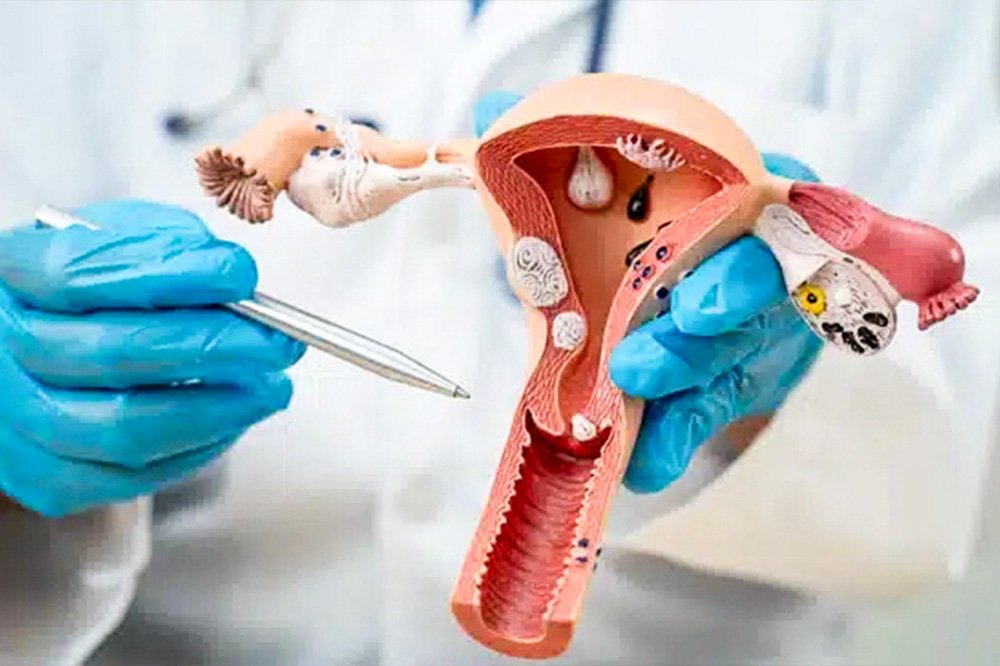
Fibroids grow in the uterus. They are almost always non-cancerous.You can have one or more. A fibroid may be too small to see with the eyes alone or it can grow as big as a grapefruit or larger, even filling the pelvis or stomach area and making someone appear pregnant.
“These are not just little inconveniences. These are very large, very significant masses and they can really impact quality of life,” Dr.
Wasson says.
Many people do not experience symptoms and only learn they have fibroids due to a pelvic exam or ultrasound. Others may have symptoms such as heavy, painful, longer or more frequent periods; pain in the pelvis, stomach area or lower back; frequent or difficult urination; constipation; or pain during sex.
“When fibroids become very enlarged, you can actually feel them through the abdominal wall.You can get to the point that your pants do not fit, you have significant abdominal bloating, and the fibroids are pushing on other organs such as the bladder, causing you to have to go to the bathroom all the time, among other symptoms,” Dr.Wasson explains.
“You can have constipation because the fibroids are pushing on the bowel and not allowing things to move.”
In the past, women whose fibroids were problematic were commonly told that a hysterectomy- surgery that removes the uterus, also ending the ability to become pregnant- was the only treatment option.
Now, medical advances are minimizing the impact of fibroid removal surgery on patients, often preserving the uterus and fertility, Dr.Wasson says. Other fibroid treatment options include medications that shrink fibroids and procedures that do not require surgery, she adds.
For example, interventional radiologists can perform a uterine fibroid embolization to block the blood supply to fibroids, causing them to shrink. Patients can usually leave the same day. Reducing the size and alleviating symptoms can help significantly, Dr.
Wasson explains.
Other minimally invasive procedures include radio-frequency ablation, which uses energy to cause fibroids to die. Minimally invasive surgeries include a robotic or laparoscopic myomectomy, a surgery to remove the fibroids and leave the uterus in place.