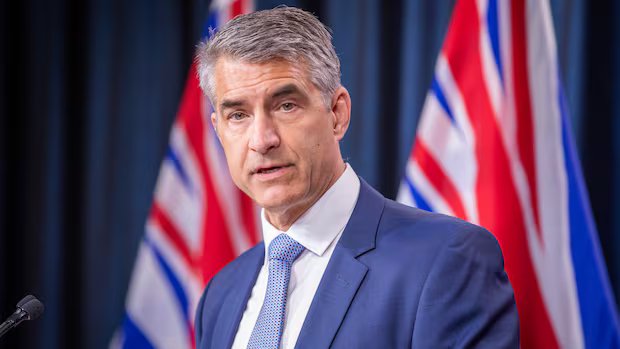
Canada’s new foreign influence office won’t prevent foreign interference in Canada, but it will provide more transparency for Canadians who want to know who is trying to influence their politicians and government officials on behalf of foreign governments, says Canada’s first foreign influence transparency commissioner.
In an interview with CBC News, Anton Boegman said there is a difference between foreign influence, which his office will monitor, and foreign interference — such as covert attempts to interfere in Canadian politics or government decisions.
There are also limits to what the new foreign influence office can do, he said.
“It’s not going to solve foreign interference in Canada,” Boegman responded when asked what his office will and won’t be able to do.
“The transparency model and the new laws, you know, they’re not designed necessarily to identify covert foreign influence … or acts of transnational repression and things like that.”
Instead, his office and Canada’s first foreign influence registry will shed light on who is trying to influence decisions on behalf of a foreign government.
“The focus of the statute is on increasing transparency around … legitimate activities and helping Canadians through the registry to understand the broader influence environment,” he said.
Foreign influence registry takes effect
Dealing with foreign interference is a job for the RCMP and Canada’s national security agencies, said Boegman, who served as British Columbia’s chief electoral officer from June 2018 to November 2025.
“If it’s something that’s outside of our mandate, we’ll be passing that off to one of the national security partners.”
While Boegman’s appointment was ratified by Parliament in March and takes effect on Tuesday, he has yet to receive a briefing from any of Canada’s security agencies.
“I hope it’s very soon,” he told CBC News in last Friday’s interview. “I know I have some meetings scheduled next week, so that is likely when that will take place.”
The country’s first foreign influence registry also goes into effect on Tuesday, more than two years after Parliament adopted Bill C-70, following revelations of attempts at foreign interference in Canada.
Anyone who works with or on behalf of a foreign government or agency in an attempt to influence a politician or government official at the federal, provincial or municipal level will now have to register with Boegman’s office, and Canadians will be able to consult the registry.

Marie-Josée Hogue, the commissioner of the public inquiry for foreign interference, says that while it is a known fact that states have been attempting to interfere with each other, the investigation into foreign interference in Canada has yielded no indications that any members of Parliament are working with outside actors against the country’s interest. Hogue’s report also concludes that foreign interference did not impact the results of the last two general elections.
Fines for failing to comply with the new rules range from $250 to $1 million.
While the legislation adopted by Parliament called for attempts to influence Indigenous leaders to be included, that provision was not part of the regulations made public this summer. In the past, security experts have warned that some Indigenous communities, particularly in Northern Canada, were potential targets of foreign interference.
“That was a decision, obviously, of Public Safety Canada,” Boegman said. “My understanding is that there was not time to do the level of engagement that was necessary to bring the Indigenous governments under the new statute.”
Foreign influence or interference?
Boegman said he will decide on a case-by-case basis whether a given situation constitutes foreign influence or foreign interference.
For example, would any future meetings in Washington between supporters of Alberta independence and U.S. government officials be considered foreign influence or interference?
“It depends on the specifics of what actually will take place, and each case we will assess. And if there is that influence activity that’s taking place, then it’s a registrable activity,” Boegman said. “But if there’s no influence activity, then it’s not registrable under the FITAA [Foreign Influence Transparency and Accountability Act] legislation and regulations.”
Over the years, the Taipei Economic and Cultural Office in Canada, which doesn’t fall under the lobbying commissioner’s jurisdiction, has been one of the most frequent sponsors of travel for members of Parliament, sending them on pricey trips to Taiwan.
“My understanding is that influence activities that are done in relation to the Taiwanese government would be covered under this legislation,” Boegman said.
Asked whether honorary consuls for foreign countries — a number of whom are former federal politicians or government officials — will have to register, Boegman said accredited diplomats won’t, but when it comes to honorary consuls appointed by foreign governments, he will look at the specifics of each case.

In a letter to Opposition Leader Naheed Nenshi, Canada’s spy agency says Alberta’s upcoming referendum could become a target for foreign interference. As provincial affairs reporter Janet French explains, one expert says the province isn’t equipped to tackle any potential referendum propaganda.
“My understanding of an honorary consul is that they don’t have accreditation specifically from a country,” he said. “They’re not part of that diplomatic corps. So if they are working with a foreign principal and they are doing influence activities, then the registration would likely be required.”
While Boegman’s new role is just beginning, he said he already knows there will need to be future changes to Canada’s foreign influence regime.
“This is a brand new statute, and so, you know, it will need to be tweaked, and it’ll need to be updated as it is implemented, as we see how it … covers the activities that are supposed to be covered.”