When the earth stopped moving, the fear did not end. Agatha Suárez was in Catia La Mar with three young children with disabilities. He had survived the double earthquake, but the uncertainty, the sleepless nights and the need to find a safe place continued. “Not only do we live in fear of never seeing our friends, neighbors and family again,” he later said from a shelter in San Martín, Caracas. His testimony summarizes an emergency that soon ceased to be just a race to rescue the injured: it also became a fight to regain health, communication and some form of stability.
The Venezuelan Red Cross has sustained an operation in Caracas and Vargas state, with health personnel, lifeguards, technical teams and volunteers. Their performance must be recounted precisely: the initial activation during the night of June 24-25 was one thing; another, the installation and subsequent strengthening of field hospitals; and another, international cooperation that expanded available capabilities as needs changed.
The night of the emergency
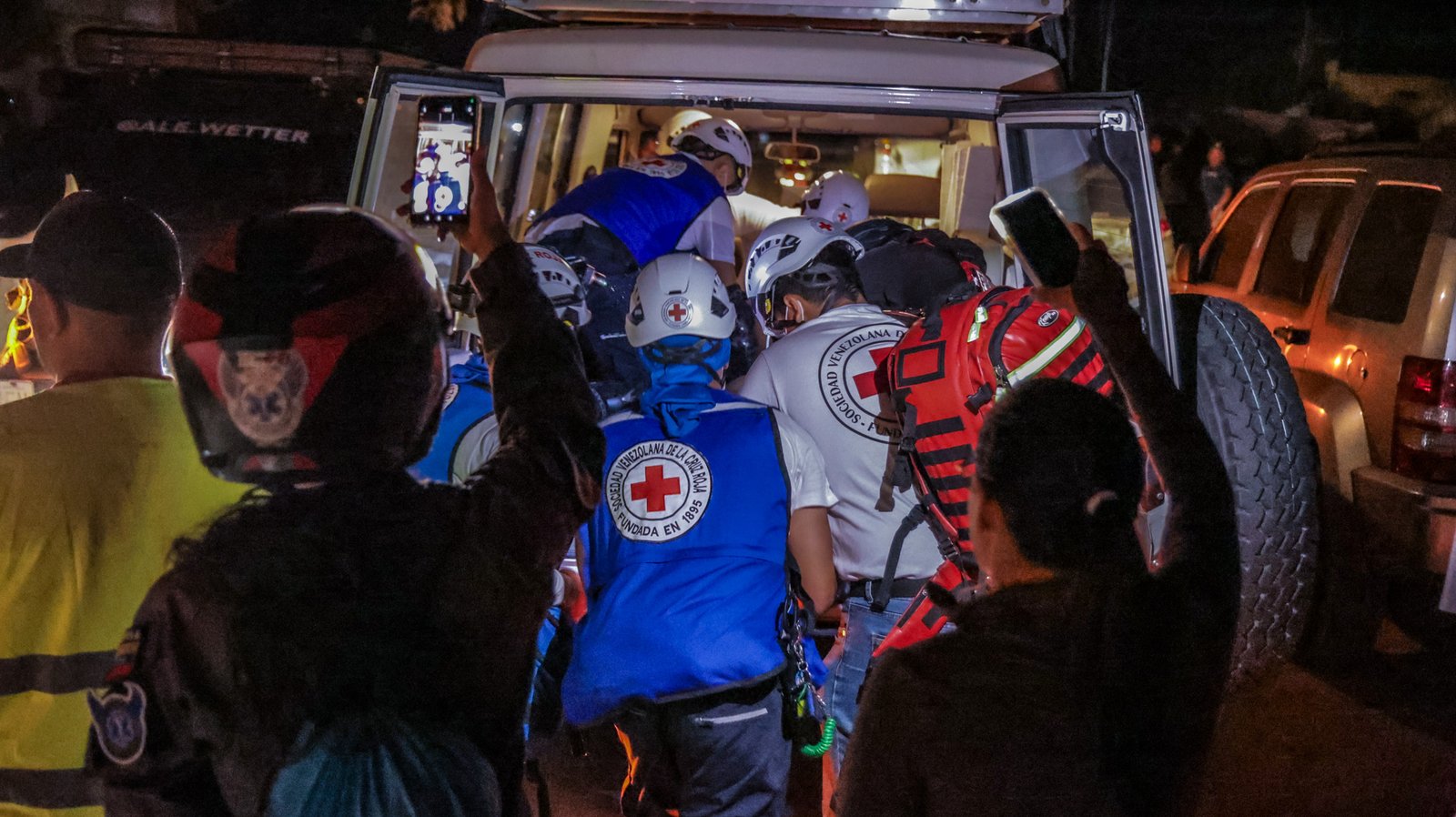
The two earthquakes hit north-central Venezuela on the afternoon of June 24or, less than a minute apart. That same night, The Venezuelan Red Cross activated its humanitarian response. ANDhe statement released by the International Federation of Red Cross and Red Crescent Societies (IFRC) On June 25, it noted that the national network of hospitals and health centers remained active, while four assessment teams were deployed overnight to the most affected areas.
The first response included damage and needs assessment, pre-hospital care, first aid, psychosocial support, mobilization of supplies, and actions to reestablish contact between family members. The teams were concentrated mainly in Caracas and La Guairawith presence in sectors such as Catia La Mar and Caraballeda. Doctors, nurses, first responders and volunteers stabilized patients and supported their transfer to care centers when necessary.
This chronology is important because the presence of equipment from the first night should not be confused with the subsequent capacity of a fully organized field hospital. The initial response occurred on the ground and through the existing health network; The temporary devices were expanded in the following days.
Backpack: an attention that became sustained
The main field hospital of the Venezuelan Red Crossto It was installed at the Jorge Luis García Carneiro stadium, in Macuto, Vargas state. There, a more stable capacity was consolidated to attend to medical consultations, traumas and injuries, monitor patients with chronic diseases, offer pediatric care, pharmacy and psychosocial support, and contribute to decongesting other health centers.
Tomás Brewer, director of the field hospitalexplained that the consultations range from headaches and general discomfort to wounds that require treatment due to injuries caused by debris. The usefulness of the center is not limited to traumatic emergencies: it allows us to accompany treatments that cannot be interrupted and bring care closer to communities with difficulties in getting around.
The evolution of the reasons for consultation portrays the change of phase. At first, trauma and emergencies caused by the collapses predominated. As the weeks passed, primary care consultations, control of chronic diseases, assistance to pregnant women and support for people affected by anxiety, grief, fear and insomnia increased.
International cooperation expanded the response
Farias He promoted coordination between Venezuelan volunteers and international organizations that reinforced health care. The magnitude of the disaster led to the Venezuelan Red Cross to activate the cooperation mechanisms of the International Movement of the Red Cross and Red Crescent. lThe operation was accompanied by the IFRC, the International Committee of the Red Cross and, according to the institutional balance, 14 National Societies that contributed personnel, knowledge, supplies and technical capabilities.
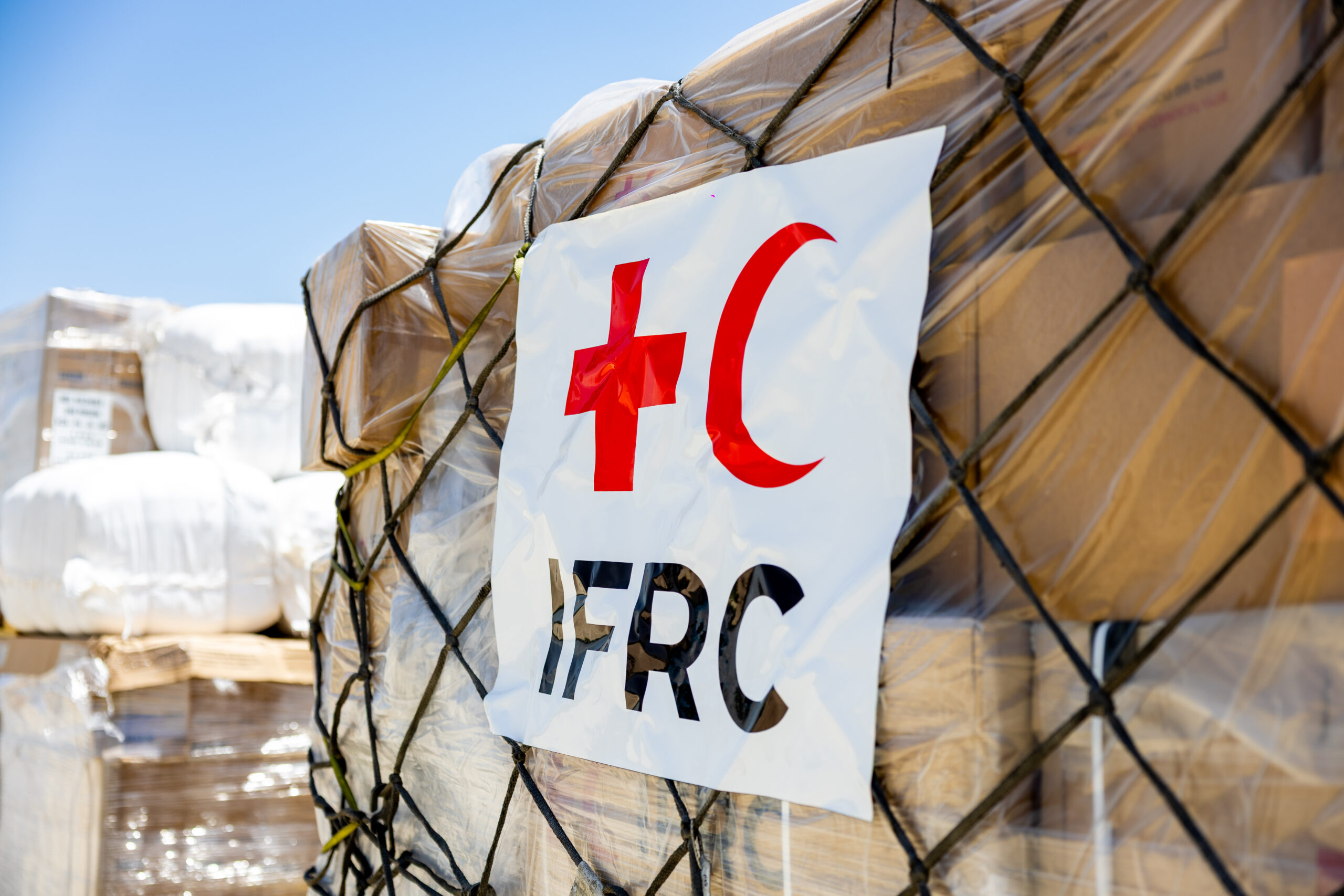
The official chronology places the arrival of the materials sent by the IFRC in collaboration with the Spanish Red Cross. The deployment was publicly announced on July 6, and also included doctors and other health professionals. lThe emergency clinic, installed by the IFRC and managed by the Spanish organization, was conceived to reinforce the Venezuelan field hospital, operate for four months and benefit nearly 30,000 people.
The international unit can offer primary care, maternal and child services, vaccination, epidemiological and nutritional surveillance, mental and psychosocial support, mobile clinics and night observation for a maximum of 20 patients. His arrival did not replace the Venezuelan response: it complemented it at a time when health needs were becoming more prolonged and complex.
The cooperation also included 36 tons of humanitarian aid mobilized from IFRC centers in Panama and Argentina, with hygiene, cleaning and rest kits, water filters and storage containers. The IFRC also launched an appeal for 50 million Swiss francs to assist 300,000 people over two years.
Two centers that should not be confused
The main field hospital of the Venezuelan Red Cross is located in Macuto. The emergency clinic installed by the IFRC and managed by the Spanish Red Cross reinforces this health capacity, although the official statement consulted does not specify its exact address. Both devices must be differentiated from the provisional care point installed in front of the San José Hospital, in Padre Machado Square in Maiquetía. The latter arose after the San José Hospital was disabled due to structural damage and has received support from the Little Sisters of the Poor, medical staff of the congregation, Avessoc and Italian cooperation, including the Italian Red Cross.
The geographical and institutional distinction avoids attributing to one organization the work carried out by another: Macuto and Maiquetía are two different localities, and the temporary devices responded to also different needs and cooperation structures.
The emergency behind the numbers
One month after the earthquakes, the balance provided by Luis Manuel Farías has insisted that behind every figure there is a person who needs attention, protection and support.to the Venezuelan Red Cross It records nearly 8,000 health care services, 5,700 people assisted through humanitarian distributions, 3,150 people with access to safe water, 68,000 liters of water distributed in La Guaira, more than 3,500 family contacts reestablished and more than 1,500 volunteers mobilized.
The figures show the scope of the operation, but they do not alone explain what it means to lose a home or depend on a shelter. Joleyda Gutierrez He remembered the noise of the houses as people ran and screamed. THe had to sleep on the street before reaching a shelter. The house in which he lived was lent by his brother and, after the earthquake, they were both left homeless. “Right now there is a lot of need to be able to get up and continue with our lives,” he said.
Gabriel Cipriani, who lost close relatives in the collapse of his building and lives with a neurological condition that requires constant medication, explained the concrete value of health continuity: “Knowing that I can count on a doctor from the Red Cross made me feel that I am not alone, that there is a hand that is with me. That gives you security, it gives you confidence.”
An operation that looks towards the next two years
The Venezuelan Red Cross and the IFRC They identified three priorities for the short and medium term: primary health care, mental health care and access to drinking water. It is also proposed to strengthen epidemiological surveillance, prevent outbreaks, maintain treatments for chronic diseases and accompany families in the recovery of their livelihoods.
Luis Manuel Farías, president of the Venezuelan Red Crosssummarized the meaning of that continuity: “They have been very hard weeks for all Venezuelans. It is precisely at times like this when “The Red Cross finds its reason for being: to let humanity move us to save, help, care for and accompany those who need it most.”
The operation is projected to last 24 months.. This horizon recognizes that a tragedy of this magnitude does not end when rescue teams withdraw. It continues in people who need medicine, safe water, psychological care, information about a family member or help to recover their livelihood.
“The tragedy is much deeper than any number and affects us all,” said Farías. In La Guaira and Caracas, the work of the Red Cross has moved from rescue and stabilization to a sustained presence. Their challenge, now, is to maintain that closeness when the emergency leaves the headlines, but remains in the lives of those still trying to rebuild.