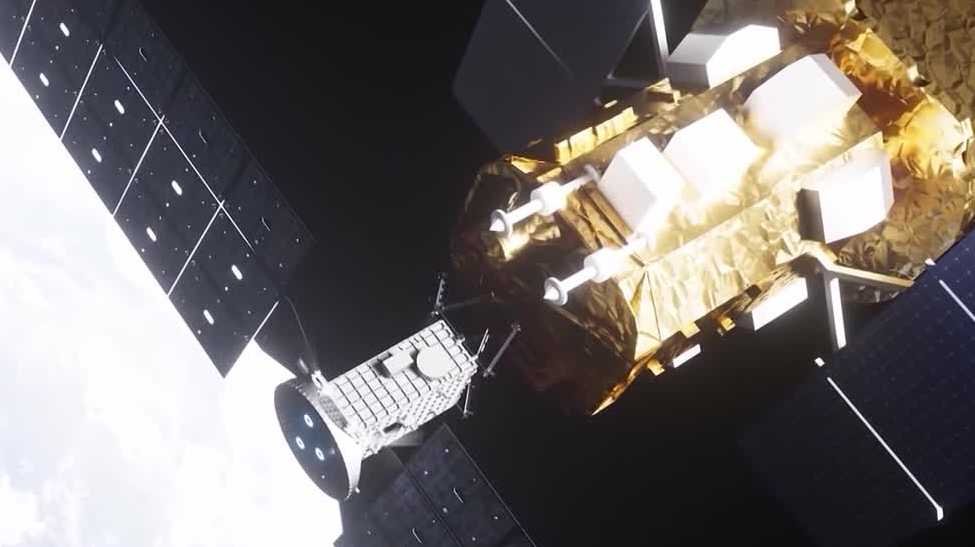
NASA is attempting something it has never done before: a rescue mission for one of its own space telescopes. “It’s high-risk, high-reward,” research chemist Ken Kremer said. “It’s experimental, but it has a lot of application in the future.” NASA’s Neil Gehrels Swift Observatory launched in 2004 on what was supposed to be a two-year mission but instead became a more than two-decade-long quest to help track explosions in the universe. “It looks at gamma-ray bursts, the most violent explosions in the universe. It has a telescope that can point in seconds in any direction, and there’s no other capability like that,” Kremer said. Right now, the spacecraft doesn’t have enough propulsion to fight the atmospheric drag caused by increased solar activity. NASA is spending $30 million to capture the aging satellite and push it into a safer orbit. Northrop Grumman launched Katalyst Space Technologies’ Link spacecraft from the Marshall Islands in the Pacific. The three-armed robotic spacecraft will slowly catch up with Swift over the next month. It will then spend about two months raising the telescope into a higher orbit. “The company already has contracts with the military to save a couple of highly expensive and highly capable military satellites,” Kremer said. “It could be important for national security. Their life could be extended instead of having to buy a new satellite.” Even if Swift can’t be saved, the mission could serve as a proving ground for whether future satellites can be repaired and serviced in orbit instead of becoming space junk. Worst-case scenario: Swift is not saved and continues falling. It would likely burn up upon reentry into Earth’s atmosphere, with the possibility of some debris falling into the ocean.
NASA is attempting something it has never done before: a rescue mission for one of its own space telescopes.
“It’s high-risk, high-reward,” research chemist Ken Kremer said. “It’s experimental, but it has a lot of application in the future.”
NASA’s Neil Gehrels Swift Observatory launched in 2004 on what was supposed to be a two-year mission but instead became a more than two-decade-long quest to help track explosions in the universe.
“It looks at gamma-ray bursts, the most violent explosions in the universe. It has a telescope that can point in seconds in any direction, and there’s no other capability like that,” Kremer said.
Right now, the spacecraft doesn’t have enough propulsion to fight the atmospheric drag caused by increased solar activity. NASA is spending $30 million to capture the aging satellite and push it into a safer orbit.
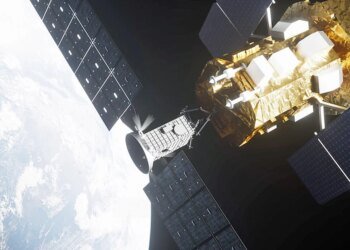
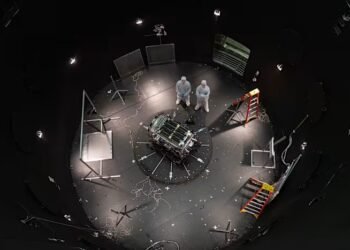
Northrop Grumman launched Katalyst Space Technologies’ Link spacecraft from the Marshall Islands in the Pacific. The three-armed robotic spacecraft will slowly catch up with Swift over the next month. It will then spend about two months raising the telescope into a higher orbit.
“The company already has contracts with the military to save a couple of highly expensive and highly capable military satellites,” Kremer said. “It could be important for national security. Their life could be extended instead of having to buy a new satellite.”
Even if Swift can’t be saved, the mission could serve as a proving ground for whether future satellites can be repaired and serviced in orbit instead of becoming space junk.
Worst-case scenario: Swift is not saved and continues falling. It would likely burn up upon reentry into Earth’s atmosphere, with the possibility of some debris falling into the ocean.