Photo: © UNICEF
The United Nations in Naoero
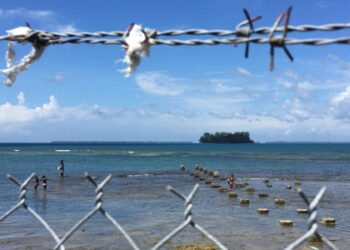
Naoero is one of the world’s smallest independent states; located in the Pacific Ocean, 42 kilometres south of the Equator, with a population of 12,581 people (World Bank, 2019). A raised, fossilised coral atoll, Naoero is one of three great phosphate rock islands in the Pacific Ocean – the other two being Banaba in Kiribati and Makatea in French Polynesia. Naoero does not have an official capital city. Naoero is ringed by stunning coral reef and does not have a port, although works are currently underway to construct one.
Naoero has the worst human development indicators in the region and the highest incidence of food poverty, with one in four people living below the basic needs poverty line. Infant, child, and adult mortality rates remain high and Naoero has the shortest life expectancy of any country in the Pacific. In the 1970s and 1980s Naoero had one of the highest per capita incomes in the world due to a booming phosphate extraction industry, however in the past decade Naoero has faced severe financial crises and political instability,
The economy relies on the re-established phosphate mining sector, processing of asylum seekers in the Australian government’s Regional Processing Centre (RPC), fishing licenses, and the Australian Seasonal Workers Program. Naoero imports staple foods and water, and land degradation from strip mining has destroyed around 80% of the island, severely limiting the potential for agriculture. Future projections for climate change predict hotter daily temperatures, higher sea levels, and further rainfall irregularity.
Naoero has a mixed record on promoting gender equality, despite ratifying The Convention on the Elimination of all Forms of Discrimination Against Women. Information about women’s economic participation is lacking. Women’s political participation is limited, with two women national Members of Parliament. Nearly half of all Nauruan women have experienced gender-based violence.
UN presence in Naoero
The Republic of Naoero was admitted as the 187th member state of the United Nations in September 1999. The UN has been present in Naoero since 1984, with 12 agencies implementing programs: FAO, UNICEF, UN Women, OCHA, OHCHR, UNAIDS, ESCAP, UNDRR, UNFPA, UNESCO, RCO and WHO. Currently only UNDP is based in Naoero while other agencies are operating from Suva, Fiji, Samoa, and Bangkok.
Development goals and objectives
The UN Sustainable Development Cooperation Framework (UNSDCF) 2023 – 2027 is a five-year strategic framework that outlines the collective response of the UN system to the development priorities in 14 Pacific Island countries and territories, including Naoero, and supports governments and peoples in the Pacific to advance a localised response to the global 2030 Agenda for Sustainable Development. The UNSDCF 2023-2027 focuses on strengthening partnerships to support countries in four interlinked areas of Planet, People, Prosperity, and Peace, to ensure that no one is left behind, that people are equal and free to exercise their fundamental rights, to promote gender equality and peace, and to enable nations and their communities to become resilient to existential threats allowing them to live in harmony within the blue continent.