
Is Peruvian education a fraud? Let’s imagine that, in the last ten years, what I invest in my children’s school has doubled, but, far from improving, now they and all their classmates do not understand what they read or manage to solve the simplest mathematical problems. Wouldn’t we think that that school has scammed us? That is exactly what has happened to the country. Peruvian students have gone back a decade in fundamental learning such as reading and mathematics, according to the PISA 2025 test, despite the fact that the education budget has doubled in the last ten years. If today the State spends more on this basic service, why are the results so poor?
Is Peruvian education a fraud? Let’s imagine that, in the last ten years, what I invest in my children’s school has doubled, but, far from improving, now they and all their classmates do not understand what they read or manage to solve the simplest mathematical problems. Wouldn’t we think that that school has scammed us? That is exactly what has happened to the country. Peruvian students have gone back a decade in fundamental learning such as reading and mathematics, according to the PISA 2025 test, despite the fact that the education budget has doubled in the last ten years. If today the State spends more on this basic service, why are the results so poor?
Of the more than S/ 51,000 million that Education manages this year, almost 70% goes to payrolls and social obligations. For infrastructure, furniture and digital equipment, there is barely a fraction left. The average teacher salary rose more than 121% in the last decade, but the performance evaluation that should accompany that increase was diluted until it almost disappeared. It is very good that teachers earn more, but more was paid for the same thing. No one cared if it was taught better.
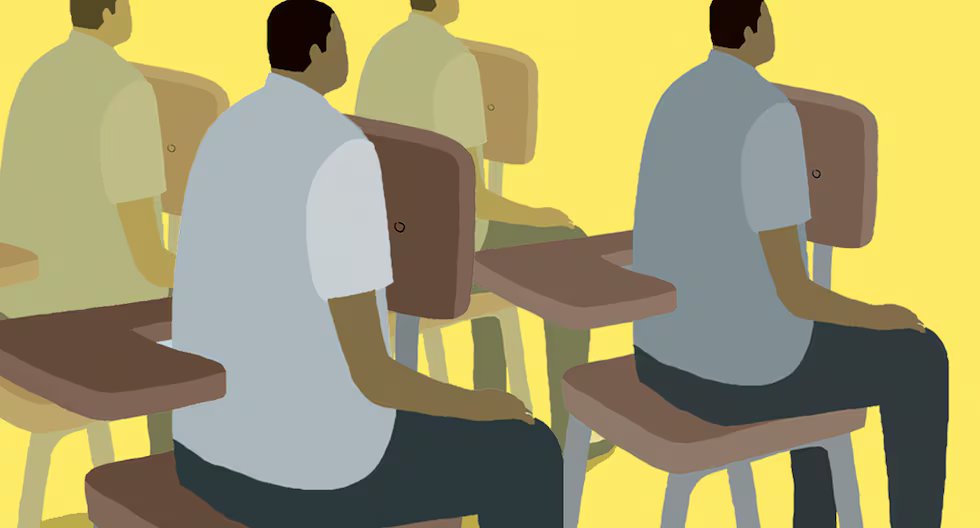
Meanwhile, the classrooms where the boys study are deplorable. Three out of ten are at risk of collapse and one out of every five students studies in a location that requires demolition. In the countryside, the proportion of schools with water, sanitation and electricity even decreased. Can you believe it? Not even the food they receive is guaranteed. The Qali Warma program, created so that the poorest children could go to school well fed, ended up involved in a bribery scheme that allowed the distribution of rotten preserves and even horse meat disguised as beef. The same State that fails to teach reading also failed to guarantee that a child eats in decent conditions.
Added to this is a political class that treats education as currency and students as collateral damage. Peru has had 20 Ministers of Education in 10 years. What serious policy can be implemented with that level of rotation?
The Castillo government, paradoxically headed by a rural professor, left a particularly damaging mark: in a year and a half it appointed three Ministers of Education, one of them censured by Congress amid serious questions. The teacher reform, which had been advancing since 2015, began to be dismantled precisely then. Far from solving the shortcomings faced by students, he concentrated all his efforts on favoring his union and incapable teachers who should have been left out of the public teaching career. The consequences are brutal and we will pay for them for generations. About 60% of the teenagers who today leave our classrooms without knowing how to read well or solve a simple equation will go straight to work; many will do it informally because they will not even make it to university. We are not creating a less productive generation: we are manufacturing, with everyone’s money, cheap labor with no future.
Peruvian education is a fraud with clear culprits: passing ministers, congressmen who legislated for their unions and officials who collected bribes while schoolchildren became intoxicated. And it is a fraud because those who were supposed to take care of the money used it for everything except for a child to learn to read.