The testimony of a Maronite priest from Sidon where people continue to die
Of Federico Piana
Marjayoun and Nabatie, cities in southern Lebanon included in the Nabatieh governorate, woke up shaking this morning. The Israeli missiles would have mainly hit the Ali al-Taher hill, a strategic point on which the IDF soldiers think Hezbollah guerrillas could hide. And from which rockets aimed at Israel can be launched.
But the IDF bombs did not even spare the villages in the area: witnesses say that that tremor similar to a powerful earthquake threw the population into panic, who poured into the streets, screaming and crying in desperation.
Yet, in the morning, the Israeli army itself had issued yet another evacuation order for 19 southern villages in which to carry out an operation officially defined as “large-scale demolition”.
The military crackdown is explained by the IDF leaders with the “repeated violations of the ceasefire by Hezbollah and after having identified, this morning, the presence of a suspicious object in the Lebanese skies”.
Marjayoun and Nabatie were not the only areas to be affected. After that massive attack, airstrikes multiplied across large portions of the Bekaa valley and in the Bint Jbeil district. Which is just under seventy kilometers from Sidon, which is located in the Governorate of Southern Lebanon of which it is the administrative capital.
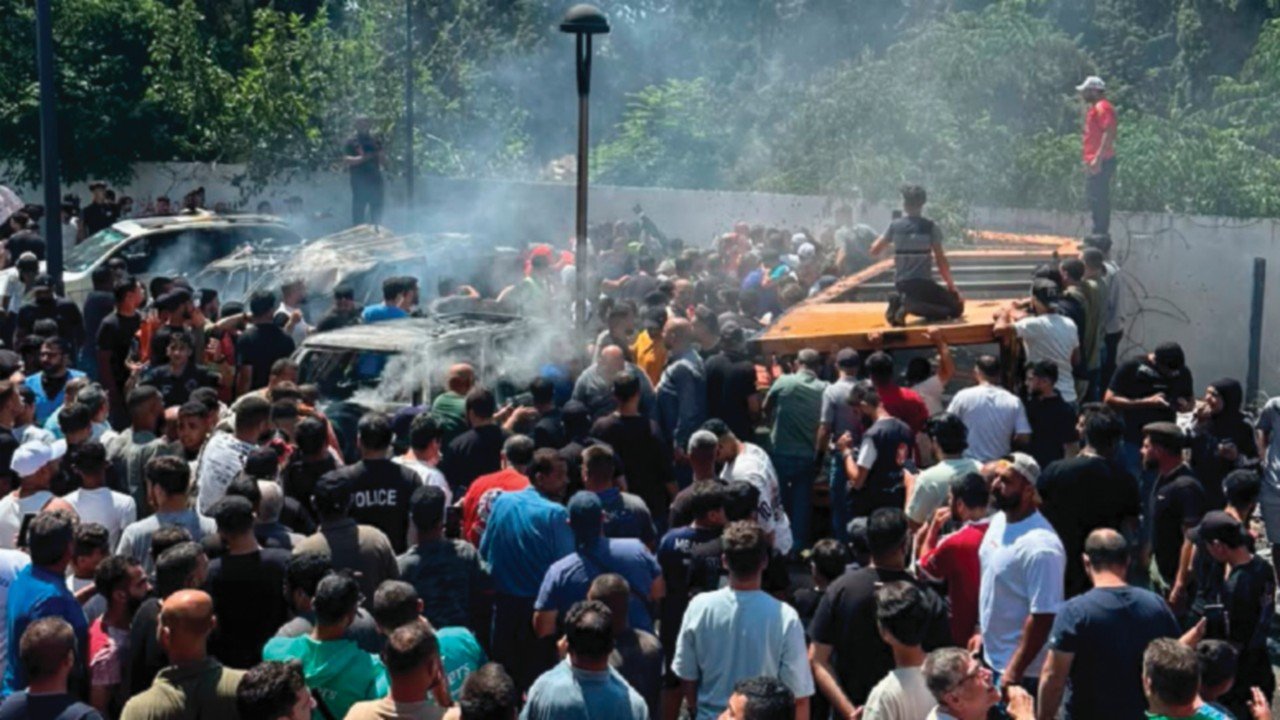
And it is here that Father Eid Bou Rached, a Maronite priest, continues to cry. He knows those powerful explosions, preceded by flashes of death, very well. On Sidon, Israeli missiles also fell forty-eight ago when they grazed the headquarters of the Maronite eparchy with the risk of hitting and destroying it.
«The bombing was decidedly strong» he tells our newspaper «the missile fell a short distance from the entrance door of our episcopal seat. Thank God there were no deaths. It was truly a miracle.”
In that instant, which lasted less than a minute, two cars traveling on the city road were blown up and the occupants died instantly. Probably an attack aimed at eliminating Hezbollah exponents which, however, the priest denounces, has dangerous implications: “The cars were stuck in city traffic and there were a lot of people around, it could have been a massacre.”
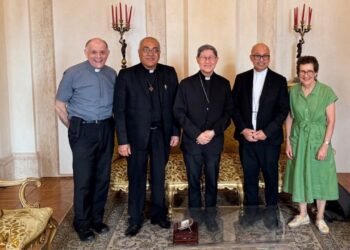
Father Eid Bou Rached, in addition to being the principal of the Sant’Elie Darbessim high school – the only Christian school in Sidon which also welcomes Muslim students – is also the parish priest of two parishes just outside the city. The people, the faithful, confide in him and open their hearts to him. And when he speaks he also does so a little on their behalf: «We, here, now say that death has become the neighbor of our homes. For example, a few days ago, the Christian community mourned the death of a colonel of the Lebanese army killed on the road from Sidon to Tire during an Israeli bombing. He left behind his wife and a five-year-old son.”
Sidon, like all southern villages, does not suffer only from bombs. There is also the economic situation which, since the war resumed virulently for four months now, is bringing entire families to their knees. Father Rached says that it has gotten worse, it is difficult to combine lunch with dinner. Even working has become impossible: «Even to cross a road we have to be careful, let alone if it is possible to move from one town to another. We are completely blocked.”
Like the schools, because throughout the south they are essentially closed: the students, in fact, have lost the school year. Even the exams, which the Lebanese government is carrying out in the rest of the country, are a problem. «The Ministry of Education has officially established that they must be carried out at a national level without taking our situation into account. But how do we fulfill this obligation while the bombs are falling? The truth is that we feel like second-class citizens.”