A new round of political crisis has begun in Romania. The country’s largest party has withdrawn its political support for the prime minister. NM tells whether the government will now resign, whether this will lead to early parliamentary elections in Romania and why what is happening is reflected in Moldova.
What happened?
On April 20, the leader of the Social Democratic Party of Romania (PSD), Sorin Grideanu, announced that the party was withdrawing political support for Prime Minister Ilie Bolozhan. The decision was made based on the results of an internal party vote, which took place in the Palace of Parliament. About 5 thousand PDS members took part in the voting. They were asked to answer the question whether the party should withdraw its support for the prime minister amid the “socio-economic crisis” in the last ten months, as well as the lack of dialogue within the coalition. According to the voting results, 97.7% were in favor of withdrawing Bolozhan’s support, and only 2.3% were against.
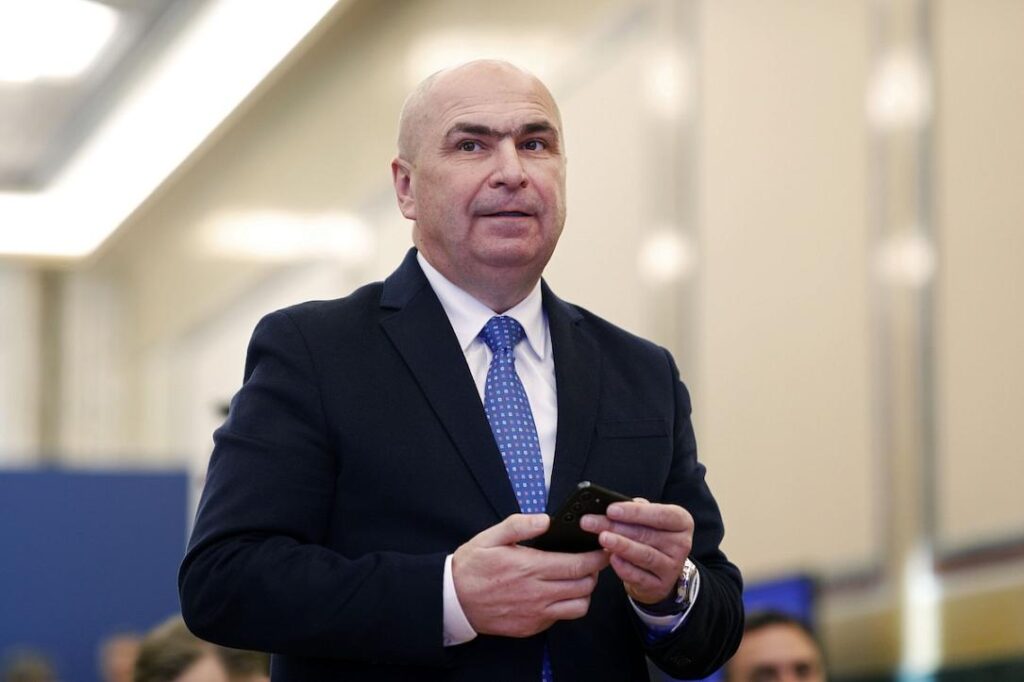
The Social Democratic Party is the largest party in Romania. Despite falling ratings and losing the 2025 presidential elections, the PSD remained the largest force in the Romanian parliament. After the elections on December 1, 2024, the ruling coalition consisted of the PSD, the National Liberal Party (PNL – the second largest party in the country after the PSD), the Union for the Salvation of Romanians (USR), the Hungarian Democratic Union (UDMR) and representatives of national minorities. The Romanian legislature consists of two chambers: the Chamber of Deputies and the Senate. There are 464 deputies in both chambers, 311 of whom formed the ruling coalition.
PSD is the largest party in the coalition (131 deputies and senators). The Chamber of Deputies consists of 330 people, of which 223 are representatives of the majority. Without PSD deputies, there will be 130 coalition representatives in the House, and 166 votes are needed to make decisions. But so far the Social Democrats have not left the coalition, but only withdrew support for Ilie Bolozhanu.
Bolozhanu himself is a PNL representative. Next year there was to be a rotation, and the government could be headed by a PSD representative. However, the current round of political crisis in Romania may reshuffle the cards.
What will happen now?
Ilie Bolozhanu has already stated that he will not resign. But the PSD may move for a vote of no confidence. The leader of the PSD senators, Daniel Zamfir, allowed such a scenario. The vote of no confidence is considered at a joint meeting of deputies of both chambers. To dismiss the Cabinet of Ministers, the votes of an absolute majority of people’s representatives are needed. In this case we are talking about 232 votes. The PSD has 131. The opposition has a total of 153 votes. A joint vote of the Social Democrats and the opposition could send Bolozhanu to resign.
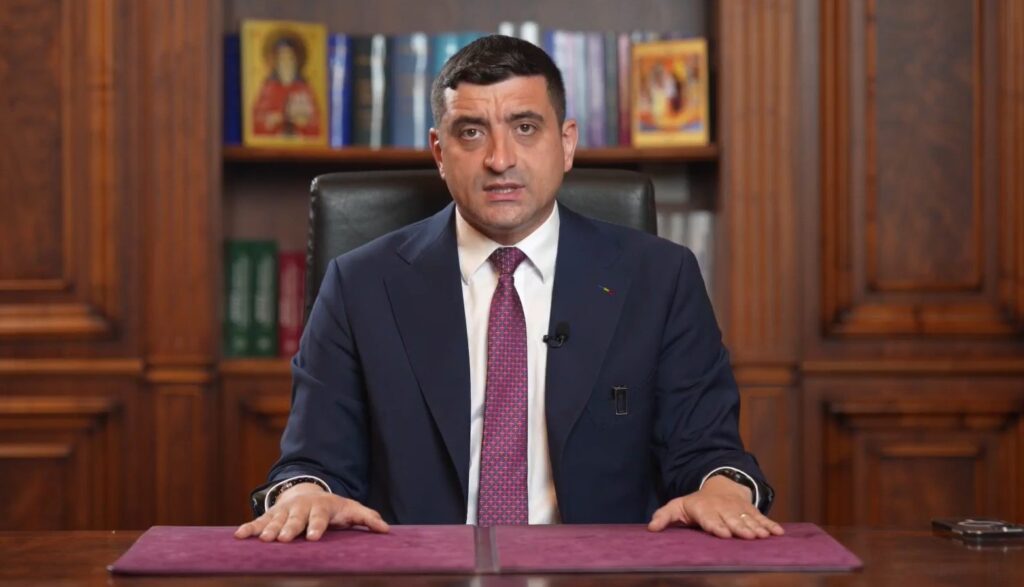
The leader of the largest opposition party, the Alliance for the Unification of Romanians (AUR), George Simion, commenting on the situation, said that he does not intend to be a “useful fool” for the PSD and “jump when it benefits the Social Democrats.” AUR also registered a vote of no confidence in the government in parliament. Voting is scheduled for May. The question is whether the PSD will vote for the vote of no confidence put forward by the AUR.
Political expert Mihai Isak believes that the most likely scenario is the search for a new political solution. “This could mean a revision of the coalition agreement, a change of prime minister, a redistribution of influence between the PSD and PNL, or a technical compromise that will preserve the unity of the pro-European majority,” the expert said. Isak noted that a pro-European majority is impossible without PSD. “At the same time, the PSD hinted that they could maintain the coalition if the Liberals proposed another prime minister, while Bolozhan refused to resign. Behind this conflict, therefore, lie not only disagreements regarding taxes, deficits and reforms, but also personal ambitions, power struggles and rivalry between leaders,” the expert believes.
Should we wait for the elections?
The resignation of the government (if any) does not automatically mean the organization of early parliamentary elections. The procedure for dissolving parliament in Romania is quite complicated. After the resignation of the Cabinet of Ministers, consultations between the President and parliamentary factions begin. Deputies will have two more attempts to appoint a new government, after which the president can dissolve parliament, which will lead to early elections.
However, the country’s President Nikušor Dan expressed hope that it will be possible to find a formula for preserving the pro-European coalition. Even before withdrawing political support from the government, he stated that he would not approve a prime minister supported by a hypothetical PSD-AUR coalition.
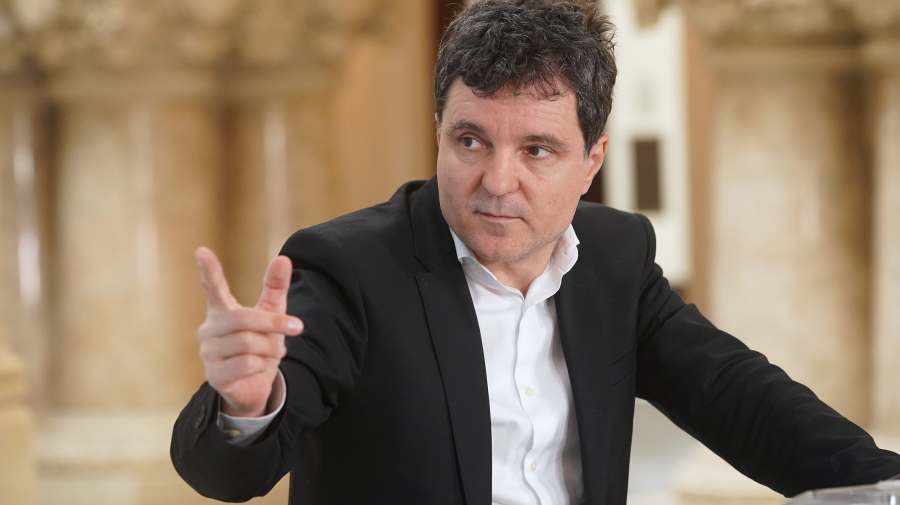
Mihai Isak emphasizes that in the event of early elections, AUR will be the main beneficiary. “According to the January Reuters/INSCOP survey, AUR scores 40.9%, significantly ahead of PSD, PNL, USR and UDMR. Therefore, for the PSD, PNL and USR, the dissolution of parliament would mean playing with an extremely dangerous stake. AUR could win the elections and be in a position to either directly dominate or even form a parliamentary majority around itself. The current coalition was created precisely in order to curb the growth of the far right and keep Romania on a pro-European and pro-NATO course,” explained Mihai Isak.
Despite the fact that the chance of holding early parliamentary elections is extremely small, Romania is clearly entering a period of political turbulence. This will inevitably affect Moldova. “Romania, one of Chisinau’s main supporters in relations with the European Union, has promised strong support for the European agenda. Bucharest is an important economic partner of Chisinau, and in recent years Romania has also become a key link in ensuring the energy security of neighboring countries. For Chisinau, it is important not only who rules in Bucharest, but also that Romania remains stable, predictable and firmly entrenched in the pro-European camp,” the expert concluded.
Subscribe to our Telegram channel @newsmakerlive. Everything that is important to know right now about Moldova and the region quickly appears there.
Want to support what we do?
You can contribute to quality journalism by supporting us one-time through the E-commerce system from maib bank or by taking out a monthly subscription to Patreon! This way you will become part of changing Moldova for the better. Thanks to your support, we will be able to implement even more new and important projects and remain independent. No matter how you support us, you will receive a small gift. Follow the link to become our partner. It’s not difficult and even pleasant.