Korea ramps up campaign to encourage double-standing from common ‘stand right, walk left’ practice on escalators
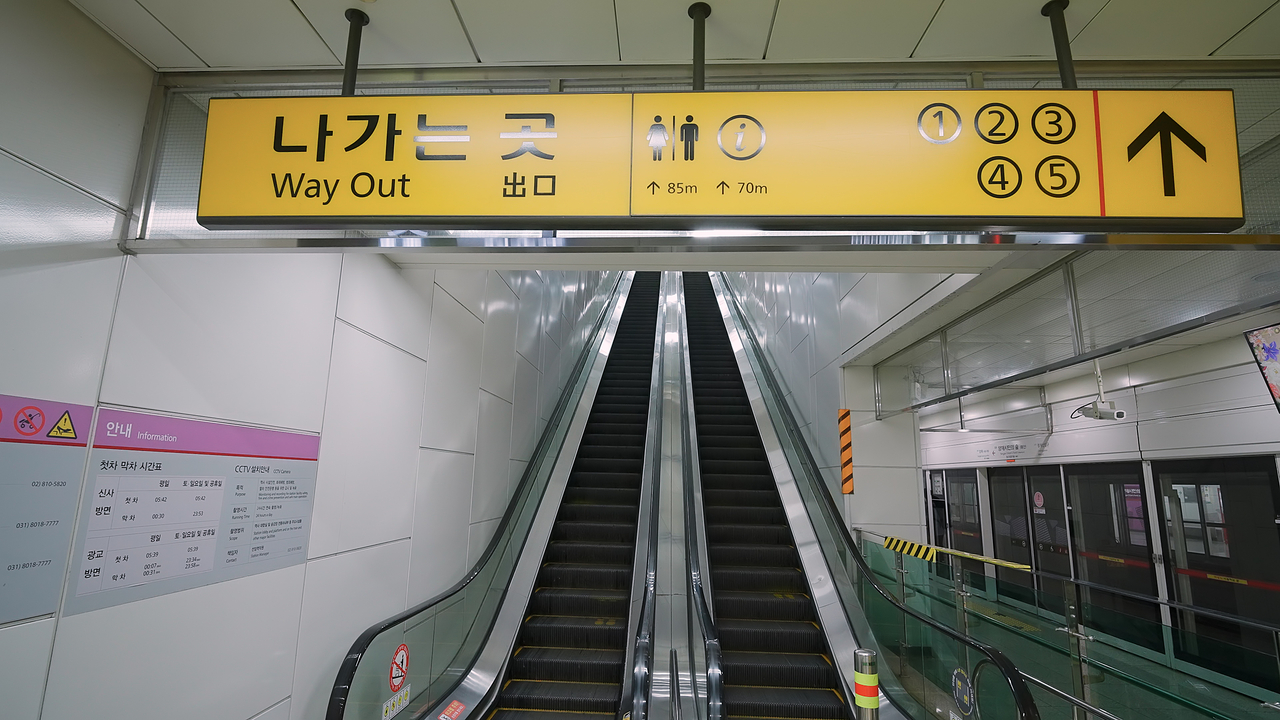
When in a foreign country, it is often the small, unwritten rules that prove most confusing, such as whether to stand in place or walk up the escalator — as well as which side is for resting and which side is for rushing.
Yet in South Korea, even locals remain unsure after decades of shifting guidance. Now the country is once again reconsidering the proper way to use moving stairs.
The Ministry of the Interior and Safety is preparing a nationwide campaign urging people to stand on both sides of escalators, moving away from the long-standing practice of standing on the right and walking on the left, according to the JoongAng Ilbo.
The move revives a policy first pushed in the late 2000s but dropped in 2015, amid public resistance and doubts of its effectiveness.
Korea’s escalator etiquette has not been consistent. It has shifted several times over the past three decades.
In the late 1990s, when no clear social norm existed, the government and civic groups began promoting standing on one side and walking on the other as the proper behavior. The practice became widely adopted during the 2002 FIFA World Cup, when campaigns encouraged orderly public conduct for international visitors.
Standing on the right and leaving the left side open for those in a hurry soon became deeply ingrained in commuting culture.
However, concerns later emerged over safety and wear on the machines. In 2007, the government reversed course and launched a campaign urging people to stay in place on both sides and just enjoy the ride. The effort, however, faced an uphill battle and struggled to gain traction.
With “stand right, walk left” already firmly established and little evidence to justify change, the campaign was finally dropped in 2015.
The renewed push for dual-line standing comes as safety concerns resurface.
Data from the Korea Elevator Safety Agency shows that 135 serious escalator accidents were recorded over the past decade, with about two-thirds attributed to user negligence. Of those, falls accounted for nearly 78 percent, with older people making up the majority of the victims.
Authorities say many of these incidents occur when people try to move aside or walk while the escalator is in motion. In one fatal case, an aged person reportedly lost balance while shifting to make way for others and fell backward.
Mechanical wear is another concern. Studies indicate that when passengers consistently stand on one side, the uneven load significantly accelerates deterioration of key components.
Research commissioned by the government found that wear on the right side chain wheels and guide rails was more than 95 percent higher than on the left, shortening maintenance cycles by up to 20 percent and increasing repair costs.
“Escalators are designed on the assumption that users remain stationary,” said a researcher involved in the study. “Allowing space for walking not only increases the risk of accidents, but also contributes to faster mechanical failure.”
Public skepticism remains
Despite the government’s rationale, public response has been mixed. Many commuters still view the system with an express lane on the left as more efficient, particularly during rush hour.
“I’m already pressed for time in the morning,” said a 32-year-old office worker surnamed Kim. “If everyone stands on both sides, it could slow things down and make people miss trains.”
Others expressed frustration over the potential loss of flexibility. “Even now, it’s annoying when someone suddenly stops in front of you while walking up,” said another commuter in her 20s. “If walking is no longer allowed, I’m not sure how well this will work.”
Officials acknowledge the challenge of changing a deeply rooted habit. Rather than enforcing strict rules, the government plans to focus on shifting public perception, starting with the idea that standing on both sides should not invite social pressure or criticism.
jychoi@heraldcorp.com