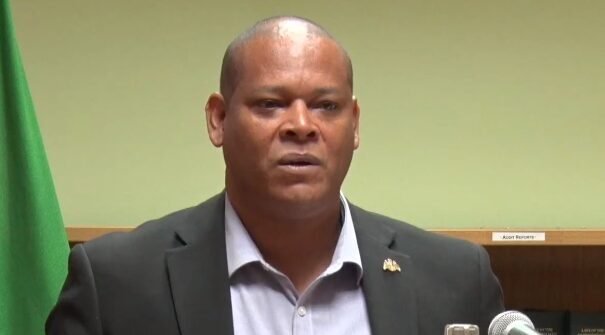

Environment, Rural Modernisation, Kalinago Upliftment and Constituency Empowerment Minister Cozier Frederick is questioning the stability and leadership of the Kalinago Council following its announcement of another by-election during the Council’s five-year mandate.
The Council announced on Facebook that its office would be closed to facilitate electoral arrangements for the by-election, meaning regular public services would not be available that day.
Frederick said the development should prompt wider discussion about the Council’s ability to retain elected members and manage internal disagreements.
“Two by-elections within a five-year mandate can be viewed not simply as an electoral occurrence, but as a warning sign about the stability and effectiveness of leadership,” he asserted.
The Minister acknowledged that councillors may leave office for legitimate personal or professional reasons and said not every vacancy should automatically be attributed to Council leadership.
However, he argued that repeated departures warrant an honest examination of the institution’s leadership and internal culture.
Pointing to what he said were recurring vacancies, he indicated that this could raise concerns about communication, conflict resolution, accountability and the Council’s ability to maintain a shared vision.
“The real issue is whether the Council is creating an environment capable of retaining leadership, managing disagreement and keeping elected representatives focused on the five-year mandate given to them by the people,” he said.
According to him, leadership should be measured by more than winning elections.
“Leadership is not measured only by who wins an election. Leadership is measured by who can hold a team together after the election,” he stressed.
Frederick said the Kalinago Council has an important role as an institution of Indigenous self-governance and should demonstrate maturity, discipline, inclusiveness and an ability to build consensus.
He argued that the second by-election should therefore trigger reflection not only on the councillors who have departed, but also on the Council’s leadership culture and institutional resilience.
“The question is not simply, ‘Why are councillors leaving?’ The deeper question is: ‘What kind of leadership are we providing that allows an elected Council to lose members before the mandate given to them by the people has been fulfilled?’ he said.
Frederick’s view is that the Kalinago community deserves an answer to this “leadership question”.