Wednesday, July 1, 2026
    The GeoStrategic Consensus
    No Result
    View All Result
    • Login
    • HOME
    • AMERICAS
      • Argentina
      • Brazil
      • Canada
      • Chile
      • Colombia
      • Costa Rica
      • Cuba
      • Dominican Republic
      • Ecuador
      • El Salvador
      • Greenland
      • Guatemala
      • Honduras
      • Mexico
      • Nicaragua
      • Panama
      • Paraguay
      • Peru
      • United States
      • Uruguay
      • Venezuela
    • ASIA-PACIFIC
      • Australia
      • Brunei Darussalam
      • Cambodia
      • China
      • Federated States of Micronesia
      • Fiji
      • Indonesia
      • Japan
      • Kiribati
      • Laos
      • Malaysia
      • Marshall Islands
      • Mongolia
      • Myanmar
      • Nauru
      • New Zealand
      • North Korea
      • Palau
      • Papua New Guinea
      • Philippines
      • Samoa
      • Singapore
      • Solomon Islands
      • South Korea
      • Taiwan
      • Thailand
      • Timor-Leste
      • Tonga
      • Tuvalu
      • Vanuatu
      • Vietnam
    • CARICOM
      • CARICOM – Non-English
        • Haiti
        • Suriname
      • CARICOM Associates
        • Anguilla
        • Bermuda
        • British-Virgin-Islands
        • Cayman-Islands
        • Curacao
        • Turks-and-Caicos
      • CARICOM English
        • Antigua and Barbuda
        • Barbados
        • Belize
        • Dominica
        • Grenada
        • Guyana
        • Jamaica
        • Montserrat
        • Saint Kitts and Nevis
        • Saint Lucia
        • Saint Vincent and the Grenadines
        • The Bahamas
        • Trinidad and Tobago
    • EURASIA
      • Armenia
      • Azerbaijan
      • Balarus
      • Georgia
      • Kazakhstan
      • Kyrgyzstan
      • Moldova
      • Russia
      • Tajikistan
      • Turkmenistan
      • Ukraine
      • Uzbekistan
    • EUROPE
      • Albania
      • Andorra
      • Austria
      • Bosnia and Herzegovina
      • Bulgaria
      • Croatia
      • Cyprus
      • Czech Republic
      • Denmark
      • Estonia
      • Finland
      • France
      • Germany
      • Greece
      • Holy See
      • Hungary
      • Iceland
      • Ireland
      • Italy
      • Kosovo
      • Latvia
      • Liechtenstein
      • Lithuania
      • Luxembourg
      • Malta
      • Monaco
      • Montenegro
      • Netherlands
      • North Macedonia
      • Norway
      • Poland
      • Portugal
      • Romania
      • San Marino
      • Serbia
      • Slovakia
      • Slovenia
      • Spain
      • Sweden
      • Switzerland
      • United Kingdom
    • MIDDLE EAST AND NORTH AFRICA
      • Algeria
      • Bahrain
      • Egypt
      • Iran
      • Iraq
      • Israel
      • Jordan
      • Kuwait
      • Lebanon
      • Lybia
      • Morocco
      • Oman
      • Palestinian Territories
      • Qatar
      • Saudi Arabia
      • Syria
      • Tunisia
      • Turkey
      • United Arab Emirates
      • Western Sahara
      • Yemen
    • SOUTH ASIA
      • Afghanistan
      • Bangladesh
      • Bhutan
      • India
      • Maldives
      • Nepal
      • Pakistan
      • Sri Lanka
    • SUB-SAHARAN AFRICA
      • Angola
      • Benin
      • Botswana
      • Burkina Faso
      • Burundi
      • Cabo Verde
      • Cameroon
      • Central African Republic
      • Chad
      • Comoros
      • Cote d’Ivoire
      • Democratic Republic of the Congo
      • Djibouti
      • Equatorial Guinea
      • Eritrea
      • Eswatini
      • Ethiopia
      • Gabon
      • Gambia
      • Ghana
      • Guinea
      • Guinea Bissau
      • Kenya
      • Lesotho
      • Liberia
      • Madagascar
      • Malawi
      • Mali
      • Mauritania
      • Mauritius
      • Mozambique
      • Namibia
      • Niger
      • Nigeria
      • Republic of the Congo
      • Rwanda
      • Sao Tome and Principe
      • Senegal
      • Seychelles
      • Sierra Leone
      • Somalia
      • South Africa
      • South Sudan
      • Sudan
      • Tanzania
      • Togo
      • Uganda
      • Zambia
      • Zimbabwe
    • HOME
    • AMERICAS
      • Argentina
      • Brazil
      • Canada
      • Chile
      • Colombia
      • Costa Rica
      • Cuba
      • Dominican Republic
      • Ecuador
      • El Salvador
      • Greenland
      • Guatemala
      • Honduras
      • Mexico
      • Nicaragua
      • Panama
      • Paraguay
      • Peru
      • United States
      • Uruguay
      • Venezuela
    • ASIA-PACIFIC
      • Australia
      • Brunei Darussalam
      • Cambodia
      • China
      • Federated States of Micronesia
      • Fiji
      • Indonesia
      • Japan
      • Kiribati
      • Laos
      • Malaysia
      • Marshall Islands
      • Mongolia
      • Myanmar
      • Nauru
      • New Zealand
      • North Korea
      • Palau
      • Papua New Guinea
      • Philippines
      • Samoa
      • Singapore
      • Solomon Islands
      • South Korea
      • Taiwan
      • Thailand
      • Timor-Leste
      • Tonga
      • Tuvalu
      • Vanuatu
      • Vietnam
    • CARICOM
      • CARICOM – Non-English
        • Haiti
        • Suriname
      • CARICOM Associates
        • Anguilla
        • Bermuda
        • British-Virgin-Islands
        • Cayman-Islands
        • Curacao
        • Turks-and-Caicos
      • CARICOM English
        • Antigua and Barbuda
        • Barbados
        • Belize
        • Dominica
        • Grenada
        • Guyana
        • Jamaica
        • Montserrat
        • Saint Kitts and Nevis
        • Saint Lucia
        • Saint Vincent and the Grenadines
        • The Bahamas
        • Trinidad and Tobago
    • EURASIA
      • Armenia
      • Azerbaijan
      • Balarus
      • Georgia
      • Kazakhstan
      • Kyrgyzstan
      • Moldova
      • Russia
      • Tajikistan
      • Turkmenistan
      • Ukraine
      • Uzbekistan
    • EUROPE
      • Albania
      • Andorra
      • Austria
      • Bosnia and Herzegovina
      • Bulgaria
      • Croatia
      • Cyprus
      • Czech Republic
      • Denmark
      • Estonia
      • Finland
      • France
      • Germany
      • Greece
      • Holy See
      • Hungary
      • Iceland
      • Ireland
      • Italy
      • Kosovo
      • Latvia
      • Liechtenstein
      • Lithuania
      • Luxembourg
      • Malta
      • Monaco
      • Montenegro
      • Netherlands
      • North Macedonia
      • Norway
      • Poland
      • Portugal
      • Romania
      • San Marino
      • Serbia
      • Slovakia
      • Slovenia
      • Spain
      • Sweden
      • Switzerland
      • United Kingdom
    • MIDDLE EAST AND NORTH AFRICA
      • Algeria
      • Bahrain
      • Egypt
      • Iran
      • Iraq
      • Israel
      • Jordan
      • Kuwait
      • Lebanon
      • Lybia
      • Morocco
      • Oman
      • Palestinian Territories
      • Qatar
      • Saudi Arabia
      • Syria
      • Tunisia
      • Turkey
      • United Arab Emirates
      • Western Sahara
      • Yemen
    • SOUTH ASIA
      • Afghanistan
      • Bangladesh
      • Bhutan
      • India
      • Maldives
      • Nepal
      • Pakistan
      • Sri Lanka
    • SUB-SAHARAN AFRICA
      • Angola
      • Benin
      • Botswana
      • Burkina Faso
      • Burundi
      • Cabo Verde
      • Cameroon
      • Central African Republic
      • Chad
      • Comoros
      • Cote d’Ivoire
      • Democratic Republic of the Congo
      • Djibouti
      • Equatorial Guinea
      • Eritrea
      • Eswatini
      • Ethiopia
      • Gabon
      • Gambia
      • Ghana
      • Guinea
      • Guinea Bissau
      • Kenya
      • Lesotho
      • Liberia
      • Madagascar
      • Malawi
      • Mali
      • Mauritania
      • Mauritius
      • Mozambique
      • Namibia
      • Niger
      • Nigeria
      • Republic of the Congo
      • Rwanda
      • Sao Tome and Principe
      • Senegal
      • Seychelles
      • Sierra Leone
      • Somalia
      • South Africa
      • South Sudan
      • Sudan
      • Tanzania
      • Togo
      • Uganda
      • Zambia
      • Zimbabwe
    No Result
    View All Result
    Agentially
    No Result
    View All Result
    Home MIDDLE EAST and NORTH AFRICA Lebanon

    Mediation between Iran and Israel… Why does it collide with taboos?

    The Analyst by The Analyst
    July 1, 2026
    in Lebanon
    Mediation between Iran and Israel… Why does it collide with taboos?


    At a time when negotiations continue between Iran andUS Amid mounting internal criticism directed at the president Masoud Bazeshkian And the Speaker of Parliament Muhammad Baqir QalibafFormer Iranian diplomat Hossein Mousavian proposed an idea that is considered one of the most sensitive proposals inside Iran, calling for American mediation to end the mutual threats between Iran and Iran.Israel As an entry point to a comprehensive and sustainable agreement between… Tehran andWashington.

    READ ALSO

    No Content Available

    Mousavian, who resides in the United States and is a researcher at Princeton University, occupies a special position in the Iranian political scene, as he previously held the position of Deputy Secretary of the Supreme National Security Council, and was a member of the nuclear negotiations team. Years ago, he was arrested on charges of espionage, and investigations were launched against him during the presidency of the president Mahmoud Ahmadinejad There was widespread controversy before he left Iran and settled in the United States.

    In an interview with Euronews, Mousavian believed that any long-term understanding between Iran and…America “It will not be viable unless it is accompanied by an end to the mutual security, military and existential threats between Iran and Israel.”
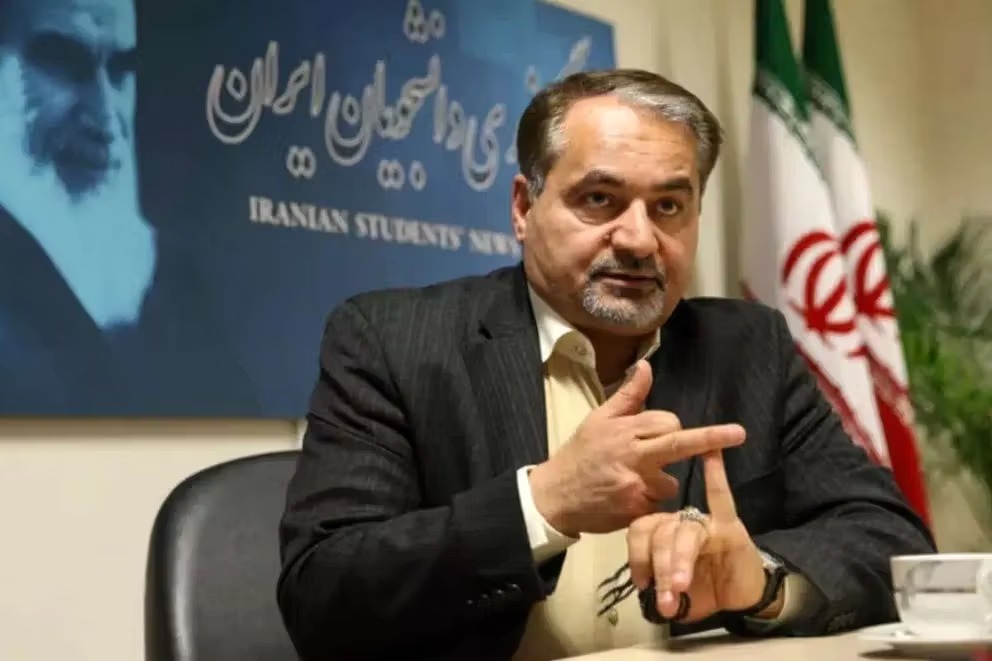
    Former Iranian diplomat Hossein Mousavian. (archives)

    Former Iranian diplomat Hossein Mousavian. (archives)

    A proposal that crosses red lines

    So far, Mousavian’s proposal has not sparked widespread debate within Iran; This may be due to the sensitivity of any conversation related to Israel in the Islamic Republic, where any such suggestion is considered a political taboo. In official discourse, Israel represents a symbol of enemies, assassinations, and evil, while the penalty for any normalization, communication, or support for it may reach death, which makes even raising this file in the media or the official political space a great risk.

    On the other hand, the debate varies within academic and informal circles, and even in some consulting institutions close to decision-making circles. There are those who believe that the continuation of the slogan “the necessity of destroying Israel,” which has accompanied the Islamic Republic since its beginnings, makes it difficult to expect Israel to abandon its hostility to Iran, especially since Tel Aviv The Islamic Republic is considered the greatest existential threat to it, and it has succeeded, through extensive media and political campaigns, in forming an international consensus against it.

    From this standpoint, some experts believe that improving relations between Tehran and Washington will remain incomplete unless the Israeli complex is addressed, because Tel Aviv will continue to try to obstruct any American-Iranian understanding that does not take its security interests into account.

    This problem has emerged again in recent weeks, with differing American and Israeli positions regarding it South LebanonWhich made the ceasefire between Iran and America more fragile, in light of Israel’s feeling that it is not fully bound by American policies towards Lebanon.

    Precedents of attempts to reduce stress

    However, Mousavian’s proposal re-asks two fundamental questions: Can easing tensions between Iran and Israel contribute to greater stability in The Middle East? Did the last two wars create grounds for rethinking this possibility?

    To answer these two questions, we must return to the path of relations between Iran and Israel over the past decades. Since the Iranian revolution in 1979, the relationship between the two countries turned into open hostility, before moving to a direct military confrontation after the October 7 operation, and Israel accused Iran of prior knowledge of and support for the operation.

    However, the hostile relationship did not remain at the same level throughout these years. Various stages witnessed undeclared attempts to reduce tension, which took place – in most cases – through intermediaries such as Switzerland andSultanate of Oman andQatar And European countries, and it was linked to the Iranian nuclear file, the role of groups allied to Tehran, and regional security. But these attempts remained far from the media due to the sensitivity of the issue inside Iran, and they did not achieve tangible results due to the deep ideological differences between the two parties.

    Iranian-Israeli relations are also not without precedents that witnessed undeclared cooperation. Perhaps the most notable is the MacFarlane affair, or the Iran-Contra scandal in the 1980s, which revealed tactical and secret cooperation between Iran, Israel, and the United States.

    At that time, official relations were completely severed, and Supreme Leader Ruhollah Khomeini had described Israel as a “cancerous gland” and called for its elimination, a speech that later underwent some modifications during the era of Ali KhameneiWith the idea of ​​holding a referendum in the occupied Palestinian territories.

    However, in the MacFarlane case, a secret deal took place in which the United States and Israel sold weapons to Iran during its war with Iraq, in exchange for help in freeing American hostages in Lebanon who were being held by “HezbollahThe administration of President Ronald Reagan also sought to use the proceeds from the deal to finance the Contra forces opposing the communist government in Nicaragua, in violation of American law.

    The operation turned into one of the biggest political scandals in the United States after it was revealed by the Lebanese magazine Al-Shiraa in November 1986.

    This case showed that common interests may push the two parties to limited cooperation despite declared hostility. At that time, Israel saw Iran as a balancing factor in the face of the Arab countries, while Tehran was in dire need of weapons to continue its war with them Iraq.
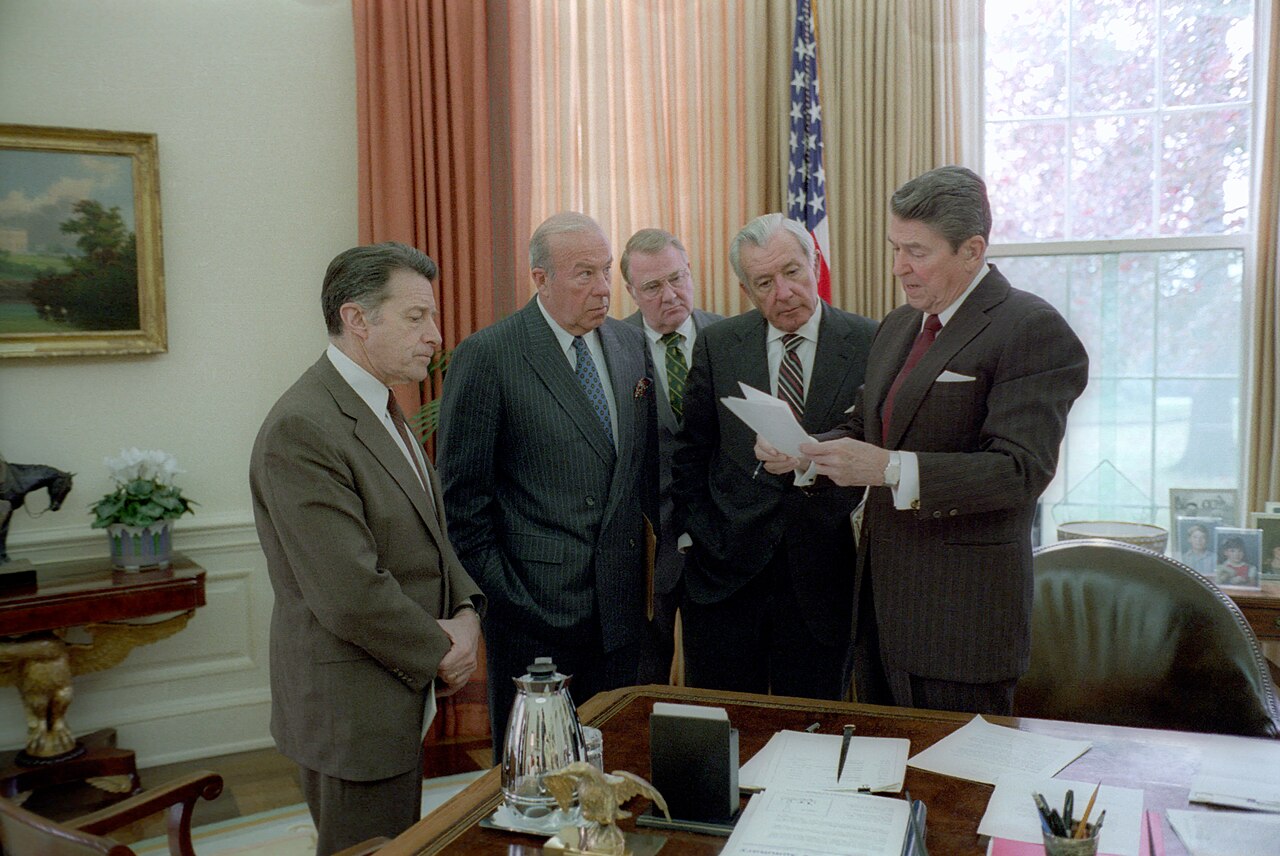
    US President Ronald Reagan holds a meeting in the Oval Office with Secretary of Defense Caspar Weinberger, Secretary of State George Shultz, Attorney General Edwin Meese, and White House Chief of Staff Donald Reagan, to discuss the Iran-Contra issue. (AFP)

    US President Ronald Reagan holds a meeting in the Oval Office with Secretary of Defense Caspar Weinberger, Secretary of State George Shultz, Attorney General Edwin Meese, and White House Chief of Staff Donald Reagan, to discuss the Iran-Contra issue. (AFP)

    Missed opportunities to change course

    Another example dates back to 2003, when the United States invaded Iraq under President George Bush, at a time when the possibility of a strike against Iran was strongly on the table. The rapid American victory in Afghanistan and then Iraq, after the September 11 attacks, raised growing concern in Tehran, specifically after it was included in the “axis of evil” in 2002.

    At that stage, Iran, through the Swiss embassy, ​​presented an initiative to the United States that included its willingness to reduce tension with Israel, stop material support for Palestinian armed groups, cooperate with Washington in combating terrorism, especially Al-Qaeda, and contribute to achieving stability in Iraq after the invasion.

    In return, Tehran requested security guarantees, the lifting of sanctions, and access to peaceful nuclear technology, in addition to an American pledge not to seek regime change.

    But the Bush administration rejected this initiative, which was later known as the “Grand Deal,” for ideological reasons, and because of its adherence at the time to the option of regime change in Iran. Today it is widely viewed as one of the most notable missed opportunities to rebuild relations and reduce regional tensions.

    The period of Mohammad Khatami’s presidency between 1997 and 2005 is also referred to as the most open phase in Iran’s relationship with the West, as it witnessed a relative decline in the level of tension, including mutual threats with Israel.

    During the era of President Hassan Rouhani, and with the signing of the nuclear agreement in 2015, and although Israel was not a party to the negotiations with the P5+1 group, restricting Nuclear programme Iran, in exchange for lifting part of the sanctions, was seen as a way to contain Israeli fears and reduce the level of tension in the region.

    But Israel did not consider the nuclear agreement a solution to the Iranian threat. The Prime Minister described it Benjamin Netanyahu At the time, he called it a “historic mistake,” before his government exerted pressure on Washington, which contributed to the US President’s withdrawal Donald Trump From the agreement in 2018.

    In the recent memorandum of understanding between Iran and the United States, issues related to Israel returned to the forefront, especially the issue of stopping Israeli attacks on Lebanon, which was subjected to repeated violations, which brought the ceasefire back to the brink of collapse.

    Why does mediation falter?

    These historical milestones lead to a question that is repeated with every new initiative, which is why did all attempts to reduce tension between Iran and Israel fail to achieve a real breakthrough?

    The answer lies largely in the nature of the conflict itself. Iran considers Israel an “illegitimate” entity, while Israel views the Islamic Republic as an existential threat. The differences between them revolve around the Iranian nuclear program, Tehran’s support for “Hezbollah” and…agitation“And “Ansar Allah” in Yemen and”Popular Mobilization Forces“In Iraq, in addition to the struggle over regional influence.

    In light of this equation, any mediation appears to be governed by profound political and ideological obstacles, even if the international will exists to sponsor it.

    However, Mousavian believes that ruling out the idea of ​​destroying or overthrowing the other party’s political and military system, and putting differences on the negotiating table with American mediation, may open the door to broader understandings that redraw the balances of the Middle East and pave the way for other agreements that are difficult to imagine in light of the continued logic of confrontation.






    Source link

    Related Posts

    No Content Available
    Next Post
    IMF: The government confirms its commitment to linking the dinar to the dollar and developing financial markets

    IMF: The government confirms its commitment to linking the dinar to the dollar and developing financial markets

    POPULAR NEWS

    Young people are addicted to “Live” for the purpose of profit

    Young people are addicted to “Live” for the purpose of profit

    July 1, 2026
    TPS: electoral choices with serious consequences for the Haitian community, according to Me Frandley Denis Julien

    TPS: electoral choices with serious consequences for the Haitian community, according to Me Frandley Denis Julien

    July 1, 2026
    Inspirations from China’s journey – Opinion

    Inspirations from China’s journey – Opinion

    July 1, 2026

    Global Artists Gather for Mongolian Contortion Convention 4 days

    July 1, 2026
    Vientiane Times

    Vientiane Times

    July 1, 2026

    EDITOR'S PICK

    Anadolu Efes said goodbye to Shane Larkin

    Anadolu Efes said goodbye to Shane Larkin

    July 1, 2026
    Cat and training: How to teach her to come when called

    Cat and training: How to teach her to come when called

    July 1, 2026
    From Medals to Mindfulness: Advancing Yoga in Gelephu Mindfulness City

    From Medals to Mindfulness: Advancing Yoga in Gelephu Mindfulness City

    July 1, 2026
    Juan Rodríguez will no longer be US ambassador to Guatemala after withdrawing his nomination

    Juan Rodríguez will no longer be US ambassador to Guatemala after withdrawing his nomination

    July 1, 2026

    Recent Posts

    • Cat and training: How to teach her to come when called
    • Ways to Treat Nausea: What Works?
    • In a letter, Pope Leo XIV’s heartfelt appeal to the superior general of the Priestly Fraternity of Saint Pius
    • Kenya’s Catholic Bishops urge respect for human life and national renewal

      © 2026 Agentially - Navigating shifting sovereignties and global risk .

      Welcome Back!

      Login to your account below

      Forgotten Password?

      Retrieve your password

      Please enter your username or email address to reset your password.

      Log In
      No Result
      View All Result
      • HOME
      • AMERICAS
        • Argentina
        • Brazil
        • Canada
        • Chile
        • Colombia
        • Costa Rica
        • Cuba
        • Dominican Republic
        • Ecuador
        • El Salvador
        • Greenland
        • Guatemala
        • Honduras
        • Mexico
        • Nicaragua
        • Panama
        • Paraguay
        • Peru
        • United States
        • Uruguay
        • Venezuela
      • ASIA-PACIFIC
        • Australia
        • Brunei Darussalam
        • Cambodia
        • China
        • Federated States of Micronesia
        • Fiji
        • Indonesia
        • Japan
        • Kiribati
        • Laos
        • Malaysia
        • Marshall Islands
        • Mongolia
        • Myanmar
        • Nauru
        • New Zealand
        • North Korea
        • Palau
        • Papua New Guinea
        • Philippines
        • Samoa
        • Singapore
        • Solomon Islands
        • South Korea
        • Taiwan
        • Thailand
        • Timor-Leste
        • Tonga
        • Tuvalu
        • Vanuatu
        • Vietnam
      • CARICOM
        • CARICOM – Non-English
          • Haiti
          • Suriname
        • CARICOM Associates
          • Anguilla
          • Bermuda
          • British-Virgin-Islands
          • Cayman-Islands
          • Curacao
          • Turks-and-Caicos
        • CARICOM English
          • Antigua and Barbuda
          • Barbados
          • Belize
          • Dominica
          • Grenada
          • Guyana
          • Jamaica
          • Montserrat
          • Saint Kitts and Nevis
          • Saint Lucia
          • Saint Vincent and the Grenadines
          • The Bahamas
          • Trinidad and Tobago
      • EURASIA
        • Armenia
        • Azerbaijan
        • Balarus
        • Georgia
        • Kazakhstan
        • Kyrgyzstan
        • Moldova
        • Russia
        • Tajikistan
        • Turkmenistan
        • Ukraine
        • Uzbekistan
      • EUROPE
        • Albania
        • Andorra
        • Austria
        • Bosnia and Herzegovina
        • Bulgaria
        • Croatia
        • Cyprus
        • Czech Republic
        • Denmark
        • Estonia
        • Finland
        • France
        • Germany
        • Greece
        • Holy See
        • Hungary
        • Iceland
        • Ireland
        • Italy
        • Kosovo
        • Latvia
        • Liechtenstein
        • Lithuania
        • Luxembourg
        • Malta
        • Monaco
        • Montenegro
        • Netherlands
        • North Macedonia
        • Norway
        • Poland
        • Portugal
        • Romania
        • San Marino
        • Serbia
        • Slovakia
        • Slovenia
        • Spain
        • Sweden
        • Switzerland
        • United Kingdom
      • MIDDLE EAST AND NORTH AFRICA
        • Algeria
        • Bahrain
        • Egypt
        • Iran
        • Iraq
        • Israel
        • Jordan
        • Kuwait
        • Lebanon
        • Lybia
        • Morocco
        • Oman
        • Palestinian Territories
        • Qatar
        • Saudi Arabia
        • Syria
        • Tunisia
        • Turkey
        • United Arab Emirates
        • Western Sahara
        • Yemen
      • SOUTH ASIA
        • Afghanistan
        • Bangladesh
        • Bhutan
        • India
        • Maldives
        • Nepal
        • Pakistan
        • Sri Lanka
      • SUB-SAHARAN AFRICA
        • Angola
        • Benin
        • Botswana
        • Burkina Faso
        • Burundi
        • Cabo Verde
        • Cameroon
        • Central African Republic
        • Chad
        • Comoros
        • Cote d’Ivoire
        • Democratic Republic of the Congo
        • Djibouti
        • Equatorial Guinea
        • Eritrea
        • Eswatini
        • Ethiopia
        • Gabon
        • Gambia
        • Ghana
        • Guinea
        • Guinea Bissau
        • Kenya
        • Lesotho
        • Liberia
        • Madagascar
        • Malawi
        • Mali
        • Mauritania
        • Mauritius
        • Mozambique
        • Namibia
        • Niger
        • Nigeria
        • Republic of the Congo
        • Rwanda
        • Sao Tome and Principe
        • Senegal
        • Seychelles
        • Sierra Leone
        • Somalia
        • South Africa
        • South Sudan
        • Sudan
        • Tanzania
        • Togo
        • Uganda
        • Zambia
        • Zimbabwe

      © 2026 Agentially - Navigating shifting sovereignties and global risk .

      This website uses cookies. By continuing to use this website you are giving consent to cookies being used. Visit our Privacy and Cookie Policy.