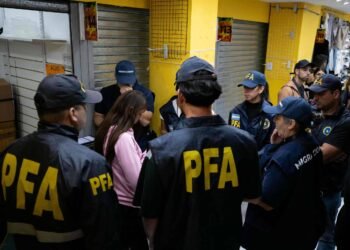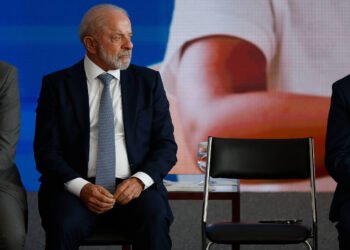
Since escaping arrest in November, in the first phase of Operation Compliance Zero, the former president of BRB (Bank of Brasilia) Paulo Henrique Costa he retired to his apartment in a luxury building in the Northwest neighborhood of the federal capital, where he was arrested this Thursday (16) for receiving bribes and participating in the criminal organization set up by Daniel Vorcarocontroller of Master Bank.
Target of the investigations and one of the main characters in the Master scandal, the former director of the Federal District government bank had been advised to make a plea bargain to the Federal Police, before his testimony lost value for investigators given the prospect of analyzing the material seized in the second phase of the operation, on January 14th.
Despite warnings and pressure from family members to accept the plea, he preferred to insist on the strategy of building his defense with an alleged technical bias to demonstrate that the purchases of Master’s portfolios and then part of Vorcaro’s bank were an excellent deal for BRB.
Costa never offered to plead guilty, according to reports from members of the PF heard by the Sheet under the condition of anonymity. He claimed that he was innocent and the victim of an emotional upheaval in the family, with the request for separation from his wife.
In meticulous, almost obsessive work, according to interlocutors who were with him during that period, he began to gather in the living room of his apartment financial reports, investment fund data, contracts and BRB documents that he took with him before being removed from the bank after the first phase of the operation that arrested, for the first time, the owner of the Master.
Costa’s lawyer, Cléber Lopes said that his client did not commit any crime and that the arrest carried out by the PF was an exaggeration on the part of the Court. He said he will not change his strategy and remains “firm in the conviction that Paulo Henrique did not commit any crime.”
The former director is accused of passive corruption and money laundering. According to investigations, one of the grounds for the arrest is the suspicion that he had concealed six high-end properties received as bribesfour in São Paulo and two in Brasília, valued at R$146.5 million.
One of Costa’s main concerns was to show that he did not know that Vorcaro and his partners had obtained 23.5% of BRB’s capital via funds in capital increase operations during his management.
For some of these interlocutors, he showed messages from his cell phone with conversations with Central Bank directors, which would prove, in his assessment, the support given by the regulator to the operation of purchasing part of Master by the public bank. These conversations, all held on his cell phone, he claimed, would be the weapon of his defense.
During the first phase of the operation, Costa was outside Brazil, and the judge did not respond to the Federal Public Ministry’s request that he also be arrested. He was removed from BRB, but continued to maintain contacts with former assistants who remained at the bank and who kept him informed of internal matters, as the forensic audit hired by the bank’s new command later identified.
According to reports collected by the SheetCosta said that the PF delegate, Janaina Palazzo, responsible for investigating the Master case, and her assistants at the corporation had no knowledge of the banking market, and that he was willing to collaborate to clarify technical distortions that were being made and passed on to the press.
He even asked the PF for a new statement. At that point, however, the PF already had strong evidence that the former president of BRB had falsified documents afterwards to support the decisions to purchase Master portfolios negotiated with Vorcaro.
A member of the PF told the report that the new phase of the operation is the result of the maturity of the investigation and that the forensic audit report added important elements that were considered in the operation. The analysis of the seized material took time, he explained.
FAKE DOCUMENTS
Based on the extraction of telematic data from Vorcaro’s cell phone and others involved in the case and the documentation seized, investigators had robust evidence that he had a central role in the mass production of artificial documents, involving Excel spreadsheets, contracts, statements, powers of attorney and power of attorney clauses intended to give the appearance of health to unbacked assets, as shown in documentation from this Thursday’s operation.
The Central Bank had also identified falsified and fabricated documentation.
When asked to comment on his client’s use of these documents, Costa’s lawyer said he would not comment.
In the evidence found by the investigators, manual adjustments of statements, backdated documents, serial creation of contractual instruments and the use of atypical powers of attorney, signed by bank agents replacing the supposed credit borrowers, are also mentioned.
As the investigations progressed, the PF dismantled Costa’s thesis. The researchers identified dialogues based on data extracted from the phones of those being investigated. Since the beginning of operations, they were already aware of relevant inconsistencies in the portfolios offered.
Despite this, the acquisitions would have been accelerated, with successive procedural flexibility and pressure for quick settlement of purchase operations, “in apparent disregard for prudential controls” by the BRB.
The conversations also showed undue advantage through the transfer of six high-end properties located in São Paulo and Federal District to facilitate the acquisition of wallets considered fraudulent.
A few weeks ago, its defense had presented a technical statement to demonstrate that all decisions followed collegial governance, good faith, market standards and economic rationality, both in the attempt to acquire Master and in portfolio purchases.
A new statement had already been requested in January. Costa’s defense denied any plea bargains and claimed that “all BRB operations followed appropriate procedures and were regular.” On the investigators’ side, there was an expectation that the testimony would only take place after Vorcaro’s statement. Costa ended up in prison before that.