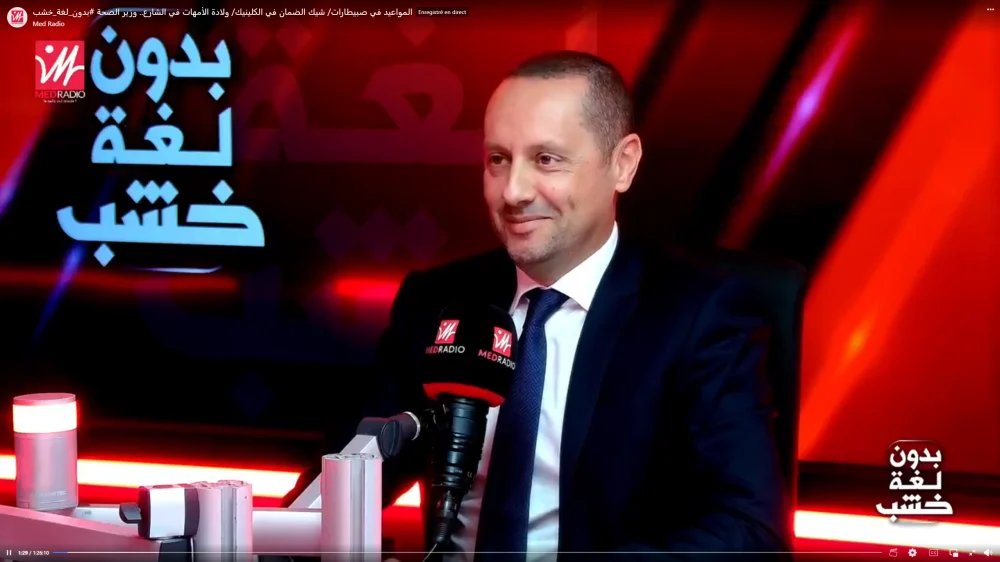
What to do when you are sick, in an emergency situation, and a clinic requires admission to be deposited with a guarantee check? The question, posed bluntly by Redouane Erramdani to
and social protection, during his appearance on the program “Heure de vérité” on
calls for an equally direct response. “It is illegal and unacceptable,” assures the Minister of Health, who recalled that the law prohibits it, that inspections exist, around 500 general inspection missions carried out this year for as many complaints and that sanctions are taken. But he also assumes that regulation alone is not enough: “We need collective responsibility.” Its operational response is embodied in the new platform
launched a few days before the interview. “746 complaints in three days,” the minister revealed live.
“No Moroccan would accept this, and neither would I”
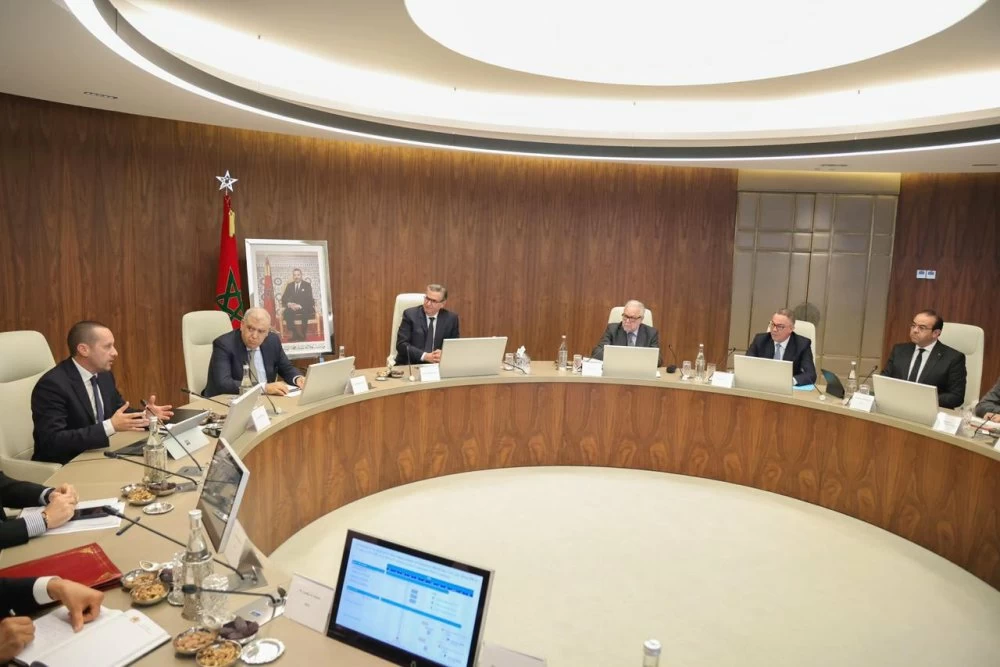
On the emigration of Moroccan doctors to Europe, the minister makes a notable reversal. Rather than treating it like a hemorrhage, he sets it up as an involuntary trophy: “It is first of all recognition of the quality of the training that we offer in Morocco.” The admission, again, is clear: “I cannot hold a doctor against his will, I do not have the legal power to do so.” Its response involves attractiveness, a renovated working environment, variable remuneration based on performance and the bill on the health function.
An offensive record and the line concerning the private sector
The figures put forward are resolutely offensive. Ten new hospitals opened in 18 months, Fkih Ben Salah, Ifrane, Aït Ourir, Tahannaout, Tinghir, Boumalne Dadès, among others. 1,400 primary health centers rehabilitated, 70% of which in rural areas, and 1,600 others launched immediately. Above all, the minister announces a boost in human resources: 1,200 specialist doctors assigned in a year and a half, compared to a historical average of 300 per year, and an additional 530 expected in July, or 2,730 specialists mobilized over the period, an unprecedented volume. The health budget, he recalls, increased from 20 to 42 billion dirhams. An argument that he directly opposes to suspicions of creeping privatization: “If we wanted to privatize, we would not make these investments.” The minister carefully avoided direct confrontation with private clinics, denying any “personal problems” with the sector. His line: neither privatization nor opening of the capital of pharmacies, contradicting in passing the recent opinion of the Competition Council chaired by Ahmed Rahhouof which he says he shares the diagnosis, but not all the recommendations.
Regionalization, cornerstone of the Royal Vision
It is this Royal dynamic that Amine Tahraoui claims to have translated into the daily life of the establishments. It describes a previous compartmentalized management method: University hospital centers operating in autonomous silos, other establishments attached to regional directorates of the ministry deprived of the necessary levers. “When a problem arose in a hospital, we had to go back to central office to decide,” he summarizes. From now on, each general director of GST has full autonomy over human resources, equipment and patient guidance throughout their territory.
The Tangier-Tétouan-Al Hoceïma GST, launched in July 2025 as a pilot structure, serves as a showcase for the minister. Since the system came into force, the Larache hospital has seen its activity increase by 60% in one year, a figure delivered directly, which Amine Tahraoui attributes to the possibility, for the general director, of redeploying doctors between establishments in the same region without going through Rabat. A mechanism that he sets up as a pragmatic response to the chronic shortage of specialists: “Before the new promotions arrive, it is through management that we overcome the delays.”
Added to this regionalization is the regional SAMU, another operational component claimed. The ambulances, until now attached to each hospital, are shared across the region and supervised from a technological platform equipped with real-time geolocation. No more, he says, of the patient being tossed from one establishment to another due to lack of admission or an available ambulance. “We know where the patient leaves and where he arrives. The receiving hospital is notified.” To the question: “Is health still in intensive care?”, Amine Tahraoui decides: “We are out of intensive care”. The most striking statement is perhaps elsewhere, when he talks about his relationship with the Head of Government, Aziz Akhannouch: “He asks me for results. This is the contract between us.” It remains to be seen whether the race against time, which he invokes several times throughout the interview, will succeed before the verdict of September 2026.