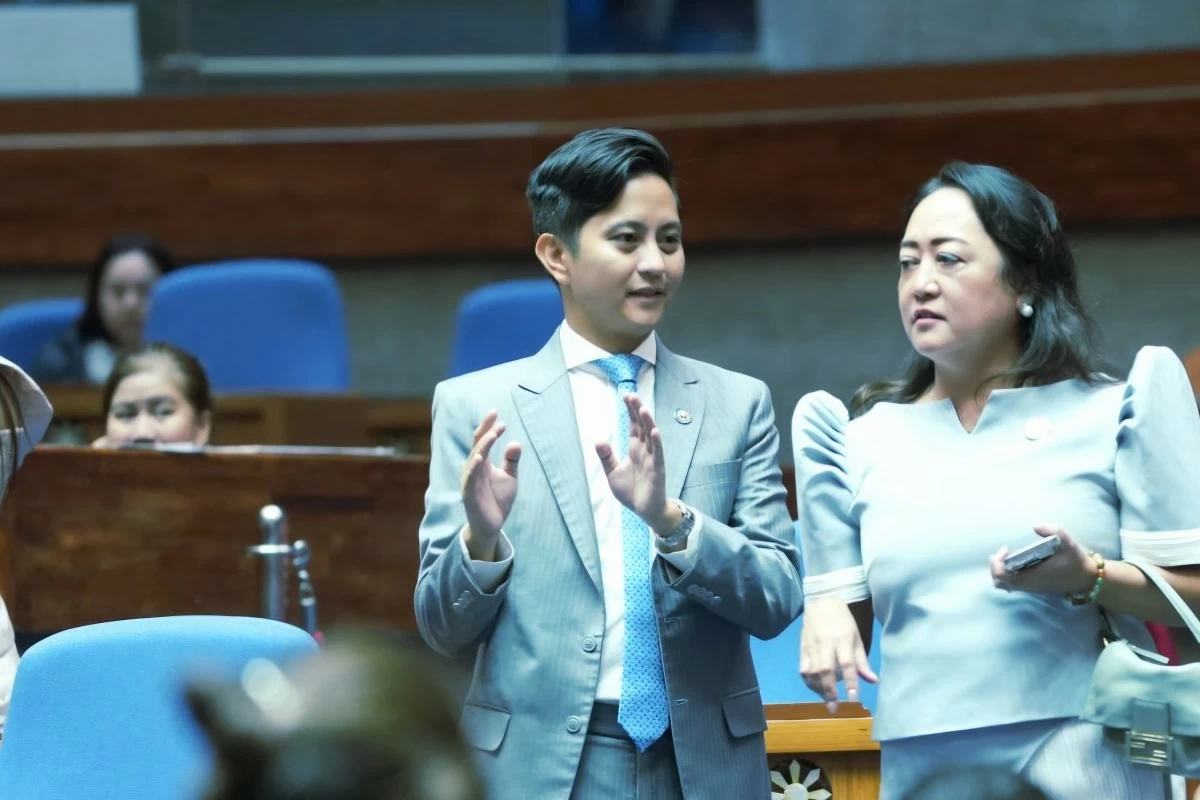
House Majority Leader Ilocos Norte 1st district Rep. Sandro Marcos is rallying his congressman-colleagues to swiftly pass the proposed Kalinga Act, which is seen to provide relief for poor Filipinos, the middle class, and small business owners amid elevated fuel costs.
Marcos made the call ahead of the resumption of plenary sessions on Monday, May 4 after Congress’ six-week summer recess.
The presidential son said the measure aims to ensure that government support is ready and automatic during crises such as fuel price spikes and inflation.
“This is about protecting every Filipino—from the poorest families, to the middle class, to small business owners trying to stay afloat,” Marcos said on Sunday, May 3.
Amid continuing tensions in the Middle East that are pushing global oil prices upward, House Speaker Faustino “Bojie” Dy III and Marcos led the filing of House Bill (HB) No. 8834, or the Kalinga Act. It seeks to institutionalize a national protection system to ensure Filipinos are not left to bear the full burden of another fuel-driven crisis.
The measure–which uses the Filipino word for “care”–has been designed to guarantee fast, targeted, and automatic government response when fuel price shocks begin driving up the cost of living.
More than an emergency assistance measure, the Kalinga Act establishes a national protection framework that allows government to act early, decisively, and in a coordinated manner—before rising fuel costs spiral into widespread increases in fares, food prices, electricity, and other daily expenses.
Marcos noted that the committee report is expected to be approved upon resumption of session, paving the way for plenary deliberations. “We are pushing to move this forward as quickly as possible so we can put real protection in place.”
During the recess, the House of Representatives’ 13-panel Legislative Energy Action and Development (LEAD), Council led by Marikina City 2nd district Rep. Miro Quimbo, conducted a series of hearings to formulate both short and long-term solutions to the fuel price crisis.
It is now entering a more consequential phase, as House members move to translate testimony, sectoral concerns, and agency recommendations into what Quimbo described as a consolidated Kalinga bill.
Marcos has emphasized that the proposal is anchored on the government’s duty to protect livelihoods, stabilize prices, and ensure that no Filipino is left behind in times of crisis.
“Sa panahon ng krisis, dapat malinaw: ang gobyerno ay kakampi ng bawat Pilipino. Walang maiiwan, at walang pababayaan. Kapag matatag ang pamilya at negosyo, matatag ang bansa. Iyon ang layunin ng panukalang ito,” Marcos explained.
(In times of crisis, it must be clear: the government is the ally of every Filipino. No one will be left behind, and no one will be neglected. When families and businesses are strong, the nation is strong. That is the goal of this proposal.)
He reckoned that government must never be on the backfoot when it comes to crisis response.
“Hindi na dapat naghahabol ang gobyerno kapag may krisis. Dapat nakaabang na ang tulong (The government should no longer be scrambling when a crisis happens. Assistance must already be ready).”