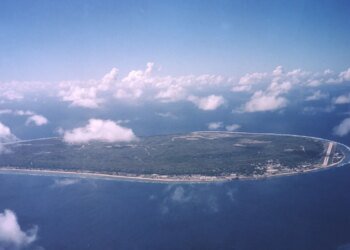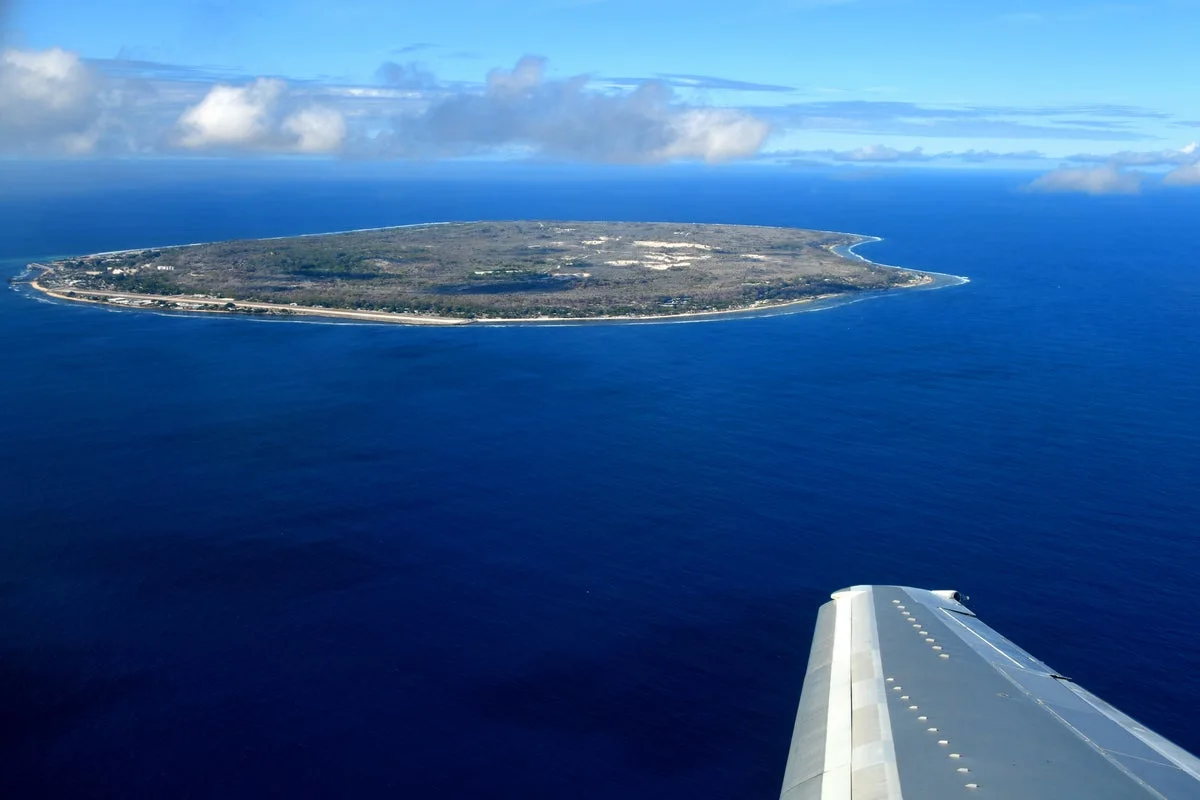
An Iranian man convicted of murdering his wife has failed in his landmark legal challenge to prevent his deportation from Australia to the Pacific island nation of Nauru.
Seven High Court judges unanimously dismissed an appeal by the man, identified only as TCXM due to Australia’s refugee identity protection laws, against an order issued last year. This order mandates his deportation to the independent nation of approximately 12,000 people, where he will reside under a 30-year visa.
Immigration Minister Tony Burke welcomed the ruling, hailing it as a victory for Australia’s immigration control. “I welcome the decision of the court. A cancelled visa must have consequences in our migration system,” Mr Burke stated, having contested the man’s appeal.
Australia previously agreed to pay Nauru 408 million Australian dollars (£212 million) for the resettlement of unwanted non-citizens who cannot be returned to their home countries, covering a period of up to 30 years. Nauru is also set to receive an annual payment of AU\$70 million (£36 million). So far, eight men have been resettled in Nauru under the arrangement, which has drawn criticism in Australia for its substantial cost.
Nauru became the solution to a political problem for Australia’s government that was created by another High Court decision in 2023. The court found at the time that stateless people or people who could not be returned to their homelands could no longer be held indefinitely in Australian detention with little chance of a third country offering a home.
More than 350 people, many of them convicted criminals including TCXM, were released in Australia on temporary visas as a result of that ruling. The test case was brought by a convicted child molester, identified in court as NZYQ, who was a refugee and member of Myanmar’s persecuted RohingyaMuslim minority.
Map of Nauru:
TCXM, who is now in his early 60s, came to Australia from Iran in 1990. He was given a protection visa in 1995 and then sentenced to 22 years in prison in 1999 for murdering his wife.
His visa was canceled and he was transferred in 2015 from prison to immigration detention where he remained for eight years. Iran does not accept the forced repatriation of its citizens by other governments. Australia has a policy of not returning refugees to countries where they risk persecution.
The Nibok refugee settlement on Nauru is shown from the air, Sept. 4, 2018. (Jason Oxenham/Pool Photo via AP, File) (Local Library)
TCXM was one of the first three noncitizens chosen to be sent to Nauru under the new bilateral deal. His challenge was rejected by a federal court judge and the decision was upheld Wednesday by the highest court, ending his legal options. TCXM was allowed to stay in Australia while he fought his legal challenge and it’s not clear when he will be deported.
His grounds for appeal included that Nauru’s medical services were inadequate to treat his severe asthma.
He also argued Australia’s agreement with Nauru was unlawful and his deportation was punitive and therefore unconstitutional. Australia’s constitution says punishment must be dealt by courts and never by governments.
Australian governments previously paid Nauru and Papua New Guinea to house asylum seekers who attempted to reach Australia’s shore by boat in squalid detention camps.
The Australian policy of refusing to allow boat arrivals to settle has largely ended people smuggling from Southeast Asian ports in rickety fishing boats that had once thrived.