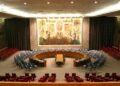
Last Wednesday, Trinidad and Tobago was elected to the United Nations Security Council (UNSC) for two years, 2027–2028, by an overwhelming majority of votes. T&T thereby becomes one of ten non-permanent members in addition to the five permanent representatives: China, France, Russia, the United Kingdom and the United States. These members hold veto power, meaning a single “no” vote from any of them can block a resolution even if it has majority support.
The primary responsibility of the UNSC is to maintain international peace and security. It is the only UN body with the authority to issue legally binding resolutions that all member states are obligated to enforce. It investigates disputes that threaten international peace and recommends methods for peaceful resolution. It authorises enforcement actions such as economic sanctions, arms embargoes and severance of diplomatic ties. It establishes and deploys peacekeeping missions as necessary.
It also plays a key role in recommending the appointment of the UN Secretary General, electing judges to the International Court of Justice and new UN member states.
These are onerous responsibilities in a complicated and interconnected world. Our World in Data, a free online scientific publication, estimates that there are approximately 130 to 150 active armed conflicts and internal wars globally.
The exact number varies by classification, but approximately 60 countries are directly entangled in organised violence.
Given the Security Council’s responsibilities, it is important to understand its composition and how the interests of its member states might affect its functioning. Two of the ten non-permanent members, Colombia and the Democratic Republic of the Congo, are affected by internal conflict. Bahrain, home to the US Fifth Fleet, is directly affected by the war in the Gulf. Two permanent members, Russia and the United States, are the chief protagonists in separate wars, in Ukraine and in the Gulf.
The world is at a precarious moment. Two major conflicts involve the indirect confrontation between two nuclear powers, with the potential for mistakes in unguarded moments. The margin of error is small.
Membership of the Security Council will require Trinidad and Tobago to take more visible positions on major international issues and expand its diplomatic engagement.
In campaigning for the Security Council seat, T&T championed three key global challenges: the women, peace and security agenda; combating the illicit trafficking of small arms and light weapons; and the implications of artificial intelligence for global security. Given rising crime rates across the region, Trinidad and Tobago could become a leading advocate for stronger international support for Caribbean security initiatives.
Trinidad and Tobago has traditionally pursued a pragmatic and non-aligned foreign policy. Security Council membership will make neutrality more difficult. One challenge will be balancing relationships with competing geopolitical actors.
The United States remains Trinidad and Tobago’s most important trading partner, while China is an important investor and trading partner. Similarly, issues affecting Venezuela, our closest neighbour, may arise and prove particularly sensitive, especially if they touch on sanctions or migration. The same is true of potential developments in Cuba. Prudence and pragmatism must be T&T’s guiding principles.
There is also a practical side to this development: Opportunity comes dressed in working clothes. The heavy workload will require additional resources to be effective.
We trust that the Ministry of Foreign and Caricom Affairs will maintain a balanced and pragmatic diplomatic posture, enabling Trinidad and Tobago to make the most of this opportunity without alienating any major partner.




![[Breaking] Cho Kuk leads tight three-way race in Pyeongtaek by-election: exit poll](https://agentially.org/wp-content/uploads/2026/06/news-p.v1.20260603.93f322508d694097ab648bea7e7d9fcb_T1-120x86.png)