By Almahdi Hindi, political activist
At a first glance, the scene appears to carry signs of a breakthrough. Yet, Libya stands once again at a critical crossroads, torn between a path striving to unify state institutions and another that reproduces the crisis using quieter, less clamorous tools—though no less dangerous in their outcomes.
Recently, indicators have emerged suggesting the possibility of a relative breakthrough in the political stalemate. This is particularly evident in discussions regarding a unified budget, attempts to restructure certain sovereign institutions, and the continued work of the 5+5 Joint Military Commission, which remains one of the most vital tracks for building trust between conflicting parties. These developments, despite their technical nature, reflect a growing realization among local and international actors that continued division is no longer a viable option.
However, this “positive” trajectory collides with a parallel, more complex reality. The human rights file has returned to the forefront, with increasing reports regarding detention conditions and violations. This raises fundamental questions about the nature of the state currently being formed: Are we witnessing the genuine building of a state governed by the rule of law, or merely a redistribution of influence under a fragile political cover?
In the same context, domestic movements cannot be read in isolation from the regional and international environment. Libya, by virtue of its geopolitical location and resources, remains an arena for intersecting interests where energy considerations overlap with files on security, migration, and influence. This entanglement makes any internal progress vulnerable to the fluctuations of external balances, which may push toward de-escalation at times or reshuffle the cards at others.
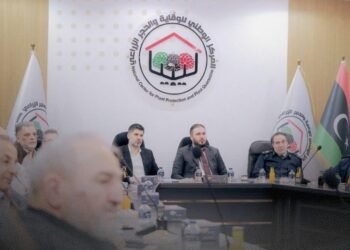
Economically, attempts to draw up long-term policies—such as the launch of the National Strategy for Water Security—emerge as an indicator of increased awareness regarding the importance of managing vital resources in a country facing challenges that go beyond oil. Nevertheless, these initiatives, as important as they are, remain threatened in the absence of a stable political framework and unified institutions capable of implementation.
The fundamental question forcing itself today is not whether Libya is capable of emerging from its crisis, but rather how that will happen: Will it be through a genuine settlement that addresses the root causes of the conflict and rebuilds the social contract? Or through “crisis management” via new formulas that keep the country in a state of “No Peace and No War”?
So far, the Libyan scene appears to be moving within a grey zone between these two options. The progress achieved remains limited, while the factors generating the crisis persist and remain capable of reshaping themselves.
The moment of decisiveness in Libya will not come from technical understandings or temporary fixes. Instead, it will stem from a genuine shift in the approach of local actors first, and subsequently in the way the international community engages with the Libyan file—moving from merely managing the conflict to actively supporting its definitive end.
Until then, Libya will remain suspended between two paths: one promising an exit from the tunnel, and another that has mastered the art of staying inside it.
Disclaimer: The views and opinions expressed in this article are those of the writer, and do not necessarily reflect those of the Libya Observer