By Abdullah Alkabir, political writer and commentator
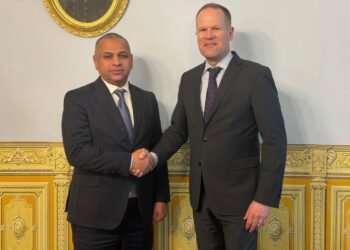
The 4+4 committee has convened in Rome under the supervision of UN Special Envoy Hanna Tetteh and her deputy, Stephanie Koury. During its first meeting last Wednesday, the first issue was nearly resolved with the selection of members for the High National Elections Commission’s board of directors. The Attorney General is expected to appoint the HNEC’s chairperson, who will likely hold a senior position within the judiciary.
This swift progress inspires optimism that the committee will agree on a legal framework for presidential and parliamentary elections. However, there are reservations regarding the constitutionality of the UN mission’s approach, as the appointment of sovereign positions and the drafting of election laws fall under the core legislative responsibilities of the House of Representatives, in consultation with the High Council of State.
UNSMIL’s argument, supported by several major powers of the UN Security Council, is based on the continued failure of both houses to address these and other issues, despite the extended timeframes granted to them. UNSMIL has been unable to exert significant pressure on the two houses because its role as a balancing force between the various regional and international actors supporting them would put the mission “in the dock” if it intervened too aggressively to bridge the gap between their positions. Maintaining the proper application of the law, as stipulated in the Constitutional Declaration and political agreements, necessitates considering the legality of the Attorney General’s role in selecting the head of a sovereign position. The Attorney General’s position is itself a sovereign one, and the current holder was approved by the House of Representatives in agreement with the High Council of State. While the political impasse that led the UN mission to resort to the 4+4 Committee is understandable, continued consultation with both houses remains a legal imperative before approving the names agreed upon today, as well as the candidate the Attorney General will propose.
Resolving the issue of the High National Elections Commission’s board of directors will not be the primary obstacle to ending the crisis and holding elections. The fundamental dilemma remains the laws governing presidential elections. The dispute centers on whether or not to allow military personnel and dual nationals to run for president. Throughout previous rounds of negotiations between the House of Representatives and the High Council of State, the House of Representatives insisted on not excluding any candidates, clearly intended to pave the way for Haftar to run. The High Council of State, however, rejects the candidacy of military personnel unless they resign from service and stipulates that dual nationals must unequivocally renounce their foreign nationality if they wish to run. The House of Representatives attempted to circumvent this by softening the requirement to simply submitting proof of having applied to renounce the other nationality—a clear attempt to bypass the original intent of the condition. Logically and practically, someone who has sworn allegiance to another country cannot assume the highest office; dual loyalty would prevent a president from fully exercising his duties should a crisis or conflict arise between the two countries to which he has pledged his allegiance and interests.
None of the figures in the de facto authorities want to appear to be obstructing international political solutions—whether through the UN mission or an influential state like the US—because such obstruction would expose them to international sanctions. However, obstruction takes many forms and can be implemented without directly confronting an initiative. It is often enough to activate other tools or exert pressure through a supporting state to thwart a settlement, or to accept it in principle—bowing to the storm—only to then work to empty the agreement of its substance by any means available. This is exactly what Haftar did through the House of Representatives regarding the Skhirat Agreement and, subsequently, the Tunis-Geneva Agreement.
I am not pessimistic, but no political solutions will succeed in the presence of Haftar. He has spent years building influence with international and regional support, consolidating a brutal, repressive authority in his regions that is ready to destroy any movement or manifestation of even slight political opposition or competition. Therefore, all attempts are liable to fail unless there is a strong internal movement that confronts the authority of Haftar and his family. Such a movement must reject the return of tyranny and the rule of the individual, family, and tribe, remaining resolved to continue the struggle until every claim to return to the pre-February revolution era is eradicated.
Disclaimer: The views and opinions expressed in this article are those of the writer, and do not necessarily reflect those of the Libya Observer