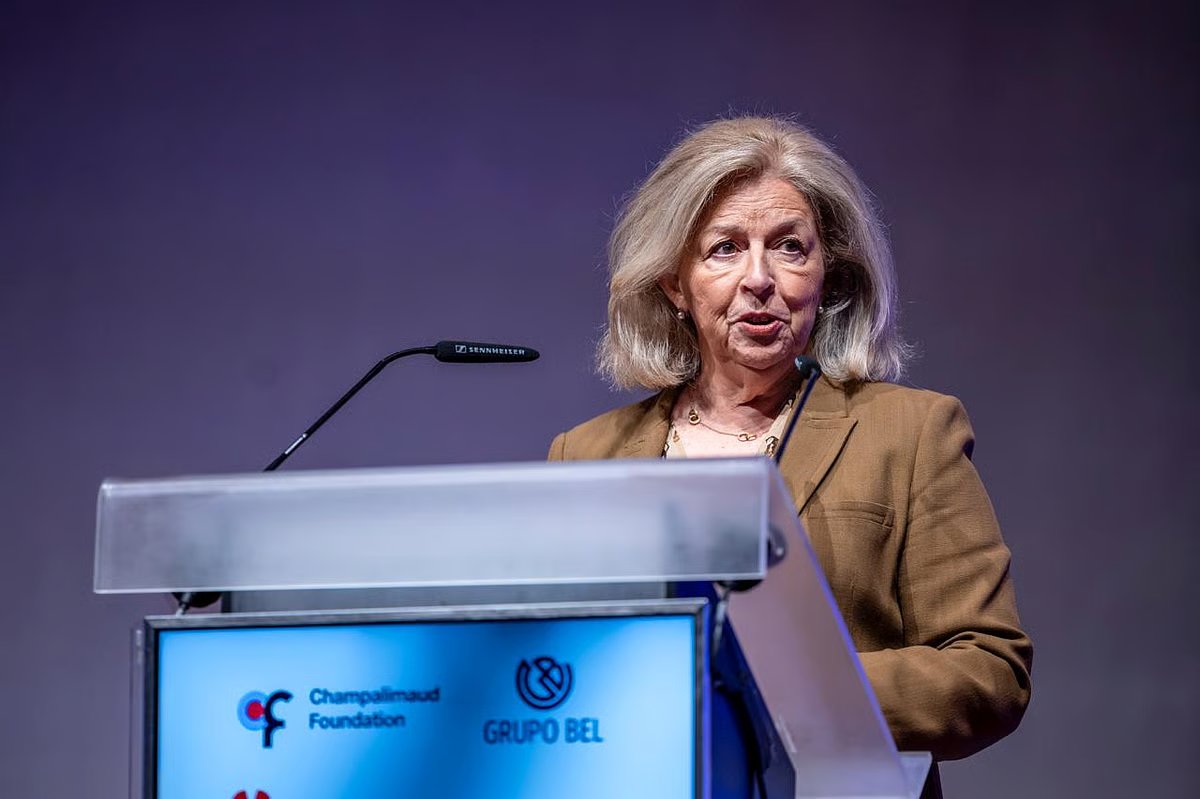
In an opening speech at the DN Grand Conference, Leonor Beleza, president of the Champalimaud Foundation, highlighted the importance of journalism for democracy and multilateralism in health. The conference themes also reflect the foundation’s mission.
“Some may think: But what does biomedical research have to do with the important issues that will be discussed here today? I can answer, and the best answer is that it has everything. First of all, researching, generating knowledge and developing new treatments for diseases costs a lot of money and can only be done if the necessary means exist”, he stated.
To do this, investment is needed. “And it can also generate wealth: wealth resulting from the well-being and health of people, wealth resulting from innovation and the way it is valued by markets and, by the way, also by governments. A developed and prosperous society invests resources in research. The results of research are a driver of development and wealth”, he stressed. “Also for this reason, we are here deeply interested in the issues and discussions that will concern us today”he added.
Leonor Beleza also highlighted the foundation’s pioneering spirit, using an example. The British National Health Service is announcing a treatment for prostate cancer carried out in five sessions, instead of 20. “Well, we here, more than ten years ago, started making a replacement of this kind: many radiotherapy sessions began, in many cases, to be concentrated in a single session”, he exemplified. “Many foreign patients and many Portuguese patients have already benefited from this treatment”, he pointed out.
“Different backgrounds and different cultures, working together, produce more diverse contributions and are much more effective”
The president of the Champalimaud Foundation did not fail to highlight the multicultural character of the institution. This is visible right at the entrance to the building, where the flags of the various nationalities represented among the foundation’s professionals are flying. “Why do we show these flags? Because we are proud of this multinational character of our doctors and researchers”he stressed.
For the former deputy, “science does not and should not have borders”. From his perspective, this diversity is an added value. “Different backgrounds and different cultures, working together, produce more diverse contributions and are much more effective”, he stated.
Leonor Beleza also sees this advantage in geopolitics. “If citizens from different countries work together and discover ways to preserve, defend and restore people’s health, not only will they be more successful in their work and discoveries, but they will also influence their countries so that collaboration between nations is strengthened and, in this way, contribute to a more lasting peace in the world. Because it is through collaboration and joint work that peace is built”, he concluded.