Sen. Telo Taitague stood with fellow Pacific lawmakers in Tokyo last week and applauded a call for a nuclear-free Pacific, condemning the kind of missile testing that sent a Chinese ballistic missile splashing near Tuvalu’s waters in July.
Back in Washington, a different conversation is underway. Two defense researchers are urging the Pentagon to do the opposite of what Taitague endorsed abroad: station American nuclear weapons on Guam.
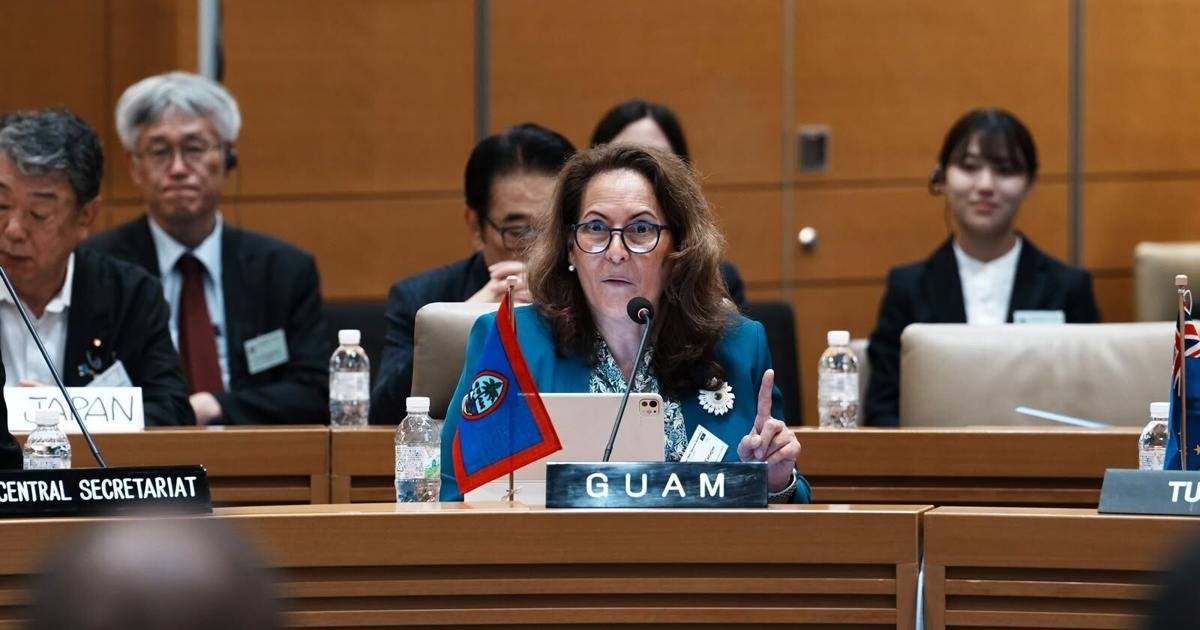
Taitague represented Guam at the Asian-Pacific Parliamentarians’ Union’s 88th Council Meeting and 54th General Assembly, a gathering of legislators from 21 national groups held under the theme of regional economic cooperation and supply chain resilience. Guam’s seat at the table comes from Guam law, not sovereignty. The island participates as what the APPU calls a cultural and geological bridge between the United States and Asia, according to a press release issued by Taitague’s office Wednesday.
The most charged moment of the gathering, by Taitague’s account, came from Tuvalu. Its delegate told the assembly that a nuclear-capable ballistic missile fired into the region was “deeply alarming” and undermined “longstanding commitments to a nuclear-free Pacific,” calling on major powers to stop using the ocean as a testing ground.
“The Tuvalu delegation’s remarks were nothing short of brave and inspirational,” Taitague said in the release. “When the prospect of war and conflict looms over us and weapons of mass destruction land near our waters, our countries must stand in solidarity and both advocate for peace and condemn the violence and destruction that any form of conflict or war would bring to our shores.”
In an interview with The Guam Daily Post on Friday, Taitague went further, describing the room’s reaction when the Marshall Islands delegate asked to read a statement into the record before his own country report.
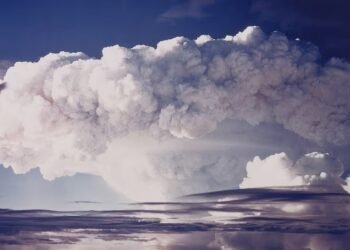
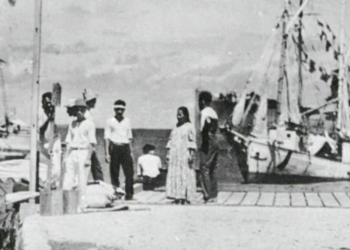
“We could see in (the) Marshall Islands’ eyes the sadness of what happened to them and how their people are still suffering today from nuclear fallout,” Taitague said. “And regardless, how far does this span? Look what happened. We are in a situation, downwinders, where Guam was affected from the nuclear fallout of the Marshall Islands. How many hundreds and thousands of miles away. So this will affect all of us.”
Guam and the Commonwealth of the Northern Mariana Islands were the only representatives with any tie to a U.S. territory at the table. CNMI did not send anyone this year.
That history is part of what makes a June commentary out of Washington land differently on Guam. Kyle Balzer, a fellow at the American Enterprise Institute, and Robert Peters of the Heritage Foundation’s Allison Center for National Security argued in Breaking Defense that the United States should reintroduce theater nuclear weapons to East Asia, starting with South Korea and moving next to Japan. Guam, in their plan, is not a footnote. It is the staging ground.
The two researchers wrote that Washington should first station B61 gravity bombs on Guam, then gradually train Japanese crews to operate dual-capable aircraft out of Andersen Air Force Base. From there, they envision joint American and Japanese crews operating a nuclear-capable long-range hypersonic weapon from the island, with nuclear systems potentially moving onto Japanese territory itself only later, if political conditions allow.
Their reasoning centers on deterring China. Without forward-deployed theater nuclear weapons in the region, they argue, Beijing may calculate that a U.S. president would hesitate to answer a theater nuclear strike with a high-yield submarine-launched ballistic missile since that risks retaliation against the American homeland. A weapon based closer to the conflict, they contend, is more credible and less likely to trigger runaway escalation. It is worth stressing that this is their recommendation, not a Pentagon decision, and the two write for organizations that favor a larger, more assertive U.S. defense posture.
Not everyone in that world agrees. Erin Dumbacher, a senior fellow at the Council on Foreign Relations, wrote in Foreign Affairs on Wednesday that expanding or diversifying the U.S. arsenal would be a mistake, regardless of China’s buildup. She argued a larger and more varied set of nuclear options invites miscalculation rather than preventing it, since adversaries could struggle to tell a conventional strike from a nuclear one. Dumbacher’s essay does not mention Guam by name, but it lands squarely on the same debate Balzer and Peters entered from the other direction and on the review the Pentagon has already confirmed is underway.
That review is real, even if its outcome is not. Undersecretary of Defense for Policy Elbridge Colby told an audience in Nebraska this month that the Pentagon is reexamining nuclear employment guidance to widen the president’s options in a crisis, though he said nothing has been finalized. The Post reported this month that a local security analyst, Leland Bettis of the Pacific Center for Island Security, has been tracking that review with concern specific to Guam. He noted the island’s prevailing winds blow from the northeast, meaning a strike on Andersen would likely spread fallout into civilian neighborhoods, not just the base.
Bettis put it bluntly in that Aug. 17 interview: “Right now, all we really are is the deductible on a U.S. insurance policy to keep conflict limited to the region. We are a cost in that policy. We’re the deductible.”
Guam’s elected leaders have already signaled resistance to hosting nuclear material on its soil. Lawmakers passed a law this year banning deep-sea mining vessels from local ports, and at a June legislative hearing, preservation advocate Baltazar Aguon urged senators to apply that same logic to any nuclear technology proposed for the island, including a possible referendum asking residents directly whether they consent.
Whether Washington moves toward the arrangement Balzer and Peters describe remains unsettled. Colby has said no changes have been publicly finalized, and any decision would likely require its own public debate on Guam, given the island’s history with fallout it never asked for.